The Brazil Narco State
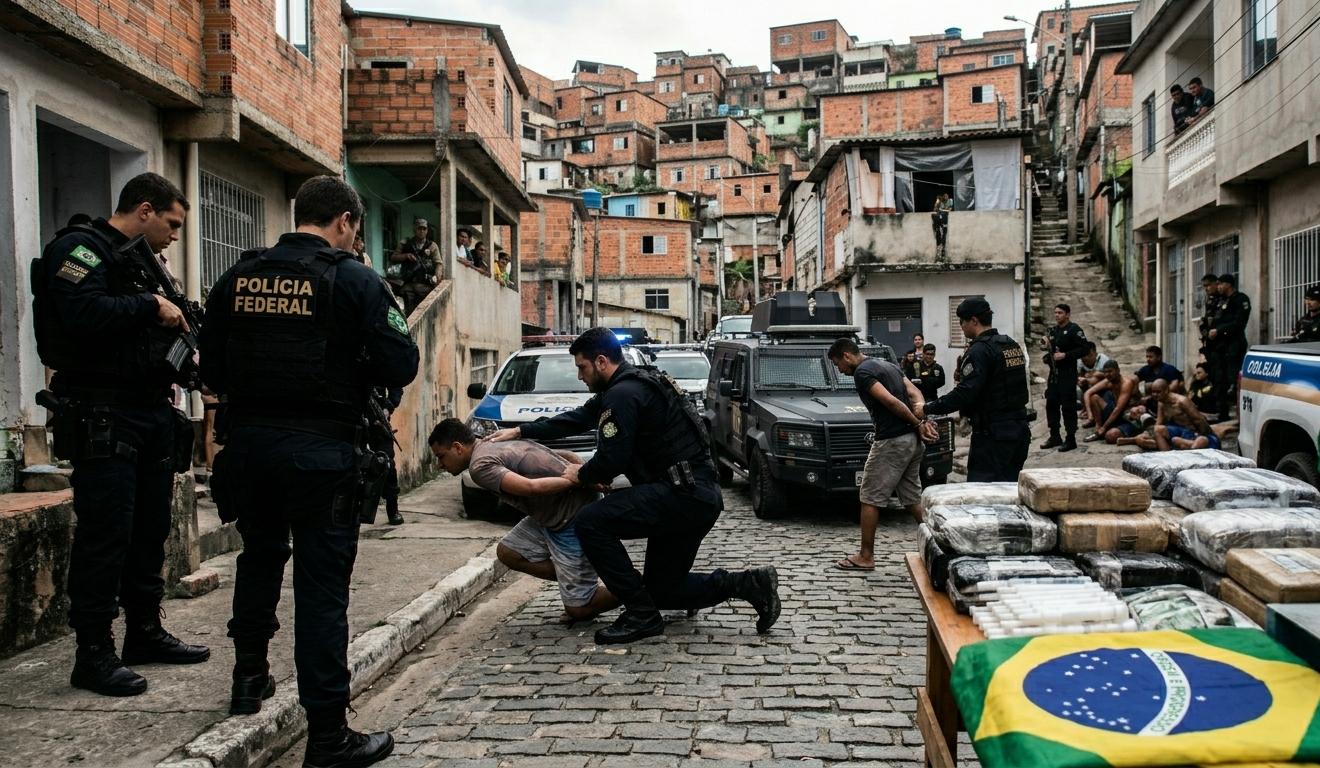

Many times we make the mistake of believing that the problems of other nations are far from our doorstep. We like to think that our institutions are solid enough to ignore the chaos consuming our neighbors. But the truth is that freedom is a global ecosystem. When the largest nation in South America shows signs of deep infiltration by organized crime into its spheres of power, the entire Western Hemisphere should sound the alarm.
What we are seeing in Brazil is not just common politics. It is something much darker. A wave of raw videos and images has recently leaked beyond the reach of traditional news outlets. This content is piercing the bubble of silence that tries to hide the current Brazilian reality. We are talking about reports of narco-terrorism and the use of the State to protect interests that should be behind bars. To anyone who stands for justice and public safety, today’s landscape in Brazil serves as a grim warning of what unfolds when the system decides to open a dialogue with crime instead of fighting it with rigor.
The term narcodictatorship might sound extreme to some, but it describes a situation where drug money dictates the pace of national decisions. Reports gaining global attention show a disturbing trail. Cartel money is allegedly being moved through channels that should be protected by State immunity. Just picture the enormous danger of cash-stuffed suitcases slipping across borders to finance political structures that now hold command positions in the government.
Make no mistake, this is no conspiracy theory. It is a matter of transparency and the absolute need for a deep investigation. While the average citizen works hard to pay taxes and support a family, a political elite seems to have found a way to maintain power through drug cartels. The big problem is that this kind of alliance never comes for free. It comes with a clear agenda that seeks to protect trafficking routes and weaken security forces.
One of the most concerning aspects of this new Brazilian reality is the stance of the current Lula government regarding crime. The civilized world understands that cartels that terrorize populations and dominate territories are terrorist groups. However, there is a clear resistance to giving them that label in Brazil today. Why would anyone protect the image of such brutal organizations? The answer may lie in the dependence many politicians have developed on the support of these crime-dominated communities.
When the State refuses to act with firmness, it is effectively handing control of the streets over to the factions. The contrast with what the country experienced just a few years ago is obvious to any observer. Today, what many Brazilians feel is a total inversion of values. Law enforcement officers feel discouraged while criminals gain more and more space and influence. For the American conservative, this story sounds familiar since we already spot these red flags in our own major cities, though in Brazil, this cancer has turned systemic.
Despite all the pressure, there is a resistance movement that refuses to accept this situation. Opinion polls show that the Brazilian people still value the principles of order and authority. Names tied to the right, such as Flavio Bolsonaro, son of former President Jair Bolsonaro, stay at the top of the polls because they mirror the hunger for a nation where criminals do not get a lifelong seat in the government. The people have not forgotten what it feels like to have a government on the side of the police instead of the criminal.
On top of that, fresh faces like Congressman Nikolas Ferreira are leading a generation that simply refuses to bow to the system. These young people use social media to show what television avoids reporting. This Brazilian movement is in sync with the conservative values we defend here in the United States. They understand that without strong borders and a respected police force, civilization simply cannot stand.
Beyond the physical violence on the streets, we must also watch the institutional crackdown on liberty. Brazil has turned into a dark testing ground for digital censorship. Right now, we are witnessing courts barking out orders to wipe out profiles and silence voices that merely question official narratives. When a government begins to persecute journalists and citizens for their opinions on social media, democracy falls into a coma.
This type of authoritarianism disguised as protection is what many here in the United States already call bureaucratic tyranny. Seeing tech platforms threatened for not following censorship orders is a clear warning that the next step after gun control is the control of ideas.
You might ask why this matters to your daily life here in America. The answer is direct. Organized crime does not respect geographic limits or national sovereignty. The very drugs poisoning our streets and the chaos driving the surge of illegal migration are being fueled by the mess in South America. A Brazil weakened by narco-terrorism becomes a safe haven for the enemies of our nation and our culture.
On May 7th, Lula is sitting down with Trump in D.C. While the cameras capture the usual diplomatic handshakes, the fact remains that these two worlds are in a massive collision. The word behind the scenes is that playing both sides is getting harder to pull off. If the Brazilian government thinks they can continue coddling criminals at home while expecting to be treated as a serious partner in Washington, they are in for a very rude awakening. Diplomacy has its limits, and reality always catches up.
This opens the door for the influence of hostile powers that do not share our values. These foreign regimes love to see instability happening in America’s backyard. If we allow Brazil to fall into a cycle of systemic corruption and cartel control, we will lose a fundamental strategic ally. The fight for transparency in Brazil is a defense of the security of our entire continent.
What we learn from the corruption reports emerging now is that there is no middle ground. When it comes to crime and politics, either the government works to protect the citizen or it ends up serving the interests of the mob. Brazil is stuck at a massive crossroads, one that is going to dictate the region’s future for decades. International exposure of these facts is the only way to ensure the truth is not erased.
The courage to denounce the use of diplomatic channels for crime is what separates a real democracy from a regime controlled by dangerous groups. We need leaders who are not afraid to confront the cartels head-on and who defend the people’s right to speak the truth. We need unity among those who believe in family and the sovereignty of their nations.
Related Articles