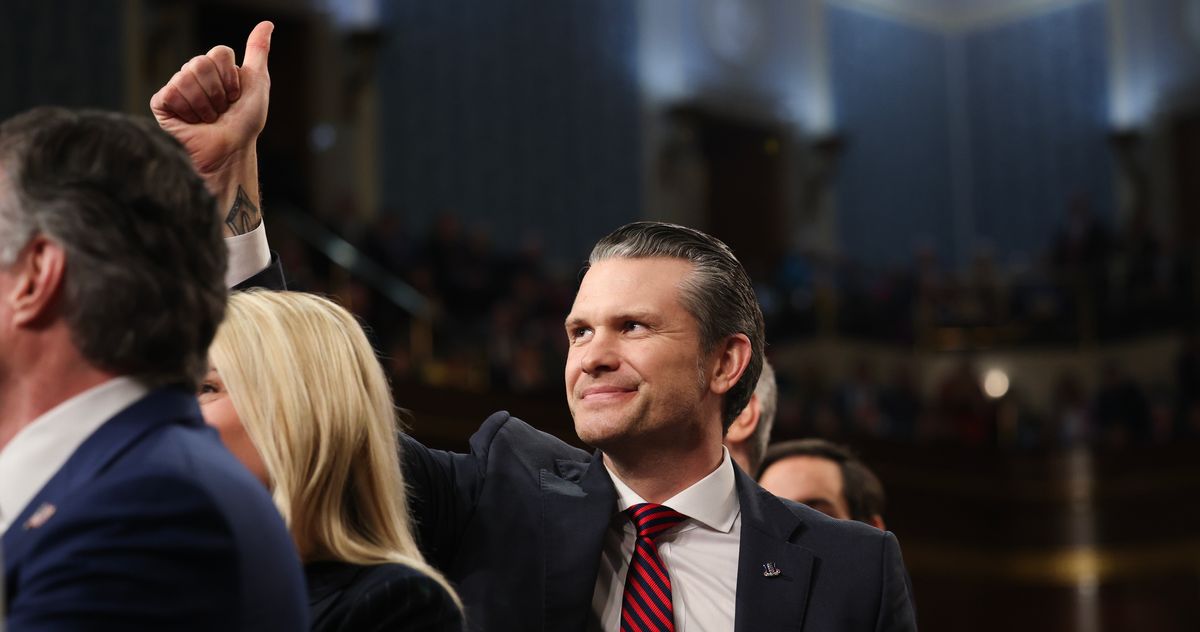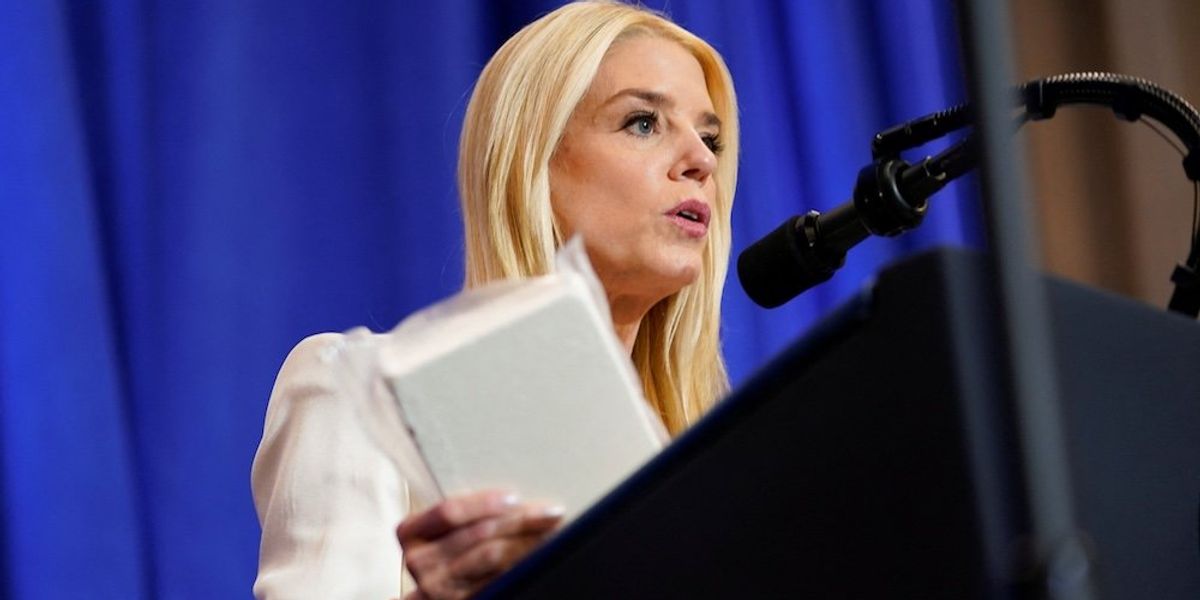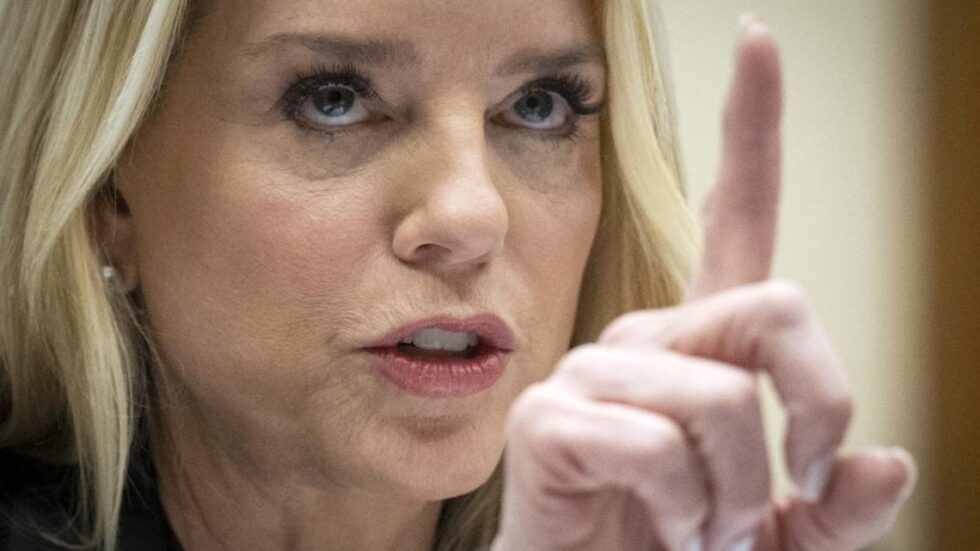
U.S. Attorney General Pam Bondi testifies before a House Judiciary Committee hearing on “Oversight of the Department of Justice” on Capitol Hill in Washington, DC, on Feb. 11. (Roberto Schmidt/AFP/Getty Images/TNS)
TNS
Clown show now well past its height
Last year I warned that when a clown visits the palace, he doesn’t become king; the palace becomes a circus.
A year later, the clown show of the Trump administration is on full display. The prime example was the shameful conduct of Pam Bondi before Congress. Her disrespect, incompetence, arrogance and contempt were clearly displayed.
Her clownish and pathetic attempts to avoid questions, deflect responsibility, protect the Dear Leader and insult and attack elected officials were worthy of the main attraction in a sad, toxic political circus.
Like her boss, Bondi has forgotten that she serves the people. Her refusal to even acknowledge the Epstein survivors in the gallery, preferring to protect the criminals instead of the victims, tells you all you need to know.
She, and the other cabinet clowns, serve only Trump, not the people.
Bondi’s disgraceful performance, followed by Kristi Noem’s recent deflections and denials of ICE atrocities, are just the opening acts of this historically corrupt and tyrannical clown show of an administration.
The latest sad example is that our president has detailed plans for the drapes in his horrendous new ballroom but offers no explanations or plans for attacking Iran. Bring in the clowns.
Reese Bang, Richland
Vote to bolster Pasco schools
Pasco schools have long been known for doing more with less. As both a former student and now a parent in the Pasco School District, I have seen that commitment firsthand.
When I was in second grade in the early 1990s, my classroom at McGee Elementary had 35 students. The school was packed. Today, my children’s elementary classes average closer to 22 students — a direct result of our community investing in school buildings and facilities over the past 30 years.
Now our community needs to renew the levy that helps keep our schools running. If the levy fails again, the district would lose roughly $50 million per year when state matching funds are included. Losses of that size cannot be replaced with fundraising or small budget cuts.
Those dollars support real things: teachers, para-educators and staff, school nurses, resource officers, and programs like sports and music that make school meaningful for many students.
I will be voting yes on the levy because our students and community deserve strong schools. I encourage neighbors to vote yes and return ballots early at a ballot drop box so votes are counted on time
Erin Kniveton, Pasco
Defense of a good vet
For nearly 50 years, Dr. Garritt “Hank” Wisse has served this region’s animal owners — both large and small — with the steady hands and surgical skill that only decades of experience can produce.
As a veterinarian trained at Washington State University, Dr. Wisse has dedicated his life to the health and well-being of animals across Franklin, Benton and surrounding counties. Recent headlines questioning his professionalism have deeply troubled those of us who know his work and character.
I don’t know the details of the recent case involving a seriously ill Rottweiler, but I do know the kind of veterinarian Dr. Wisse is. When faced with a catastrophic condition — where tissue death is already extensive — any surgeon must make painful but medically sound recommendations.
Dr. Wisse’s actions were not the result of neglect or incompetence, but the grim reality of a disease that often cannot be reversed. It’s easy, in grief, to seek someone to blame.
But those who have entrusted their animals to Dr. Wisse over the years know that he has always placed the welfare of his patients first. Veterinary medicine is not easy, it demands hard truths and humane realism. Dr. Wisse has always practiced both.
Chris Barnes, Kennewick
Overdose calls too much for area
I’m writing about the current state of our community regarding overdose calls.
Rural communities that can be found in Washington are termed as “treatment deserts” since they are areas where treatment is unavailable.
The addicts in these communities are more likely to end up in emergency departments, homeless shelters, or jails instead of getting the treatment that they need to overcome their addiction.
This not only harms families, but all Washington taxpayers. Without local services, addicts experience untreated medical conditions, repeated overdoses, and a lack of employment. This creates a vicious cycle that could be solved by providing access to treatment facilities.
If we want safer communities, we need to be putting our tax dollars to fund behavioral health programs, improve access to healthcare, transportation, and recovery facilities. This would help make the area safe and help those struggling with addiction to at least have the resources available should they choose to quit. Rebecca Cazier, Pasco