ISLAMABAD — The Iranian Revolutionary Guard Corps fired on at least two ships in the waters near Oman Saturday, shortly before Tehran declared the Strait of Hormuz was once again closed.
Two IRGC gunboats approached an Indian-flagged tanker about 20 nautical miles northeast of the Gulf country around 1 p.m. local time — and opened fire unprovoked, the tanker’s master reported, according to the United Kingdom Maritime Trade Organization.
Soon after, another Indian-flagged container ship in the same area was hit by an “unknown projectile,” which reportedly caused damage to some of the containers.
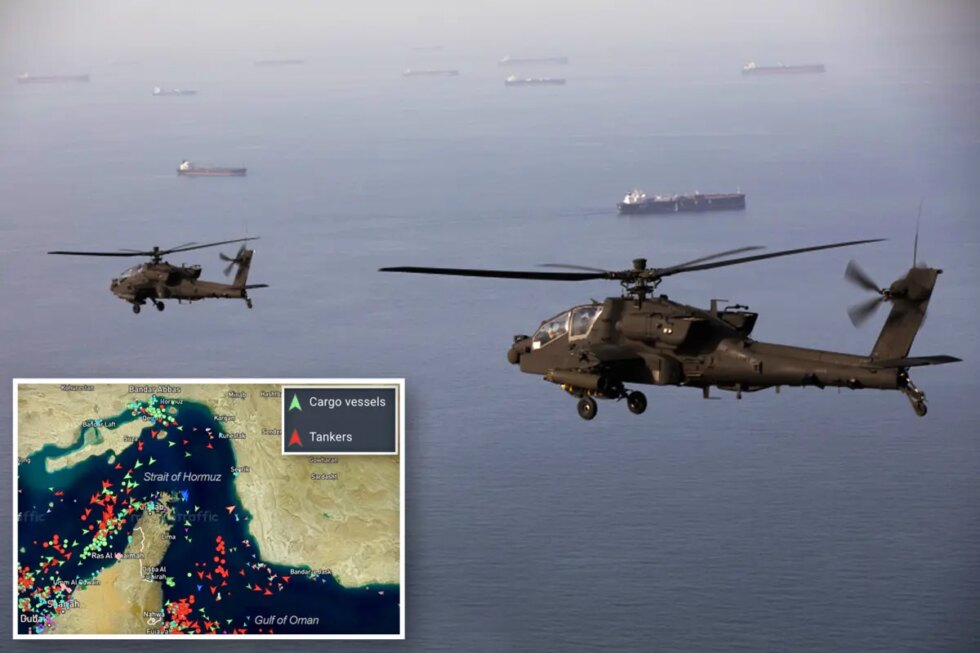
AH-64 Apaches fly above the Strait of Hormuz during a patrol on Friday, April 17, 2026. X / US Central Command
The UKMTO said the incident is under investigation.
The attacks came as the US was weighing plans to board and seize Tehran-linked oil tankers worldwide in an effort to choke Iran’s economy, The Wall Street Journal reported.
Behind the scenes, US officials say the Pentagon is preparing to intercept and take control of commercial vessels tied to Iran — potentially far beyond the Middle East, the outlet reported.
The strategy is aimed at squeezing Tehran’s economy — with the hope it forces the Iranian regime to reopen the strait and bend in nuclear talks, according to the report.
But the acts of aggression on Saturday led numerous ships to back out of the strait, tracking data from Marine Traffic shows.A third commercial ship also reported a “splash” 3 nautical miles east of Oman, though it did not sustain any damage, according to the UKMTO.
A marine map shows traffic in the Strait of Hormuz on Saturday, April 18, 2026.
Littoral combat ship USS Canberra (LCS 30) patrols the Arabian Sea during the US blockade on April 18, 2026. X / US Central Command
One of the Indian ships was transporting $2 million barrels of Iraqi oil and was forced to turn around, prompting India to urge Tehran to restore safe passage.
It’s unclear why Indian-flagged ships were targeted when the Iranian regime had previously granted passage through the strait to New Delhi vessels.
The attacks prompted India to summon the Iranian ambassador to express its “deep concern” and urge Tehran to immediately restore travel through the vital waterway.
Tankers are anchored in the Strait of Hormuz on April 18, 2026. AP
Hours later, the IRGC Navy claimed it had closed the strait in an effort to strong-arm the US into lifting its ongoing naval blockade on Iranian ports and ships.
The IRGC said it extended the strait’s closure to the narrow corridor it had earlier designated for safe passage and threatened to target any ships that continued to sail through.
A regional intelligence official confirmed the measure, telling Fox News the Strait of Hormuz is “under full IRGC control and effectively closed at this moment.”
US Army Soldiers are flying in and around the Strait of Hormuz, providing a visible presence in support of freedom of navigation. X / US Central Command
“Multiple vessels have been forced to turn around since this morning as they attempted to pass through the Strait,” the official said.
A maritime map also showed that travel had largely come to standstill by Saturday evening.
However, vessels willing to pay a toll to Tehran were being prioritized to pass through the waterway as part of new protocols, a senior Iranian official told CNN on Saturday.
The Malta-flagged tanker Agios Fanourios I, an oil tanker that sailed through the Strait of Hormuz, arrives in Iraq’s territorial waters off Basra, Iraq, on April 17, 2026. REUTERS
A drone view shows the Malta-flagged tanker Agios Fanourios I arriving in Iraq’s territorial waters off Basra, Iraq, on April 17, 2026. REUTERS
Vessels that do not pay the fees will have their passage “postponed,” the official continued, saying the new measure was part of Tehran’s efforts to manage maritime traffic.
US Central Command did not address the apparent closure or immediately respond to The Post’s questions regarding whether the Navy would respond, but shared images Saturday in a post on X of its patrolling helicopters and vessels “in and around the strait” providing a visible presence in support of freedom of navigation.
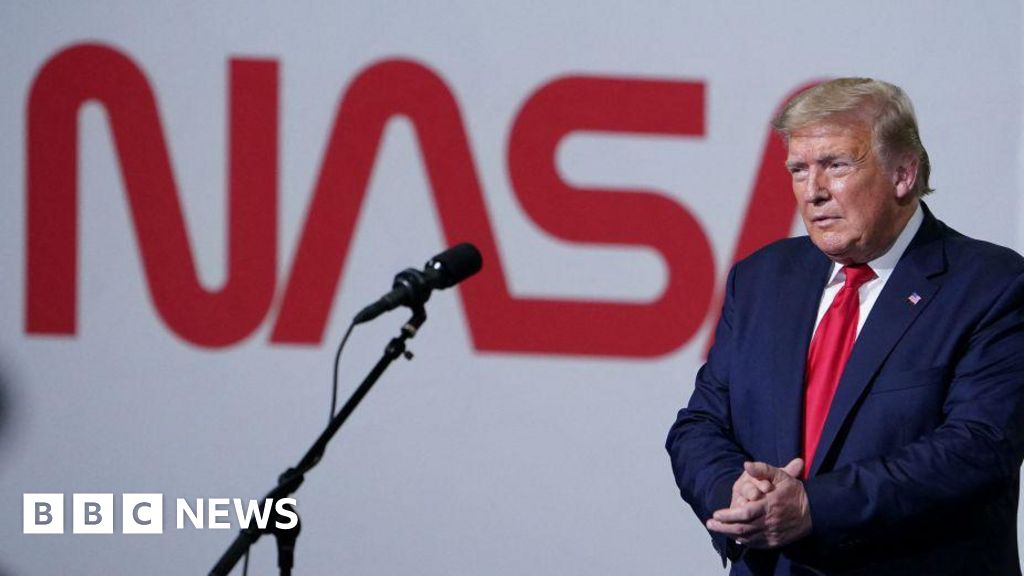
President Trump, meanwhile, accused Iran of trying to “get cute” while warning the regime “can’t blackmail us.”
Speaking from the White House during an unrelated press conference, Trump did not confirm the strait’s closure outright but acknowledged Tehran’s repeated threats to shut it down — while delivering a scathing assessment of Iran’s military and leadership.
“American forces are enforcing a maritime blockade against ships entering or exiting Iranian ports and coastal areas,” said the combatant command overseeing military options in the Middle East. X / US Central Command
A vessel is pictured at the Strait of Hormuz, off the coast of Oman’s Musandam province, on April 12, 2026. REUTERS
“They wanted to close up the strait again, as they’ve been doing for years,” Trump said. “They can’t blackmail us.”
He paired that warning with an unexpectedly upbeat readout on diplomacy, saying talks were advancing despite the violence at sea.
“We have very good conversations going on. It’s working out very well,” he said.
Start your day with all you need to know
Morning Report delivers the latest news, videos, photos and more.
Thanks for signing up!
“They got a little cute, as they have been doing for 47 years. Nobody ever took them on — we took them on.”
Trump also downplayed the long-term impact of any disruption to the strait, arguing global shipping has already begun adjusting routes.
“In fact, a lot of the ships are coming up to Texas … in Louisiana,” he said. “They got used to it. Maybe they’ll keep doing it.”
The attack comes after Iran again claimed to be closing the Strait after reopening it on Friday. via REUTERS
Saturday’s developments mark a dangerous turn in an already volatile standoff – and weeks of mounting maritime violence – over one of the world’s most critical shipping chokepoints, through which roughly a fifth of global oil supplies typically pass.
Iran claimed on Friday it had reopened the strait, while simultaneously warning it would shut it again in response to the US continuing its naval blockade.
The Guard has warned it would target any ship attempting to move through the Strait without permission. Getty Images
The US blockade, launched earlier this week after diplomatic talks faltered, has put American and Iranian forces on a collision course, with American warships shadowing tankers and Tehran insisting it now controls which vessels can safely pass.
CENTCOM said US forces had turned away 23 ships during the five-day blockade in a post on X.
The latest violence underscores how fragile the situation remains, even as backchannel diplomacy — including talks involving Pakistani intermediaries — continues in hopes of preventing a broader regional war.
Pakistani mediators have been working to bring the US and Iran together soon for a second round of talks, but arrangements remain in flux and neither side has formally committed.