Table of Contents
Table of Contents
Ask Anything
Top Questions
What was the Department of Government Efficiency?
What was the Department of Government Efficiency?
What were the goals of the Department of Government Efficiency?
What were the goals of the Department of Government Efficiency?
Was the Department of Government Efficiency a cabinet-level department?
Was the Department of Government Efficiency a cabinet-level department?
Department of Government Efficiency (DOGE), U.S. federal department that was formerly called the United States Digital Service (USDS). On January 20, 2025, U.S. Pres. Donald Trump issued an executive order that reorganized the USDS and changed its name to the United States DOGE Service; DOGE stood for Department of Government Efficiency. The order also created the U.S. DOGE Service Temporary Organization (USDSTO), which was tasked with implementing Trump’s DOGE agenda. According to the executive order, the goal of DOGE was to “moderniz[e] Federal technology and software to maximize governmental efficiency and productivity.” DOGE was not a cabinet-level department, and the USDSTO was scheduled to end on July 4, 2026. However, in November 2025 it was announced that DOGE no longer existed and that the Office of Personnel Management had assumed most of the agency’s tasks.
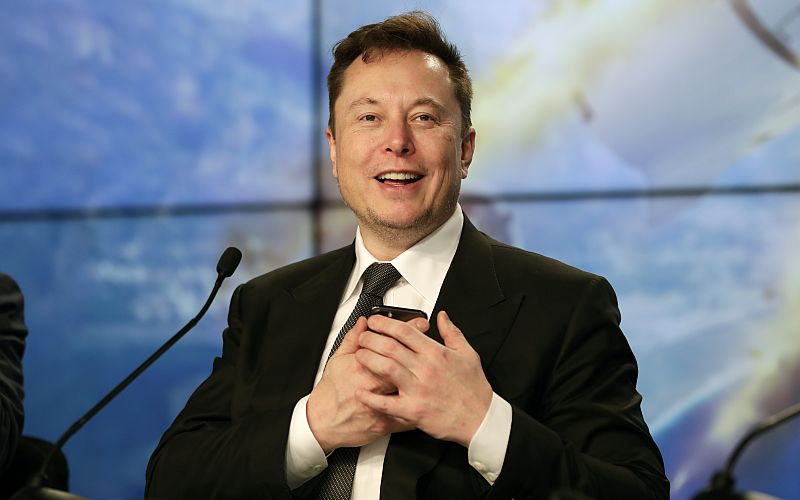
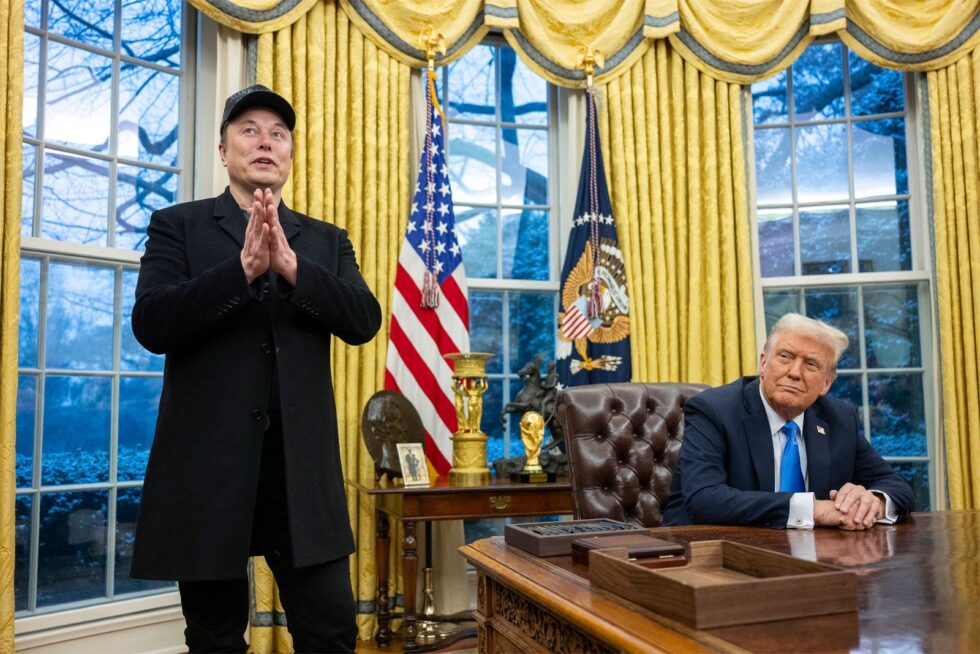
Both the United States DOGE Service and its temporary organization were headed by acting administrator Amy Gleason. However, Elon Musk was widely seen as the driving force behind DOGE until April 2025, when it was announced that he was cutting back his work with DOGE. The following month Musk said that his time as a government employee had ended.
Background and creation of DOGE
Did You Know?
DOGE is thought to be a reference to Dogecoin, a cryptocurrency favored by Musk.
The idea for DOGE was first floated during the 2024 presidential election when Musk suggested an audit of the federal government. The proposal was embraced by Trump, then the Republican nominee. After winning in November, Trump announced that he planned on creating DOGE, which would be headed by Musk and Vivek Ramaswamy; however, Ramaswamy ultimately opted not to participate. According to Trump, the new agency would help “dismantle Government Bureaucracy, slash excess regulations, cut wasteful expenditures, and restructure Federal Agencies.” Musk later claimed that through DOGE he hoped to cut $2 trillion from the federal budget. However, he soon lowered that number to $1 trillion.
On his first day in office, Trump signed the executive order that transformed the USDS—which had been created in 2014 to help federal agencies with digital services—into DOGE. Critics questioned DOGE’s lack of transparency, particularly the manner in which the department sought to withhold the names of staff members, most of whom, including Musk, were classified as “special government employees”; that designation is for temporary hires who are excluded from certain ethics and conflict of interest rules. In addition, Trump’s administration later classified DOGE documents as presidential records, which would prevent public access to the information until at least 2034. A White House spokesperson insisted that these actions were necessary to achieve DOGE’s goals.
Activities and legal issues
Immediately after the department’s creation, DOGE employees began accessing government agencies with the stated goals of cutting costs and halting what Musk and Trump have identified as left-wing policies. Musk warned of massive layoffs and the potential closure of certain agencies and departments. On January 28, 2025, more than two million government employees were emailed a deferred resignation offer. It stated that they would not have to return to their offices if they resigned at the end of September 2025. (The subject line of the email, “Fork in the Road,” was the same as one used in an email Musk sent in 2022, offering resignation to Twitter employees shortly after he took over the service.)
The first organization that faced the chopping block was the United States Agency for International Development (USAID), which was involved in development and humanitarian efforts around the world. Trump and his supporters had been critical of foreign aid, and Musk alleged, without evidence, that the agency was “a criminal organization.” Supporters of USAID noted that it was a vital tool of U.S. soft power. The agency officially closed on July 1, 2025.
In late January 2025, DOGE was granted access to the Department of the Treasury’s payment system, which distributes trillions of dollars to government agencies as well as millions of Americans every year. Opponents cited privacy issues and expressed concerns that the Trump administration could halt payments, even those approved by Congress. The move sparked lawsuits—as did most of DOGE’s activities.
Smart, reliable knowledge for professionals, students, and curious minds everywhere.
SUBSCRIBE



In a civil case involving DOGE’s access to the Treasury’s sensitive data, a federal judge questioned the constitutionality of DOGE. She noted that heads of federal agencies need to be nominated and then confirmed by the Senate. Musk met neither requirement, and government lawyers were unable to name the official administrator. Shortly thereafter, in late February 2025, a White House official stated that Amy Gleason was the acting administrator of the department. She had previously worked at the USDS. However, according to White House Press Secretary Karoline Leavitt, Musk continued to oversee the department.
By mid-April 2025 DOGE had made notable cuts to the federal workforce. Some 76,000 employees had accepted the buyout offer, and more than 55,000 positions had been eliminated, though many of those were being challenged in the courts. However, DOGE was far short of its goal of $1 trillion in cuts. In April, Musk announced expected savings of $150 billion for the year, which was outlined in the “Wall of Receipts”, an online ledger. However, the site contained errors, such as listing canceled contracts that had actually been terminated under previous presidents. Many observers believed that DOGE’s savings would ultimately be lower than projected.
Falling popularity and closure
During this time, DOGE and Musk faced declining popularity with the public. While many supported the elimination of wasteful government spending, the majority of Americans opposed how DOGE was operating. One notable complaint was that the department moved too quickly. It often made cuts that, after closer examination, were rescinded. For example, DOGE fired hundreds of nuclear weapons workers, who they later hired back. As the face of the department, Musk drew particular ire. Across the country, protests were held at Tesla dealerships (Musk is CEO of the car company), and the value of Tesla stock dropped by more than 40 percent. In addition, the company’s net income in the first quarter of 2025 was down by 71 percent. While there were various reasons behind the decline, the opposition to Musk was considered a key factor. In late April, Musk announced that he would be spending less time at DOGE, and the following month he left the Trump administration.
In November 2025 Scott Kupor, director of the Office of Personnel Management (OPM), stated that DOGE “doesn’t exist.” However, he later took to social media to write that “the principles of DOGE remain alive and well: de-regulation; eliminating fraud, waste and abuse; re-shaping the federal workforce; making efficiency a first-class citizen.” The actually cost of DOGE was disputed. While it claimed to have saved taxpayers more than $200 million, some sources estimated that the agency actually cost Americans billions of dollars.