This article may contain commentary
which reflects the author’s opinion.
The U.S. Supreme Court issued a 5-4 decision to affirm a California law on animal welfare enacted by state voters, mandating that all pork sold within the state adhere to specific humane standards. In 2018, California voters approved a measure that enhanced spatial requirements for egg-laying hens, breeding pigs, and calves raised for veal sold by businesses within the state.
The National Pork Producers Council and the American Farm Bureau Federation sought to impede the law, arguing that it contravenes the Constitution by necessitating a transformation of the industry, predominantly situated outside California.
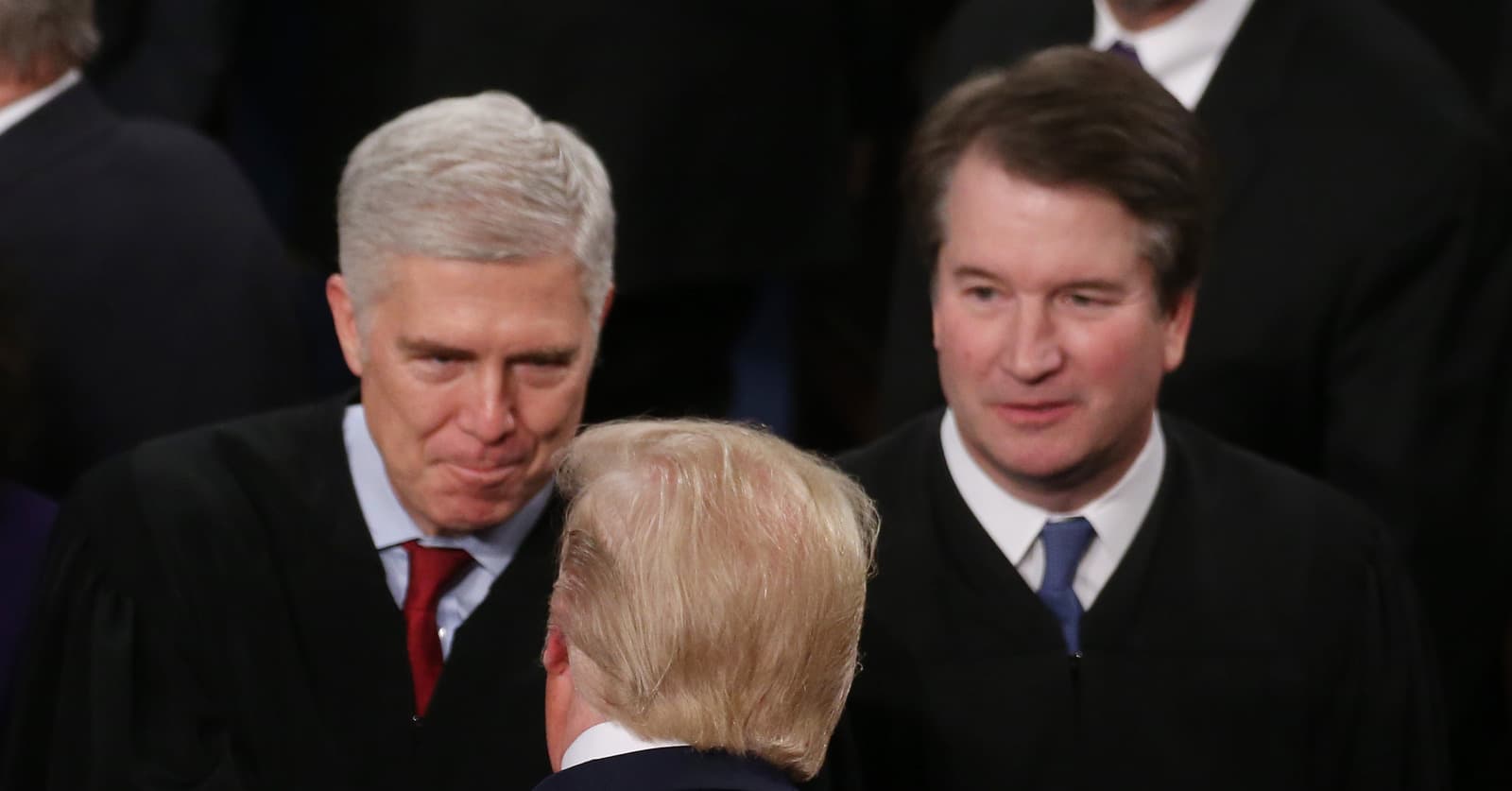
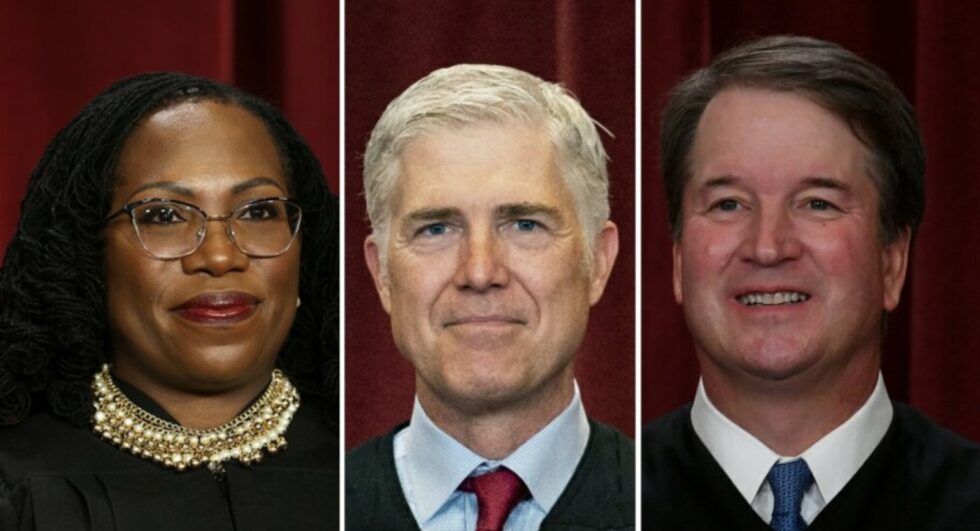
The Supreme Court, in a 5-4 ruling authored by Justice Neil Gorsuch, dismissed the challenge.
Advertisement
“Although the Constitution encompasses numerous significant matters, the specific variety of pork chops that California merchants are permitted to sell is not among them,” Gorsuch stated.“Petitioners urge us to prioritize audacity over prudence.”
“They have consistently failed to convince Congress to exercise its explicit Commerce Clause authority to establish a uniform regulation for pork production,” Gorsuch continued. They reject any dependence on this Court’s fundamental dormant Commerce Clause principles concerning discriminatory state legislation. Petitioners urge us to adopt two novel theories of implied judicial authority.
Following the lower courts’ support for the state, the justices consented to review the group’s appeal to ascertain whether the law contravenes the dormant Commerce Clause, which stipulates that, due to the Constitution’s delegation of authority to Congress to regulate interstate commerce, individual states are prohibited from enacting laws that discriminate against other states in commercial activities.
Advertisement
The pork industry acknowledged that Proposition 12 did not exhibit bias against other states.
The nation’s highest court has been active this week.
The Supreme Court struck down Louisiana’s congressional map on Wednesday and sharply limited the use of race in drawing district boundaries in a major ruling that could carry significant consequences for future House elections.
Advertisement
Louisiana had been ordered by lower courts to create a second majority-Black congressional district in 2024 to comply with Section 2 of the 1965 Voting Rights Act, which bars states from diluting minority voting strength.
The Trump administration and state officials challenged the revised map, arguing it amounted to an unconstitutional racial gerrymander in violation of the 14th Amendment, which guarantees equal protection under the law.
About one-third of Louisiana’s residents are African American, and the state’s only two Democratic lawmakers in Congress (compared to four House Republicans) were elected from majority-black districts.
The justices initially addressed the Louisiana map case during the 2024-25 term. In an unusual move, they ordered both sides to restate their arguments to consider the implications of both the 14th and 15th Amendments. The 15th Amendment, in particular, prohibits states from denying citizens equal protection under the law or restricting their rights based on race.
The decision was widely interpreted as a signal that the Supreme Court was preparing to weaken Section 2 of the Voting Rights Act.
The ruling carries immense weight, with two prominent voting rights organizations noting earlier that the removal or restriction of Section 2 will likely empower Republican-led legislatures to change the boundaries of as many as 19 congressional districts to their advantage, in order to comply with the court.
This would enable mapmakers to emphasize Republican strengths.
Voting rights organizations aligned with the Democratic Party already warned that the removal or restriction of Section 2 could empower Republican-led legislatures to change the boundaries of as many as 19 congressional districts to their advantage.
Fair Fight Action and the Black Voters Matter Fund argue that if Section 2 of the Voting Rights Act is invalidated, it could significantly increase the likelihood that Republicans will maintain control of the House of Representatives for years.
Research has identified 27 congressional seats nationwide that Republicans could benefit from if the current legal and political landscape remains unchanged.
The SCOTUS ruling will prompt many states to redraw maps ahead of November’s elections.