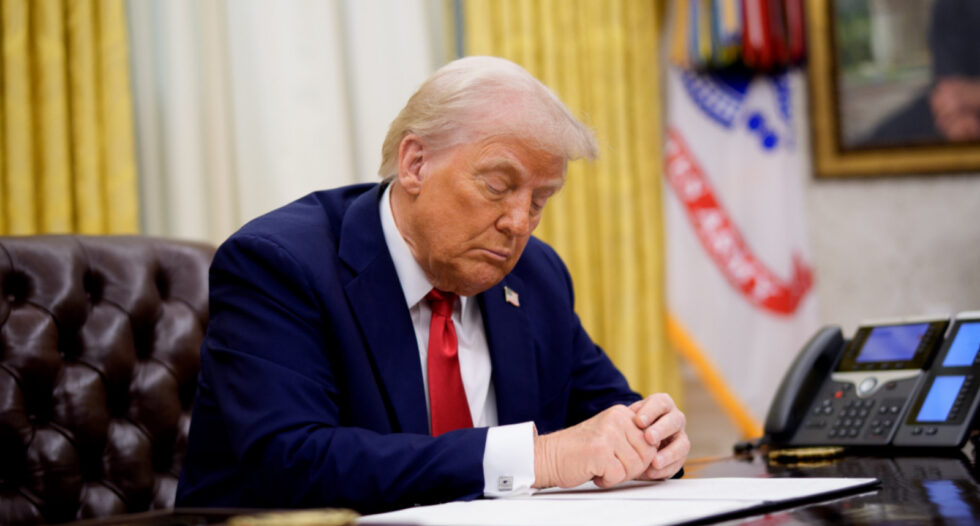
President Donald Trump stated that the ceasefire arrangement with Iran is “on life support,” just days after he rejected a proposal from the country to halt the war.
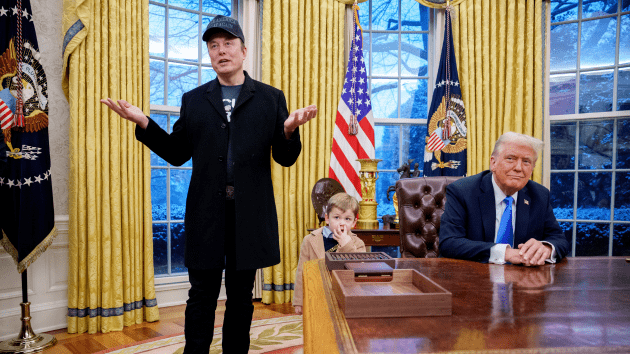
Trump, questioned about the state of the truce, spoke to reporters inside the Oval Office and delivered some brutally honest words about the state of affairs.
Advertisement
“It’s unbelievably weak,” Trump said. “I would call it the weakest right now, after reading that piece of garbage they sent us. I didn’t even finish reading it. I said, ‘I’m not going to waste my time reading it.’ The ceasefire is on life support.”
Ayatollah Mojtaba Khamenei, Iran’s Supreme Leader, issued a statement in which he lauded the Iranian people for their “heroic action” in the face of two “terrorist global armies.”
The message, purportedly from Khamenei, was disseminated by Iranian state media outlets to commemorate the second anniversary of the death of Ebrahim Raisi, the nation’s former President, who was killed in a helicopter accident in May 2024.
The statement stated that the Iranian nation is currently engaged in a unique historical resistance against two “terrorist global armies” through valiant actions.
Advertisement
After his father, who had ruled Iran for 36 years, was killed in a U.S. or Israeli airstrike on Feb. 28, the first day of the conflict, Khamenei was appointed as the new supreme leader of Iran.
Since that time, no one has directly observed or communicated with the junior Khamenei. According to U.S. officials, he is believed to be alive; however, he sustained grievous injuries during the same strike that claimed his father’s life.
Presenters on Iranian state media have read out numerous statements attributed to the new supreme leader during the conflict.
According to Iran’s state news outlets, Pakistani Interior Minister and Senator Syed Mohsin Reza Naqvi arrived in Tehran on Wednesday to participate in meetings as Islamabad continues to advocate for a peace agreement to conclude the U.S.-Israeli conflict with Iran.
Although the reports did not specify which Iranian officials Naqvi would encounter in Tehran, diplomatic sources informed CBS News that his visit, which was the second in less than a week, was part of Pakistan’s heightened efforts to facilitate a peace agreement amid the increasing tension between the United States and Iran.
“Pakistan has doubled its efforts to find a solution,” a senior Pakistani diplomat told CBS News, adding that Islamabad understood frustrations, “but restarting war would be a total disaster for everyone.”
Advertisement
President Trump said Monday that he had called off plans to launch new strikes on Iran at the request of several Persian Gulf allies, which he said had informed him “serious negotiations are now taking place” toward a deal to end the war.
On Tuesday, Pakistan’s Foreign Ministry said the country’s ambassador-designate to Iran, Imran Ahmed Siddiqui, met with Foreign Minister Mohammad Ishaq Dar ahead of Siddiqui’s departure to Tehran to take up his post.
Dar “highlighted Pakistan’s constructive and responsible role in promoting regional peace, dialogue, and stability, and expressed confidence that the Ambassador-designate would make a valuable contribution towards further strengthening the enduring partnership between the two brotherly countries,” the ministry said in its statement.
Iran’s Islamic Revolutionary Guard Corps warned that any renewed U.S. or Israeli attacks would be met with retaliation “beyond the region.”
In a statement, the IRGC said it still had not brought “all the capacities” of the country “into action.”
Advertisement
“But if aggression against Iran is repeated, the regional war that had been warned of will this time spread beyond the region, and our crushing blows will bring you to ruin in places you cannot even imagine,” the statement said.
“We are men of war, and you will witness our power on the battlefield,” the IRGC added, “not in hollow statements or on social media pages.”
President Trump told reporters on Tuesday that he had been just “an hour away” from ordering new strikes on Iran Monday evening, but that he decided against it after a request from several Persian Gulf allies, who he said were voicing optimism that a peace deal could be reached.
Trump warned, however, that if an agreement isn’t made, he could order a major wave of new strikes “on a moment’s notice.”
This article may contain commentary
which reflects the author’s opinion.