Federal prosecutors have indicted two people who used artificial intelligence to make nude movies and images of female celebrities under new legislation that seeks to curb the spread of deepfake pornography.
Cornelius Shannon, 51, and Arturo Hernandez, 20, were identified in criminal papers as both being arrested on Tuesday for creating sexually obscene AI content that had millions of views online.
Advertisement
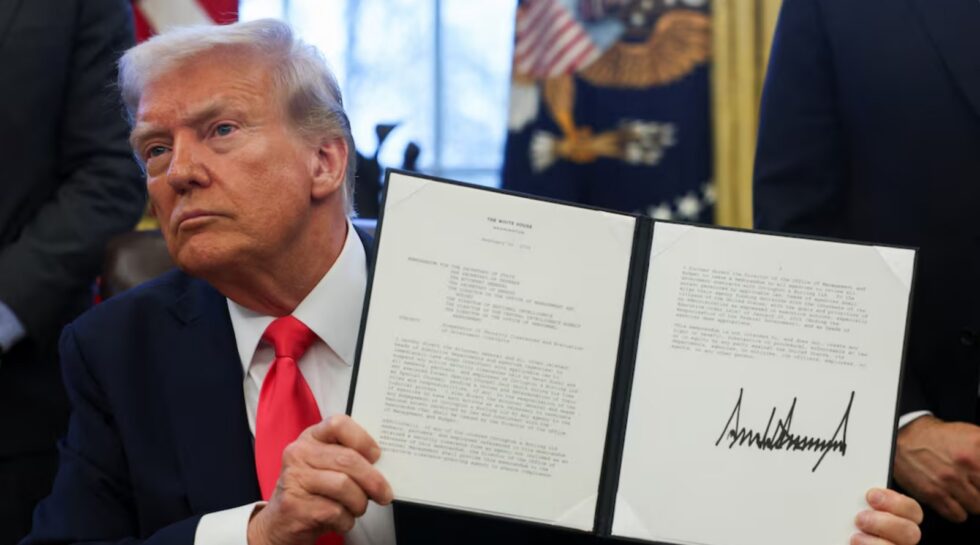
The individuals — who don’t seem to be affiliated with each other — are among the first defendants to face charges under the Take It Down Act, a bill enacted last year by President Donald Trump that imposes tougher penalties for publishing AI-generated deepfakes and “revenge porn.”
The bill had support from both parties and the backing of First Lady Melania Trump.
Under the new law, the men now face up to two years in prison.
In a statement, Joseph Nocella, the U.S. attorney in Brooklyn, said the men had ”used cutting-edge digital technology to create images that degraded and violated” dozens of women.
“This case makes clear that posting deepfake pornography is not a victimless crime,” he added.
Advertisement
Shannon, a resident of New Jersey, published at least 240 albums of AI-generated pornography featuring female politicians, musicians, and singers, according to the complaint.
Prosecutors said Hernandez, of Texas, posted the deepfakes of both celebrities and private ladies, including recent high school grads.
The charges come amid concern about the spread of sexualized fakes online, sometimes with kids, created by more advanced AI algorithms.
In Ohio last month, a man became the first person convicted under the Take It Down Act when he pleaded guilty to utilizing AI to manufacture child sexual assault material.
Two adolescent lads were placed on probation in March for making explicit AI photos of their peers at an exclusive private school in Pennsylvania.
In a separate lawsuit filed earlier this year, three teens in Tennessee sued Elon Musk’s xAI, alleging the company’s Grok tools turned their genuine photos into sexually explicit images.
High school students seek class-action status to represent what the lawsuit says are thousands of others who were similarly affected as minors.
Last year, President Trump signed the bipartisan legislation, which imposes harsher penalties for the sharing of non-consensual intimate pictures commonly labeled “revenge porn,” as well as deepfakes generated by artificial intelligence.
Texas GOP Sen. Ted Cruz and Minnesota Democratic Sen. Amy Klobuchar co-sponsored the legislation, and First Lady Melania Trump later supported it.
Meta, which owns and operates Facebook and Instagram, supports the legislation.
The Information Technology and Innovation Foundation, a tech industry-supported think tank, said in a statement following the bill’s passage last month that it “is an important step forward that will help people pursue justice when they are victims of non-consensual intimate imagery, including deepfake images generated using AI.”
“We must provide victims of online abuse with the legal protections they need when intimate images are shared without their consent, especially now that deepfakes are creating horrifying new opportunities for abuse,” Klobuchar said in a statement.
“These images can ruin lives and reputations, but now that our bipartisan legislation is becoming law, victims will be able to have this material removed from social media platforms, and law enforcement can hold perpetrators accountable,” Klobuchar added.
Klobuchar called the law’s passage a “major victory for victims of online abuse” and said it gives people “legal protections and tools for when their intimate images, including deepfakes, are shared without their consent, and enables law enforcement to hold perpetrators accountable.”
“This is also a landmark move towards establishing common-sense rules of the road around social media and AI,” she added.
Cruz said, “Predators who weaponize new technology to post this exploitative filth will now rightfully face criminal consequences, and Big Tech will no longer be allowed to turn a blind eye to the spread of this vile material.”
This article may contain commentary which reflects the author’s opinion.