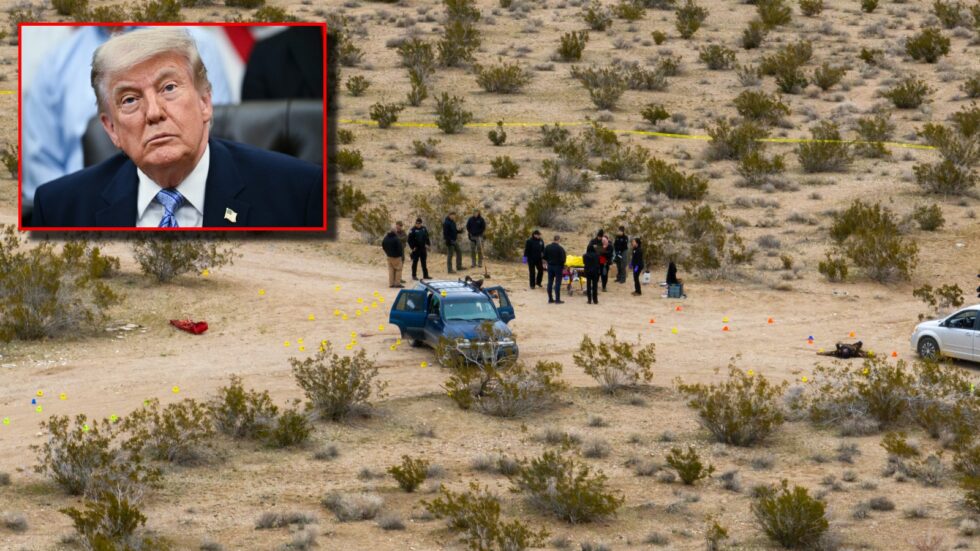
The family of a federal laboratory employee whose remains were found in a remote New Mexico national forest a year after her disappearance is disputing investigators’ conclusion that her death was self-inflicted, insisting that key questions remain unanswered and suggesting foul play may have been involved.
Melissa Casias, 54, was reported missing on June 26, 2025, after disappearing from Taos, New Mexico.
Advertisement
According to relatives, Casias failed to report to work that day, made a stop at her daughter’s residence, and then seemingly vanished without a trace.
As authorities worked to reconstruct her final movements, investigators reportedly discovered circumstances that family members say are inconsistent with a voluntary disappearance.
Among the factors raising concern were personal belongings and other items that relatives contend Casias would not have willingly left behind.
Those details have fueled ongoing skepticism among family members, who continue to question the official narrative and argue that additional investigation may be warranted into the events surrounding her disappearance and death.
Her purse, driver’s license, and multiple cellphones were all recovered, but none of them were on her person.
Advertisement
The case took a tragic turn over the weekend when a hiker discovered human remains in the McGaffey Ridge area of Carson National Forest.
New Mexico State Police later confirmed on Saturday that the remains belonged to Casias.
According to authorities, a handgun was found near the location where her body was recovered, a detail that has drawn significant attention as investigators work to determine exactly what happened.
Despite the discovery, many questions remain unresolved.
As of Thursday morning, officials had not publicly released a final determination regarding either the cause of death or the manner of death, leaving the investigation open and fueling continued speculation among family members and community observers, said reports.
The case attracted the attention of both the FBI and the House Oversight Committee, which have been examining whether there may be connections among several high-profile disappearances and deaths involving individuals connected to sensitive scientific and defense-related work.
In April, the House Oversight Committee sent a letter to FBI Director Kash Patel outlining concerns about what lawmakers described as a pattern of mysterious incidents.
President Trump, however, has said the cases are not connected.
The discovery of Casias swiftly prompted a strong reaction from her extended family.
Relatives on her parents’ side took to Facebook to highlight a concerning detail: the specific area where her body was found had already been searched previously.
The family members also mentioned a “mound of evidence” related to the case, although no specific details about this evidence had been made public at the time of reporting.
Thomas McNally, an Arizona-based private investigator retained by the Casias family, was blunt with his assessment.
“You don’t need to be a hunter, a scientist or a cop to know that a human body is not going to be left out in the elements and be undisturbed a year later,” he told Fox News Digital.
McNally acknowledged that Casias regularly carried a concealed firearm.
However, he refrained from making any conclusions about the weapon found near her remains, stating that he had no information regarding its caliber or the condition it was in when discovered.
He was equally straightforward in distinguishing Casias from a number of other government laboratory workers who have made headlines in recent months for going missing under mysterious circumstances.
Casias, he emphasized, was not a scientist—she worked in administration. Her daily responsibilities were far removed from sensitive research.
According to McNally, her duties included scheduling maintenance for government vehicles at off-site locations.
Casias was employed at Los Alamos National Laboratory, one of the nation’s premier federal research facilities located roughly 35 miles northwest of Santa Fe, New Mexico.
This article may contain commentary which reflects the author’s opinion.