The Justice Department said Thursday that it plans to intervene in a lawsuit brought by an order of Catholic nuns challenging a New York law that they argue could require nursing homes to place biological males who identify as female in accommodations with female residents.
The department announced its support for the Dominican Sisters of Hawthorne, a nonprofit religious organization that operates Rosary Hill Home, a nursing facility founded more than 125 years ago.
Advertisement
The lawsuit challenges a 2024 New York law that prohibits discrimination based on “actual or perceived sexual orientation, gender identity or expression, or HIV status.”
The religious order contends that the law conflicts with its religious beliefs and mission.
The department’s Complaint-in-Intervention alleges that the law violates the Fourteenth Amendment’s Equal Protection Clause by “requiring religious facilities to meet requirements that violate religious beliefs, while excusing non-religious facilities from those same requirements.”
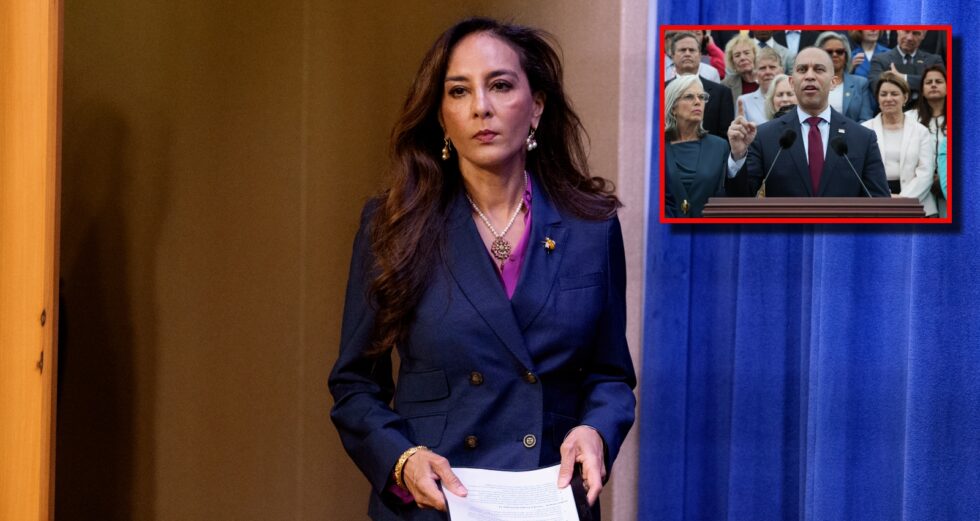
U.S. Assistant Attorney General Harmeet Dhillon said states “should take notice that they cannot require Americans to abandon their religious beliefs in the name of woke gender ideology.”
Advertisement
“For more than a century, the Dominican Sisters of Hawthorne have provided free palliative care to indigent cancer patients in their last days,” she said in a statement published by the Washington Times.
“New York’s law would force these religious women to choose between their faith and their license if they wish to continue serving the dying,” she added.
According to the lawsuit, the New York law is enforced by the state’s Department of Health and requires nursing homes to house residents and provide access to bathrooms based on a person’s gender identity.
The complaint alleges that facilities must also use residents’ preferred pronouns, regardless of whether the individual is present.
The lawsuit further claims that state training materials instruct nursing homes to foster environments that affirm residents’ sexual orientation and gender identity.
According to the complaint, the guidance also directs facilities to accommodate residents’ requests for extramarital relationships unless such conduct is prohibited under a facility-wide policy, the Times reported.
Nursing homes that fail to meet those requirements face fines of up to $2,000 for the first violation and up to $5,000 for repeat violations, said the outlet.
Facilities engaging in “willful violations” of public health law may be penalized with fines of up to $10,000 or one year in prison, or both, it said.
The DOJ, meanwhile, argued that “Catholic teaching holds that biological sex is God-given and cannot be morally changed, and that identifying a person by another sex is religiously prohibited lying.”
“Consistent with that teaching, Rosary Hill houses patients in single-sex rooms based on patients’ biological sex, refers to patients by pronouns reflecting their biological sex, and performs ‘very personal acts of care such as painting women’s fingernails, combing their hair, changing them into fresh nightgowns, and arranging flowers in their rooms,’” said the department in its statement.
Dhillon has had her hands full since taking on her role.
In April, the assistant AG told Maria Bartiromo on “Sunday Morning Futures” that federal officials found tens of thousands of dead people and noncitizens on voting rolls.
The Trump administration has sued several states for not giving the Department of Justice voter rolls. The DOJ is trying to make sure that the National Voter Registration Act, the Help America Vote Act, and other federal laws that protect the right to vote are followed.
Dhillon told Bartiromo that even in states attempting to adhere to the rules, they still discovered issues regarding voter eligibility.
“States are not in compliance, even those ones who want to,” she said.
“So, for the ones that we’ve run so far — 60 million records that we’ve run — we found at least 350,000 dead people currently on the voter rolls in those jurisdictions, and we’ve referred approximately 25,000 people with no citizenship records to [the Department of] Homeland Security to look at, you know, dig into that further and see the extent to which people voted,” she told Bartiromo.
This article may contain commentary which reflects the author’s opinion.