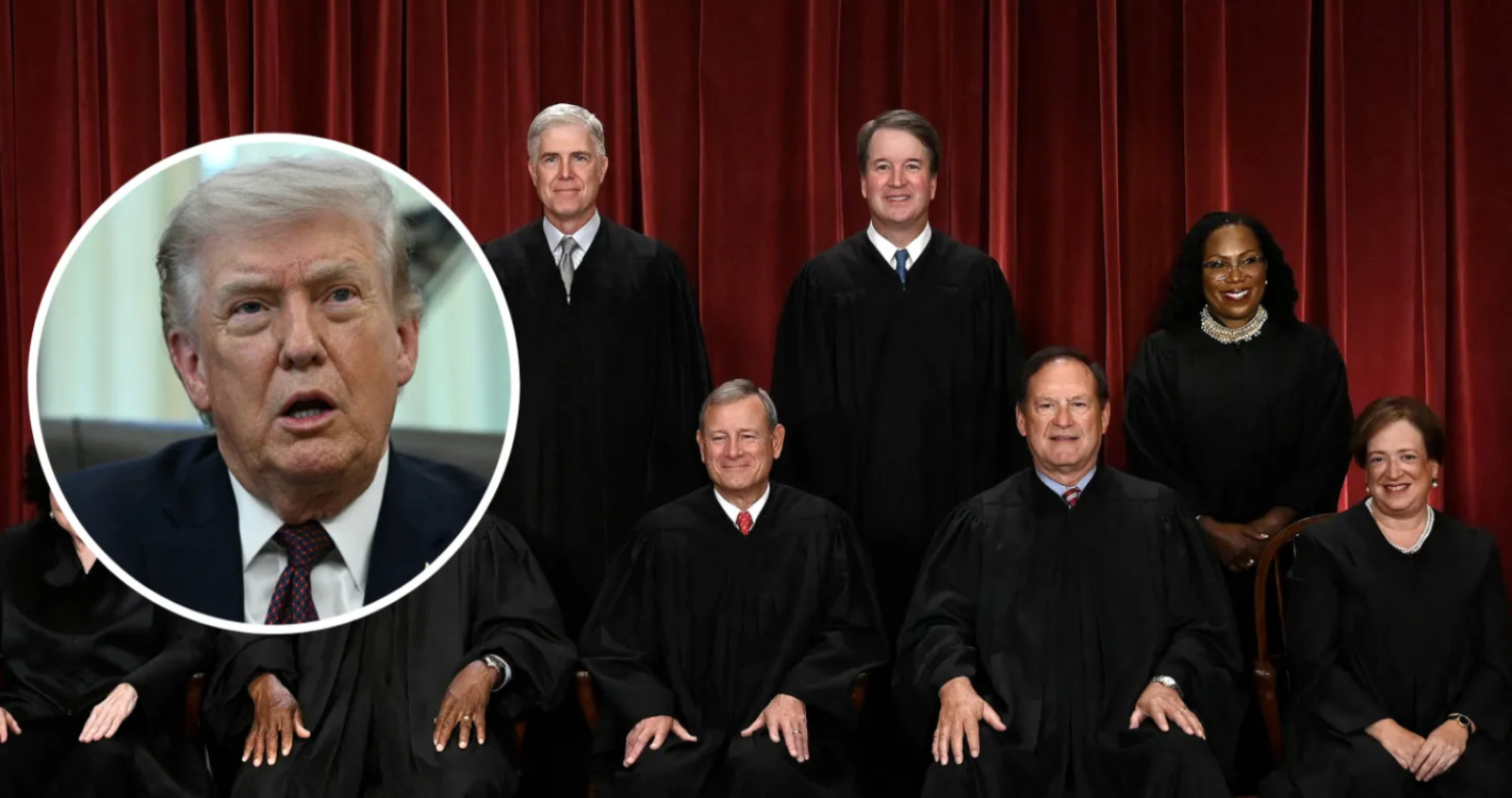
The U.S. Supreme Court on Monday declined to hear a key case on Monday in a disappointing move that leaves lower courts free to inject racial politics into policing.
In the case, United States v. Donte J. Carter, the Supreme Court allowed a controversial D.C. Court of Appeals ruling to stand.
Advertisement
The lower court had ruled that a Black man’s race must factor into whether he was “seized” during a police encounter under the Fourth Amendment, effectively creating different constitutional rules based on skin color.
The case arose from a legitimate firearm interdiction in Washington, D.C., where officers approached Donte J. Carter and others amid reports of gunfire.
After questioning and directing Carter to adjust his clothing, officers recovered a stolen firearm.
Advertisement
The D.C. appeals court suppressed the evidence, holding that a “reasonable Black man” might not feel free to leave the encounter due to historical and social factors involving law enforcement.
This race-conscious approach turned the traditional objective “reasonable person” test into a subjective, group-based inquiry.
Advertisement
Justice Samuel Alito, joined by Justice Clarence Thomas, dissented from the denial of certiorari, warning of the dangerous precedent.
“The injection of an individual’s race into the ‘reasonable person’ test contravenes our decisions,” Alito wrote.
He stressed that the Constitution “hardly ever” permits treating individuals differently based on race.
Alito continued: “It is dangerous to allow an individual to be treated differently based on statistics, studies, or expert testimony that purports to show that members of the racial or ethnic group to which he belongs are more likely to act in a certain way than are members of other groups. Here, the special treatment helped the individual; in other situations, it will not.”
He raised practical concerns for officers on the street: “Under the test, officers will need to quickly assess a person’s race, and if officers and courts must craft special rules for black persons, what about dark-skinned Latinos, other Latinos, and members of other minority groups?”
Alito added that this approach conflicts with the color-blind ideal of the Constitution.
The majority’s refusal to take the case allows this race-based framework to persist in the nation’s capital and potentially spread, undermining equal application of the law.
Conservatives have long argued that such standards erode public safety by second-guessing proactive policing in high-crime areas while dividing Americans by race rather than judging encounters on objective facts.
This denial represents a missed opportunity to reaffirm that the Fourth Amendment applies equally to all Americans regardless of race.
By leaving the D.C. decision intact, the Court permits activist judges to import critical race theory-style reasoning into core constitutional doctrine, potentially handcuffing law enforcement and creating a nightmare of race-specific rules for stops, questioning, and consent.
In high-crime communities—often disproportionately affected by violence—such rulings risk emboldening criminals while discouraging the very policing needed to protect law-abiding citizens.
Justice Alito and Thomas correctly highlight the threat to a color-blind Constitution.
The Founders envisioned one law for all, not a balkanized system where constitutional rights bend based on ancestry or “lived experience.”
As violent crime remains a top concern for American families, this decision underscores the urgent need for the Supreme Court to eventually confront and reject these divisive tactics.
President Trump and Republican leaders have consistently championed equal justice under law—today’s inaction makes that fight even more critical.
Separately, the Supreme Court delivered a key 5-4 ruling this week in a strong affirmation of federalism and judicial restraint.
In the case T.M. v. University of Maryland Medical System Corp., the justices extended the Rooker-Feldman doctrine to bar federal district courts from reviewing state-court judgments even while those judgments remain subject to further state appellate review.
The decision prevents “state-court losers” from running to federal court to collaterally attack unfavorable rulings before exhausting state processes.
The case involved T.M., a Maryland woman with a rare medical condition that can trigger psychosis after gluten ingestion.
After involuntary commitment and a consent order formalized by a state court allowing her release under treatment conditions, T.M. filed a federal lawsuit challenging the order as unconstitutional and entered under duress.
Lower courts dismissed the suit under Rooker-Feldman, which prohibits federal district courts from exercising what amounts to appellate review over state judgments.
This article may contain commentary which reflects the author’s opinion.