President Donald Trump signaled that his administration may pursue a new executive order addressing birthright citizenship, arguing that a concurring opinion by Supreme Court Justice Brett Kavanaugh outlines a potential legal path forward.
The president’s musings came this week just days after the Supreme Court struck down an earlier executive order that sought to limit automatic U.S. citizenship for certain children born on American soil.
Advertisement
On June 30, the Supreme Court issued its decision in Trump v. Barbara, invalidating Executive Order 14160, which Trump signed on Jan. 20, 2025.
The order, titled Protecting the Meaning and Value of American Citizenship, directed federal agencies to deny automatic U.S. citizenship to certain children born in the United States based on their parents’ immigration status.
Advertisement
Under the order, citizenship would have been denied to children born to mothers who were in the United States unlawfully if the father was neither a U.S. citizen nor a lawful permanent resident.
It also applied to children born to mothers who were legally present on a temporary basis, such as with a visa, if the father likewise was neither a U.S. citizen nor a lawful permanent resident.
Advertisement
The order instructed the Departments of State and Homeland Security, along with other federal agencies, to revise their policies to implement those changes.
In a 6-3 decision, the Supreme Court struck down Trump’s order. Chief Justice John Roberts wrote the majority opinion, joined by Justices Sonia Sotomayor, Elena Kagan, Amy Coney Barrett and Ketanji Brown Jackson.
The Court concluded, by a 5-4 vote on the constitutional question, that the order violated the Citizenship Clause of the Fourteenth Amendment.
The Supreme Court reaffirmed that, under longstanding constitutional precedent, children born in the United States to parents who are in the country unlawfully or on a temporary legal basis are generally considered “subject to the jurisdiction” of the United States and therefore acquire U.S. citizenship at birth.
In reaching that conclusion, the Court relied in part on its longstanding interpretation of the Citizenship Clause of the Fourteenth Amendment, including its landmark 1898 decision in United States v. Wong Kim Ark, which established that most children born on U.S. soil are citizens regardless of their parents’ immigration status.
Justice Brett Kavanaugh filed a separate opinion concurring in the judgment that the executive order could not take effect while differing with part of the majority’s constitutional analysis.
But Kavanaugh concluded that the order did not violate the Fourteenth Amendment itself. Instead, he wrote that it conflicted with 8 U.S.C. § 1401(a), the federal statute that codifies key provisions governing birthright citizenship.
“Congress could—consistent with the Fourteenth Amendment—amend §1401(a) or otherwise enact new legislation establishing exceptions to birthright citizenship for children born to foreign citizens unlawfully or temporarily in the country,” he wrote in his opinion.
“But Congress has not yet done so,” the Trump appointee added.
Advertisement
Following the ruling, Trump stated in a Truth Social post that the Supreme Court had upheld birthright citizenship, describing the outcome as “too bad for our Country.”
He added that the issue “we can easily make it up in Congress through Legislation, with the support of the President, that has now been determined during this process.”
“No long and unwieldy Constitutional Amendment is necessary!” Trump added.
“Congress should start TODAY to work on ending expensive and unfair to our Country, Birthright Citizenship. They will have my Complete and Total Support!” he wrote.
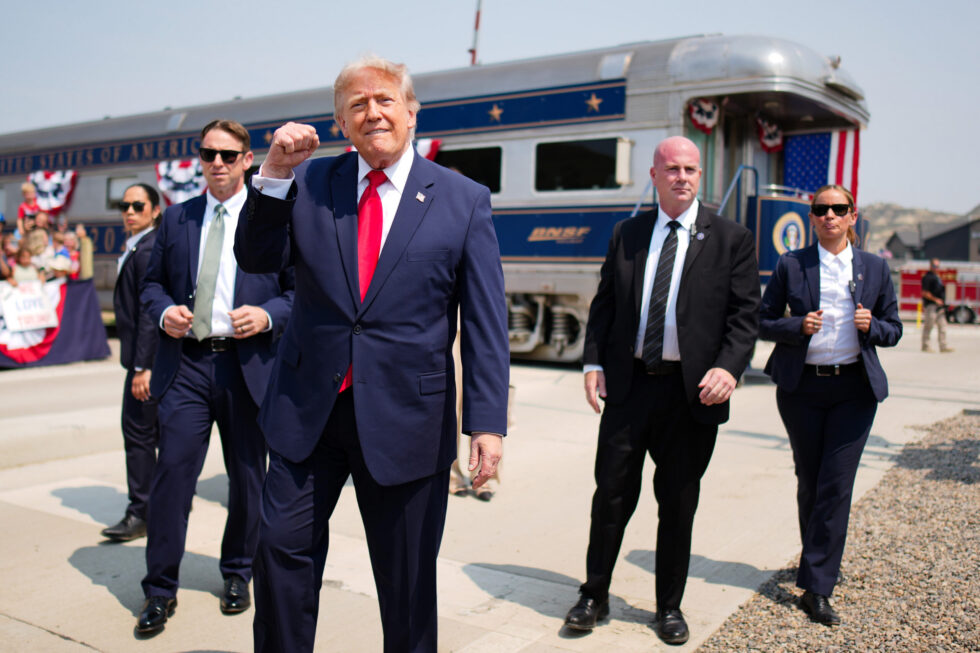
Speaking at a rally in Medora, N.D., the following day, Trump again addressed birthright citizenship, arguing that the policy was never intended to apply to wealthy foreign nationals or to individuals traveling to the United States for birth tourism.
He said the Citizenship Clause of the Fourteenth Amendment was originally adopted in the aftermath of the Civil War to ensure citizenship for the children of formerly enslaved blacks in America.
This article may contain commentary which reflects the author’s opinion.