President Trump was so vested in one of his first executive orders he issued at the very beginning of his second term that, when it landed before the U.S. Supreme Court, he became the first sitting president to attend the oral arguments.
The order banned birthright citizenship, but the nation’s highest court struck it down, as had several lower courts, claiming it violated the Constitution’s 14th Amendment.
Advertisement
Rather than let the issue die, however, Trump is now taking a new course of action to at least curtail as much birthright citizenship as he possibly can without Congress or amending the Constitution.
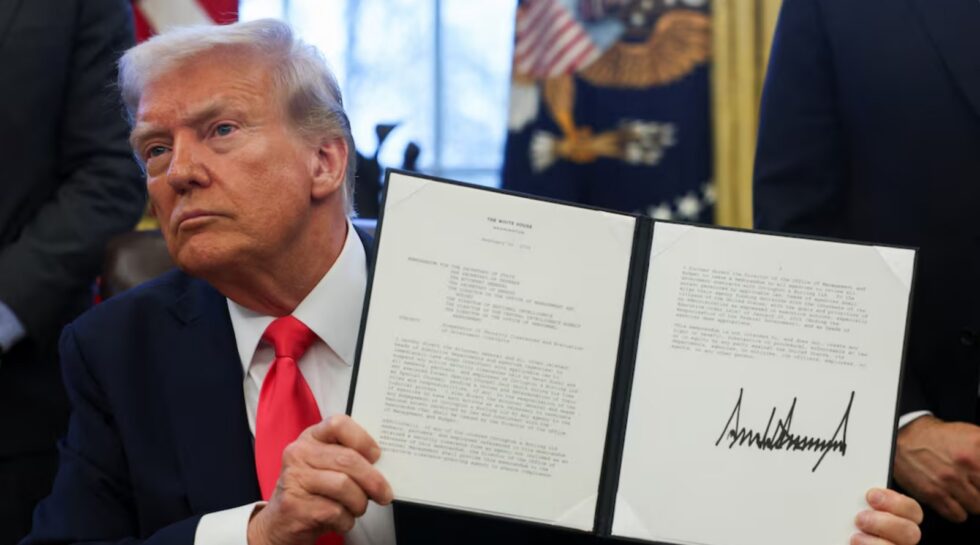
On Thursday, Trump signed executive orders banning “birth tourism” – a phenomenon that has sprung up and expanded in recent years.
Advertisement
The Trump administration has argued that the court’s ruling preserves the president’s authority to limit birthright citizenship in certain circumstances under what it describes as long-recognized legal exceptions.
Advertisement
Under the administration’s executive orders, the proposed restrictions would apply only to future births involving four specified categories, via Axios:
- Children born of foreign diplomatic staff working on behalf of another government while in the U.S. The 14th Amendment doesn’t confer automatic citizenship to ambassadors’ families, and this order would expand that category to other noncitizen employees.
- Children of people who are classified as alien enemies, including those who belong to federally declared terrorist groups. The 14th Amendment doesn’t apply to invading armies, and this designation would expand that category.
- Those born in U.S. territories — but only if Congress changes the law to end automatic citizenship there. A bill seeking to do that was introduced last month but isn’t expected to pass. This would apply most notably to those in Puerto Rico.
- Children born of mothers who expressly and deceptively enter the U.S. for the sole purpose of having a child here, namely at a birth-tourism center. The order seeks to limit the use of surrogate mothers for this purpose as well.
The administration argues that the proposed birth tourism exception is justified in cases involving alleged fraud or misrepresentation by parents seeking entry into the United States, such as individuals who obtain tourist or temporary work visas under false pretenses.
Officials contend that because U.S. law permits the revocation of citizenship obtained through fraud in certain circumstances, similar principles should apply in cases involving commercial birth tourism.
Under the new executive order, the administration says the exception would apply to mothers who knowingly participate in commercial birth tourism through fraudulent means.
A separate executive order directs the secretaries of State and Homeland Security to develop regulations and guidance aimed at preventing birth tourism and disrupting the industry both within the United States and internationally.
U.S. law already bans getting a tourist visa “for the primary purpose of obtaining U.S. citizenship for a child by giving birth in the United States.”
Advertisement
Immigration officials also can deny a pregnant foreign national from entering the U.S. if they determine she’s entering the country for the purpose of giving birth, Axios reported.
The House Oversight Committee is already investigating birth tourism centers
In May, the panel requested a host of documents from a company called “Have My Baby in Miami.”
Advertisement
“The benefits of U.S. citizenship are a unique privilege,” the committee wrote.
“However, as foreign expectant mothers traveling for this purpose come predominantly from China and Russia, there are concerns that the birth tourism industry is giving rise to potential national security and election integrity threats posed by adversarial nations that challenge U.S. interests,” the committee added.
Advertisement
The Senate Homeland Security Committee released its own report on birthright citizenship in 2022.
Estimates of children born in the U.S. via birth tourism are from the low thousands to tens of thousands annually, Axios said.
This article may contain commentary which reflects the author’s opinion.