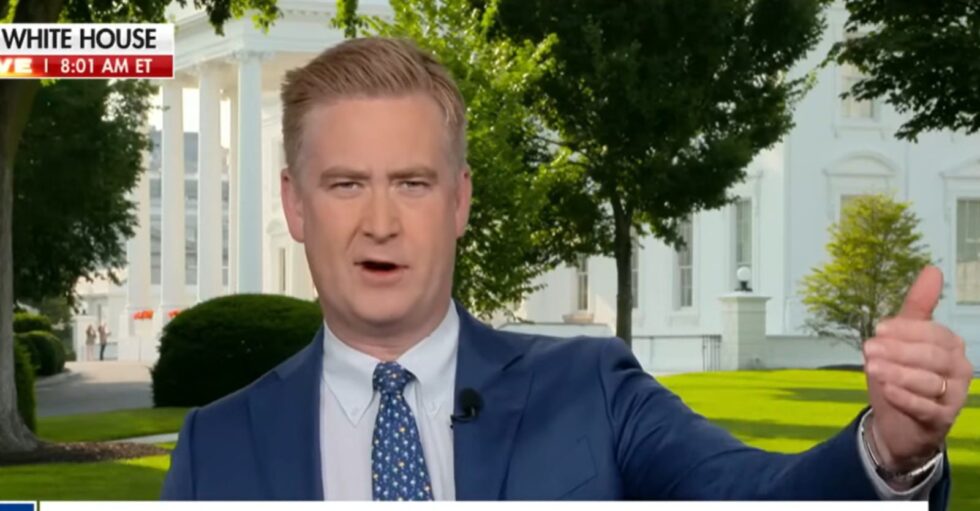
Fox News correspondent Peter Doocy made headlines on Monday when he provided some key details on Birthright Citizenship.
During a segment on Fox & Friends, Doocy spoke about the U.S. Supreme Court’s late-June ruling against President Donald Trump’s executive order challenging the Constitution’s “birthright citizenship” provision.
Advertisement
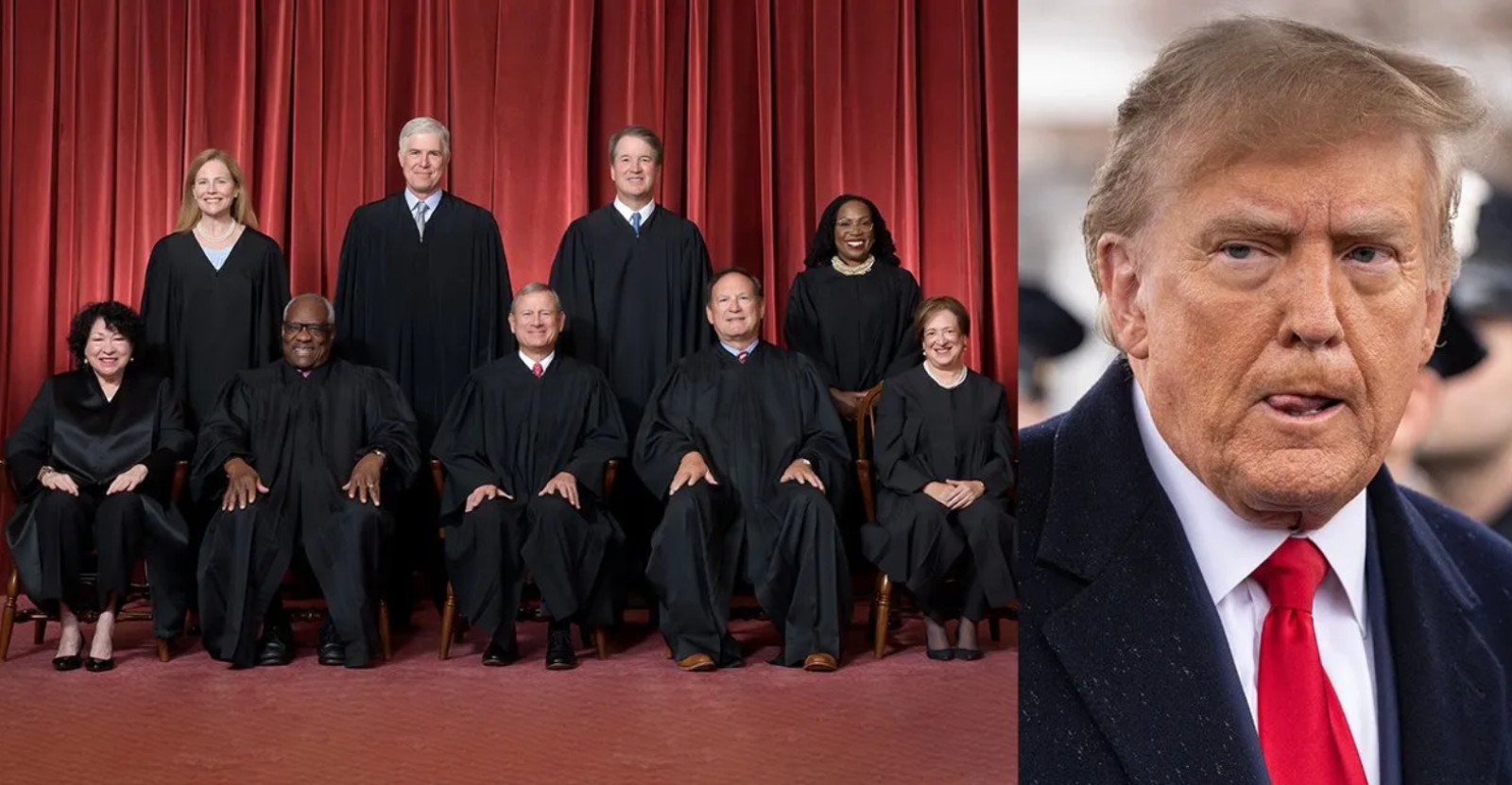
In a 6-3 ruling, the Supreme Court held that the children of illegal aliens and foreign nationals born in the U.S. count as American citizens.
Justices Thomas, Alito, and Gorsuch dissented.
The Supreme Court ruled that the Fourteenth Amendment guarantees birthright citizenship to children born in the United States, including those whose parents are in the country unlawfully or only temporarily, striking down President Trump’s executive order.
Advertisement
Doocy spoke about the significance of the case and what it looks like yearly.
“260,000 babies every year are given automatic U.S. citizenship who have parents that are not citizens or lawful permanent residents. When it goes to the birth tourism citizens, that is 20K-26K per year,” Doocy said.
On Jan. 20, 2025, Trump’s first day back in office, he issued an executive order titled “Protecting the Meaning and Value of American Citizenship.”
Advertisement
The order argued that the Fourteenth Amendment was intended to convey citizenship on newly freed American slaves following its ratification after the Civil War.
Now, some Republicans in Congress are attempting to take action.
Indiana Republican Sen. Jim Banks released a plan for Republicans and the Trump administration to end birthright American citizenship for the United States-born children of illegal aliens and foreign tourists.
Justice Brett Kavanaugh, who partly joined the majority’s ruling in the case, argued that while Trump’s order does not violate the 14th Amendment, it did violate existing federal law, which could be changed through legislation.
“Congress could — consistent with the Fourteenth Amendment — amend §1401(a) or otherwise enact new legislation establishing exceptions to birthright citizenship for children born to foreign citizens unlawfully or temporarily in the country,” Kavanaugh wrote.
“But Congress has not yet done so,” Kavanaugh added.
Now, Banks is laying the groundwork for Congress to end birthright citizenship for anchor babies by codifying the fact that the U.S. is under invasion by illegal aliens in his Citizenship Act.
In contrast, Banks relies on Article I of the Constitution, which states that Congress shall have the power to establish a uniform rule of naturalization.
Banks’ bill would declare illegal aliens as foreign invaders, thus eliminating the current practice of granting birthright citizenship to children born in the United States.
“The Supreme Court’s birthright citizenship decision was an unprecedented assault on American sovereignty, and we must do whatever it takes to save our country,” Banks said.
Advertisement
“I’m leading the Citizenship Act to reverse the effects of this consequential ruling and ensure the millions of illegal aliens that invaded our country can’t continue to exploit our immigration system,” Banks added.
Annually, an estimated quarter of a million anchor babies are born to illegal aliens and foreign tourists in the U.S.
In early August, the U.S. Supreme Court issued its certified judgment in the birthright citizenship case after the Trump administration did not file a petition asking the justices to rehear their decision within the court’s required time frame.
The court’s ruling, issued at the end of June, left in place a lower court order blocking enforcement of Trump’s executive order seeking to deny automatic U.S. citizenship to certain children born in the United States to parents who are in the country unlawfully or temporarily.
Advertisement
Following that decision, Trump announced on Truth Social that he intended to ask the Supreme Court to reconsider the case.
“I will be asking for a Rehearing by the United States Supreme Court, IMMEDIATELY,” Trump wrote at the time.
He also criticized the ruling, writing, “This miscarriage of justice will destroy America if they don’t change their absolutely insane decision.”
However, no petition for rehearing was filed before the deadline expired.
🚨 The Supreme Court has issued its judgment in the birthright citizenship case. The Court held that children born in the U.S. to parents present unlawfully or temporarily are citizens at birth.
Despite President Trump’s announcement, the United States did not seek rehearing. pic.twitter.com/fxfqcRckpt
— SCOTUS Wire (@scotus_wire) August 3, 2026
Advertisement
Under the Supreme Court’s normal procedures, the clerk issues a certified judgment after the period for seeking rehearing has passed, formally concluding that phase of the case unless additional legal proceedings are initiated through another avenue.
According to SCOTUSblog, the certified judgment is typically issued about 32 days after the court’s opinion when no rehearing petition is filed.
The Supreme Court’s decision leaves intact the lower court ruling that blocked Trump’s executive order from taking effect while the broader legal dispute continues.
This article may contain commentary which reflects the author’s opinion.