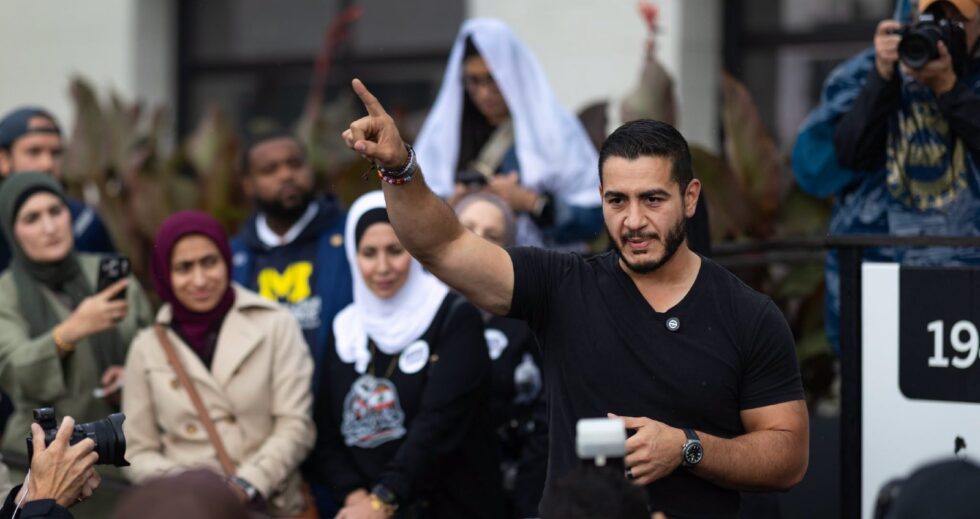
Michigan Democratic Senate nominee Abdul El-Sayed is facing renewed scrutiny after comments resurfaced in which the progressive candidate questioned whether U.S. actions abroad can contribute to the grievances and “pain” that ultimately help drive some people toward terrorism.
The remarks, made during a July 2025 discussion and initially reported earlier this year, are receiving fresh attention now that El-Sayed has captured the Democratic nomination for one of the nation’s most closely watched Senate races.
Advertisement
El-Sayed, a physician and former public health official aligned with the progressive wing of the Democratic Party, is running against former Republican Rep. Mike Rogers in November.
The contest could play an important role in determining control of the Senate.
El-Sayed has campaigned on progressive priorities including Medicare for All and reducing the role of money in politics.
Advertisement
The controversy centers on El-Sayed’s comments about America’s approach to fighting terrorism.
“I think the approach that we’ve often taken with terrorism has been to figure out how to leverage the might of the U.S. military to go in and root out, right, certain terrorist organizations, et cetera,” El-Sayed said.
Advertisement
“And where that’s necessary, that’s necessary. But I also think we need to be curious about why those things happen in the first place. Like, what drives somebody to want to commit such a heinous act?” he added.
El-Sayed then turned his attention toward American foreign policy, arguing that the United States has sometimes failed to follow the international rules it expects other countries to respect.
“And I think too often, the way [America has] engaged in the world has been that we set up this rules-based international order,” El-Sayed said.
“And then we break the rules of the rules-based international order, and that creates a situation where there are a lot of people who look at us and say that’s hypocritical and that’s wrong. And I think the best thing we can do is be honest about that,” he added.
El-Sayed went further while discussing what he believes can motivate individuals to embrace political violence.
“When people feel some kind of way about what terrorism is—it’s political violence, doing heinous things in pursuit of a political end, right? There is a level of pain and frustration and a level of lack of agency that they have to feel to do something so insane and absurd, right? And so I’ve often tried to ask, like, so what moves somebody into that, and how is it that we’re behaving that may get somebody to think that we don’t see them, and that’s creating pain?”
The comments are likely to provide Republicans with another line of attack against El-Sayed as national security and his progressive record become increasingly prominent issues in the Michigan race.
El-Sayed did explicitly describe terrorism as both “heinous” and “insane and absurd,” and his remarks did not say that terrorist attacks are justified.
Advertisement
Rather, he argued that policymakers should examine the conditions and grievances that can contribute to radicalization.
Critics, however, contend that his focus on American behavior risks shifting responsibility away from terrorists themselves and toward the United States.
The resurfaced remarks arrive as Republicans, including President Donald Trump and his allies, intensify their efforts to portray El-Sayed as too far left for Michigan.
The White House has attacked his policy agenda, while El-Sayed has responded that he expected Republicans to pursue that strategy following his primary victory.
Advertisement
The Democratic nominee has also faced scrutiny over his positions on Israel, immigration and other foreign-policy questions.
El-Sayed supports ending unconditional U.S. military assistance to Israel and has advocated sweeping changes to the nation’s immigration enforcement system. His supporters argue that Republicans are attempting to characterize his political views as more radical than they actually are.
The renewed terrorism controversy adds another volatile issue to a race already drawing national attention.
Advertisement
El-Sayed emerged from a bitter Democratic primary earlier this month after narrowly defeating establishment-backed Rep. Haley Stevens.
Since securing the nomination, he has called for Democratic unity as he attempts to broaden his coalition beyond the progressive voters who helped propel him through the primary.
Republicans, meanwhile, see an opportunity to make the general election a referendum on El-Sayed’s record and ideology rather than simply on the national political environment.
This article may contain commentary which reflects the author’s opinion.