Democratic Socialists have scored a series of political victories that are forcing Democratic Party leaders to confront growing ideological divisions within their coalition.
Now, conservative historian Victor Davis Hanson is arguing that establishment Democrats helped create the very political movement threatening their control of the party.
Advertisement
Hanson compared the Democratic Socialists of America’s growing influence to a “Frankensteinian monster,” arguing that Democratic leaders are increasingly unable to control the movement they once accommodated.
“They were the Dr. Frankensteins, and they created this socialist Frankensteinian monster, and now it’s devouring them because they’re weak,” Hanson said Monday.
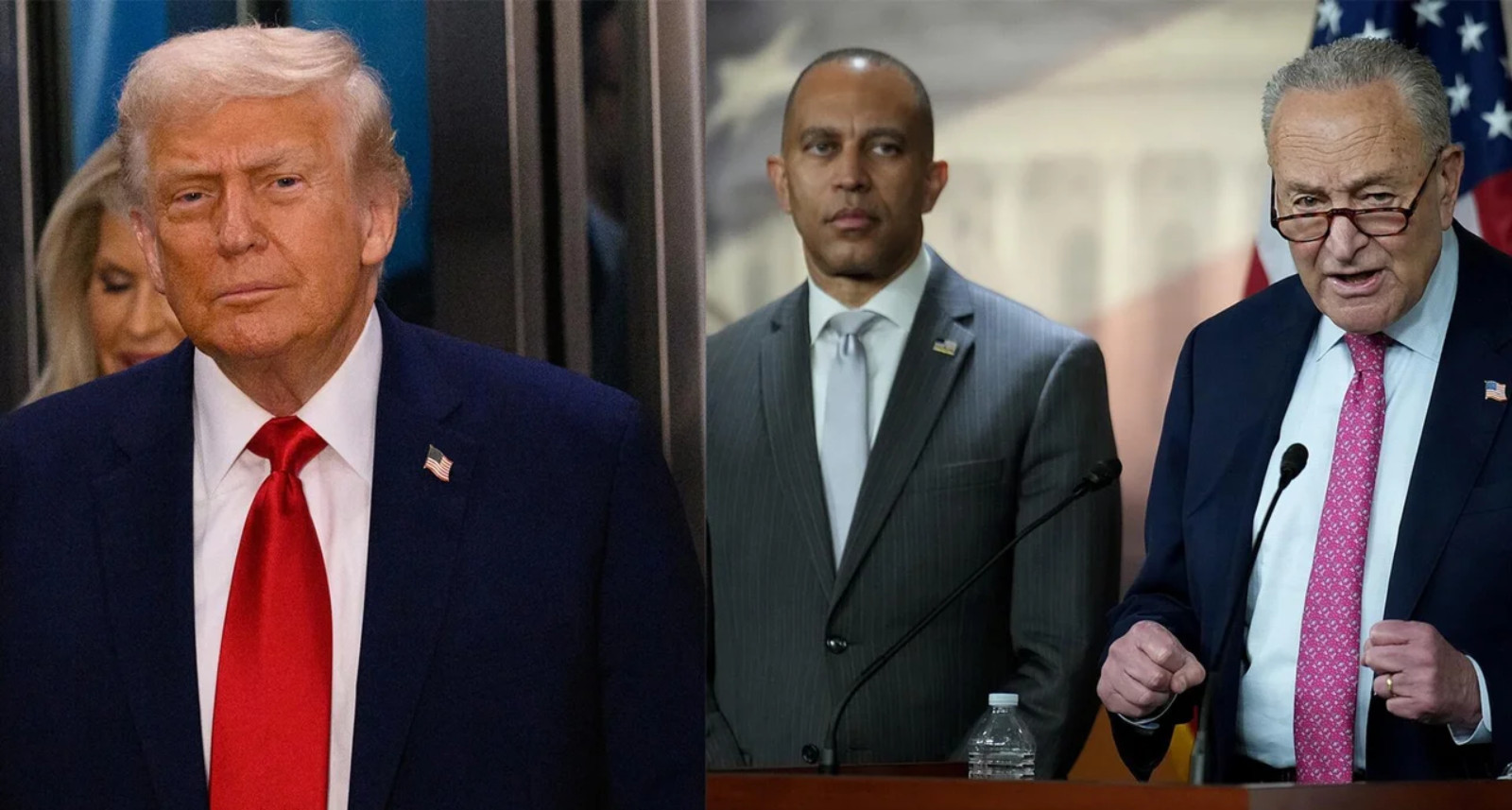
Hanson, a classicist, military historian and Hoover Institution fellow, specifically targeted House Minority Leader Hakeem Jeffries and Senate Minority Leader Chuck Schumer.
Advertisement
He portrayed both Democratic leaders as establishment politicians struggling to respond to a younger and increasingly influential socialist wing.
“When you look at Hakeem Jeffries, he’s like a deer in the headlights,” Hanson said.
He similarly mocked Schumer’s public statements about electing Democrats, questioning whether that commitment means supporting Democratic Socialist candidates whose political views differ substantially from those traditionally associated with the party establishment.
Advertisement
“They’re old, fuddy-duddy, ossified, calcified hacks,” Hanson said of the establishment leaders.
Hanson acknowledged that some of the younger figures associated with the socialist movement possess significant political charisma.
But he argued that charisma is helping sell an economic agenda that he believes its proponents do not fully understand.
Hanson specifically referenced Michigan Democratic Senate nominee Abdul El-Sayed, Rep. Alexandria Ocasio-Cortez, New York City Mayor Zohran Mamdani and left-wing streamer Hasan Piker while discussing the personalities helping drive the movement.
He described the group as “arrogant, ignorant, somewhat charismatic.”
Beyond personalities, Hanson focused much of his criticism on the economic promises made by Democratic Socialist candidates.
DSA-backed politicians have championed proposals including Medicare for All, dramatically higher taxes on wealthy Americans, expanded government programs and other sweeping changes to the nation’s economic system.
Supporters argue those policies would provide greater economic security for working- and middle-class Americans while requiring wealthy individuals and corporations to contribute more.
Critics, including Hanson, contend that the enormous cost of such programs would eventually require tax increases extending beyond wealthy Americans.
Advertisement
The debate has taken on greater significance as DSA-aligned candidates have demonstrated an ability to defeat establishment-backed Democrats in primary elections.
🔥NEW: Victor Davis Hanson *TORCHES* Chuck Schumer and Hakeem Jeffries🔥
“They were the Dr. Frankensteins and they created this socialist Frankensteinian MONSTER — and now it’s devouring them because they’re WEAK!”
“When you look at Hakeem Jeffries, he’s like a deer in the… pic.twitter.com/0K06tZYdi1
— Jason Cohen 🇺🇸 (@JasonJournoDC) August 25, 2026
That success has created a strategic problem for Democratic leaders who have traditionally described their coalition as a political “big tent.”
Maintaining that coalition becomes more difficult when candidates operating under the same Democratic banner fundamentally disagree over issues ranging from capitalism and healthcare to policing, immigration and foreign policy.
Advertisement
The DSA operates separately from the Democratic Party but frequently endorses candidates who seek office as Democrats, allowing the organization to exercise influence through Democratic primaries and elections.
Hanson’s argument is that Democratic leaders tolerated or encouraged the party’s movement to the left when doing so benefited them politically but are now discovering they may be unable to reverse it.
Recent electoral successes by socialist and progressive candidates have intensified that debate heading into the November midterm elections.
The question is particularly important if Democrats capture the House with only a narrow majority.
A relatively small bloc of Democratic Socialist lawmakers could potentially wield substantial influence over legislation if party leaders need virtually every Democratic vote to pass their agenda.
Advertisement
That possibility has already prompted concern among some establishment Democrats about how much leverage the party’s progressive wing could possess in the next Congress.
For Hanson, however, the current struggle is not an unexpected development.
He views it as the predictable consequence of Democratic leaders empowering a political movement that increasingly believes the party establishment itself is part of the problem.
This article may contain commentary which reflects the author’s opinion.