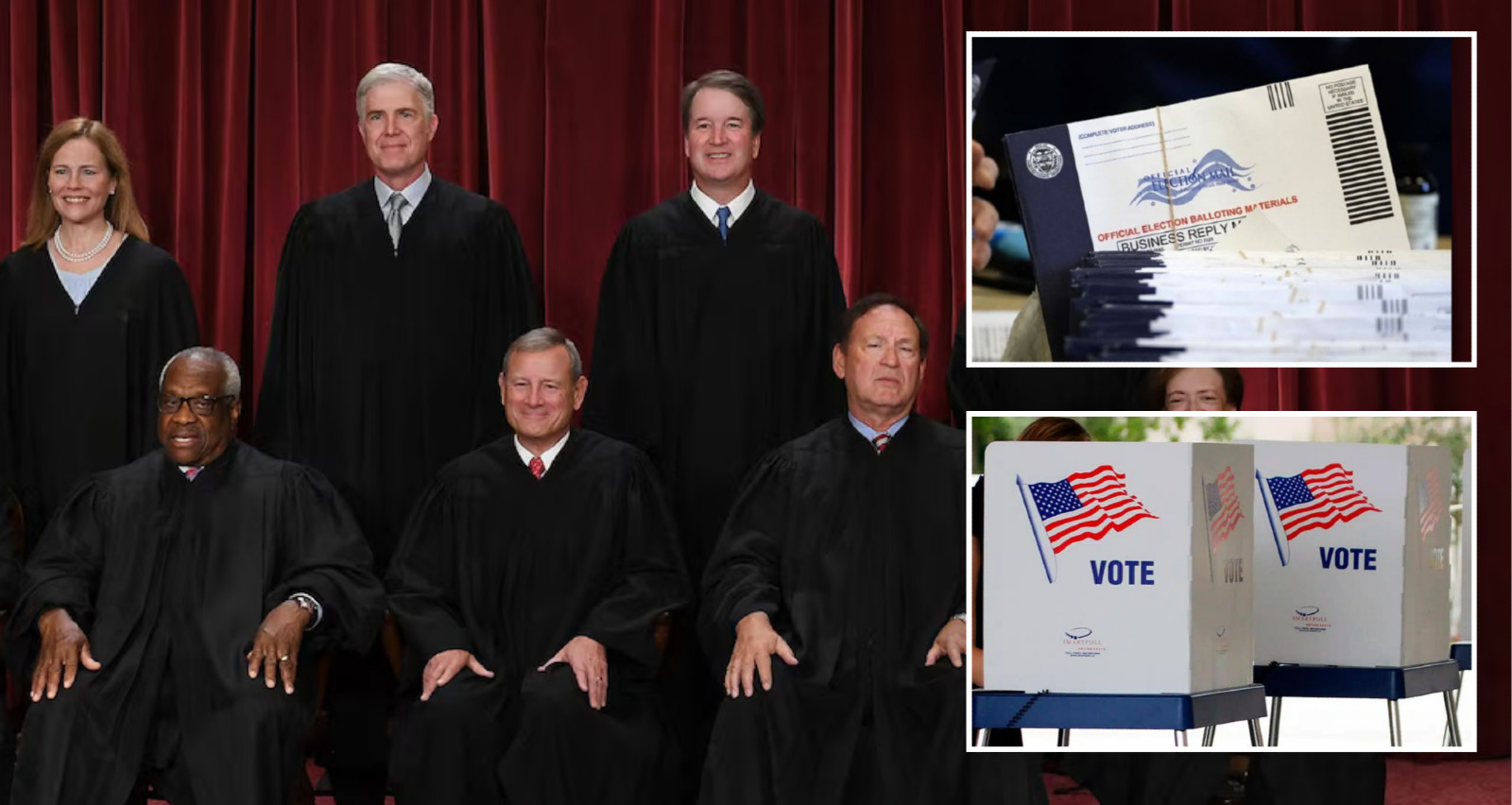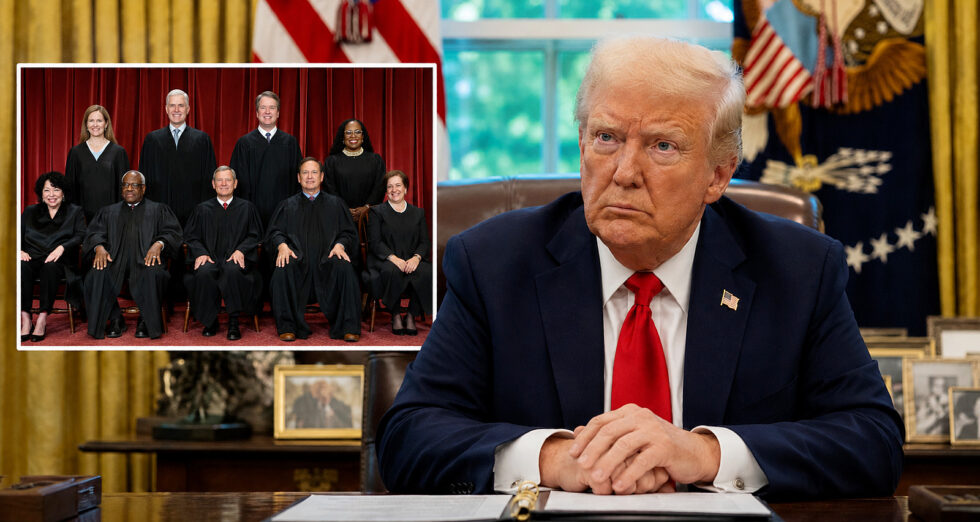
The Trump administration has returned to the Supreme Court seeking emergency intervention in a fast-moving dispute over new U.S. Postal Service requirements affecting mail-in ballots for the November midterm elections.
The latest filing comes as states are beginning to send ballots to voters and after a federal judge blocked portions of the administration’s rules while litigation continues.
Advertisement
The dispute is the administration’s latest attempt to revive election-related restrictions that have repeatedly been challenged by Democratic-led states and voting-rights organizations.
Justice Ketanji Brown Jackson, who handles emergency matters arising from Massachusetts, has ordered the challengers to respond by 4 p.m. Wednesday.
Advertisement
The administration is asking the justices to stay a preliminary injunction issued Friday by U.S. District Judge Indira Talwani that prevents enforcement of portions of the Postal Service’s new ballot-mail rule.
Solicitor General D. John Sauer argued that the injunction interferes with USPS efforts to address potential election fraud and regulate how federal election mail moves through the postal system.
The contested rule includes requirements governing ballot-envelope design and voter information that states would have to provide through a Postal Service portal before mailing federal-election ballots.
The administration contends that those requirements fall squarely within the Postal Service’s congressionally granted authority to regulate mail and do not improperly federalize state election rules.
The legal fight grew out of President Donald Trump’s March executive order directing federal agencies to take several steps involving citizenship verification, voter eligibility and mail-in voting.
A coalition of 23 states and the District of Columbia sued, arguing that portions of the order intruded on powers the Constitution gives states to regulate elections.
Advertisement
Talwani initially blocked challenged provisions from taking effect before the November election, but the Supreme Court intervened in August and allowed the administration to move forward.
In that earlier ruling, the Supreme Court did not finally decide whether the policies were constitutional, instead concluding that the states’ lawsuit was premature because the challenged provisions had not yet been implemented and the states had not yet suffered a sufficient injury.
The Postal Service subsequently issued a final rule establishing specific requirements for federal-election ballot mail, triggering a new round of litigation.
Talwani issued a temporary restraining order on August 27 blocking portions of that rule for 14 days, including requirements involving envelope specifications and submission of voter data.
Advertisement
The administration went to the Supreme Court on September 3 seeking to freeze that temporary order, and Jackson initially requested a response from opponents.
That application became moot for practical purposes when Talwani replaced the temporary restraining order Friday with a preliminary injunction that could remain in place throughout the litigation.
The administration therefore withdrew its September 3 Supreme Court application Sunday and immediately filed a new one challenging the preliminary injunction.
Sauer argued that the two lower-court orders are materially similar and accused Talwani of improperly prejudging the legality of the Postal Service rule.
Advertisement
He also emphasized the approaching election calendar, noting that North Carolina has already begun mailing ballots and that Alabama is scheduled to begin doing so September 9, with additional states following soon afterward.
The government argues that each day the injunction remains in effect creates harm that cannot be recovered because ballots mailed without complying with the new requirements cannot later be recalled and reprocessed.
The states challenging the rule contend that complying with the new federal requirements would disrupt their own election procedures and impose burdens during an already compressed election calendar.
The Supreme Court’s next immediate step will come after Wednesday’s response deadline, when Jackson could act herself or refer the emergency application to the full Court, SCOTUS Blog reported.
The filing gives the justices another consequential election dispute only weeks before November voting, with the administration seeking permission to enforce its Postal Service ballot rules while the broader constitutional battle continues.
This article may contain commentary which reflects the author’s opinion.