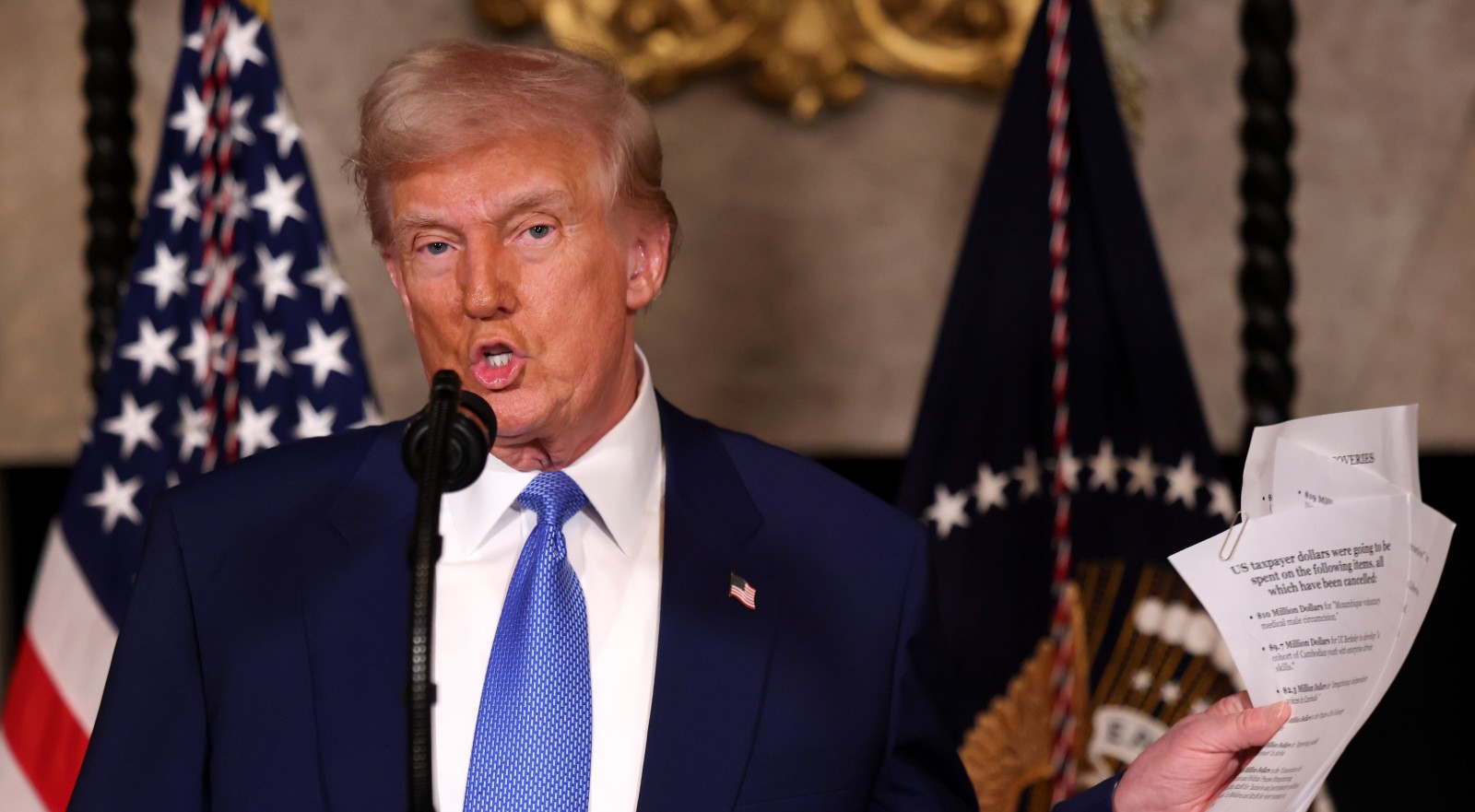
President Donald Trump signaled that several members of his team could be replaced after Republicans lost control of Congress in Tuesday’s midterm elections.
Advertisement
His comments came hours before the White House confirmed a change at the top of his staff on Friday.
Trump told 60 Minutes he was considering changes, later choosing Stephen Miller to succeed Susie Wiles as chief of staff.
CBS correspondent Ross Douthat asked Trump whether he expected to fire anyone after the midterms, invoking his television catchphrase.
“Yeah,” Trump said.
Advertisement
The president followed that answer by expressing affection for his Cabinet and saying he considered its members good.
“But I’ll be doing maybe a few changes. I don’t want to mention who,” he added.
Douthat asked about Secretary of War Pete Hegseth, whom the correspondent said he saw in the hall before the interview.
Douthat said Hegseth had just met with Trump and noted that some critics had called for the Pentagon chief’s resignation.
Asked whether he had confidence in Hegseth, Trump gave a direct answer.
“I do,” Trump said.
Trump went on to cite the administration’s military record, claiming two victories and highlighting the operation in Venezuela.
He described the operation as a victory achieved in less than an hour and claimed that nobody was killed.
Douthat followed up by asking whether Trump credited Hegseth for the operation.
“No, but he was part of it,” Trump answered.
That exchange put Trump’s support for Hegseth on the record while keeping credit for the Venezuela operation a separate question.
CNN played part of the interview Friday, with Jake Tapper calling attention to what Trump had said about Hegseth’s future.
Tapper emphasized that Trump declined to credit Hegseth and disputed the president’s characterization of the administration’s military record.
Advertisement
Tapper described the seizure of Nicolás Maduro as a successful military operation and rejected Trump’s description as war.
The Cabinet discussion preceded the White House announcement that Miller would become the president’s 33rd chief of staff.
Miller moves into the job from his position as deputy chief of staff for policy, according to the Associated Press.
Advertisement
He joined Trump’s first presidential campaign as a speechwriter and became a key figure in shaping the administration’s immigration policies.
The White House credited Miller with helping carry out Trump’s border security and anti-fraud efforts.
The appointment puts a longtime advocate for Trump’s agenda in charge of the White House staff heading into January.
Wiles submitted her resignation Thursday night, according to a person familiar with the events who spoke to the Associated Press.
Trump praised his outgoing chief of staff and said she would continue working for his political organization.
Speaking to reporters Friday night, Trump said the election was unrelated to his decision to replace Wiles.
The president also told reporters that Miller had been with him from the beginning.
Wiles was the first woman to serve as White House chief of staff, the Associated Press reported.
Advertisement
In a social media statement, Wiles cited the administration’s work on border security, tax cuts and the economy.
Vice President JD Vance thanked Wiles for her service and congratulated Miller on the promotion, according to the White House.
Secretary of State Marco Rubio praised Wiles and said he looked forward to working with Miller to advance Trump’s agenda.
The White House cited Miller’s experience inside the administration when it announced his appointment.
Attorney General Todd Blanche thanked Wiles and said he expected to continue working with Miller on public safety and fraud.
Hegseth welcomed Miller’s appointment and pledged support from the Department of War, according to the White House announcement.
Republicans will face a Democratic House and Senate in January, with the president’s team preparing to govern under divided control, Mediaite reported.
The chief of staff transition gives Trump a new point person inside the White House as that congressional balance shifts.
This article may contain commentary which reflects the author’s opinion.