The Ice Queen and the Hundred Year Audit

Hello, I’m Kristy Allen and you’re reading the Tsunami of Truth.
1. The Ice Queen and the Hundred Year Audit
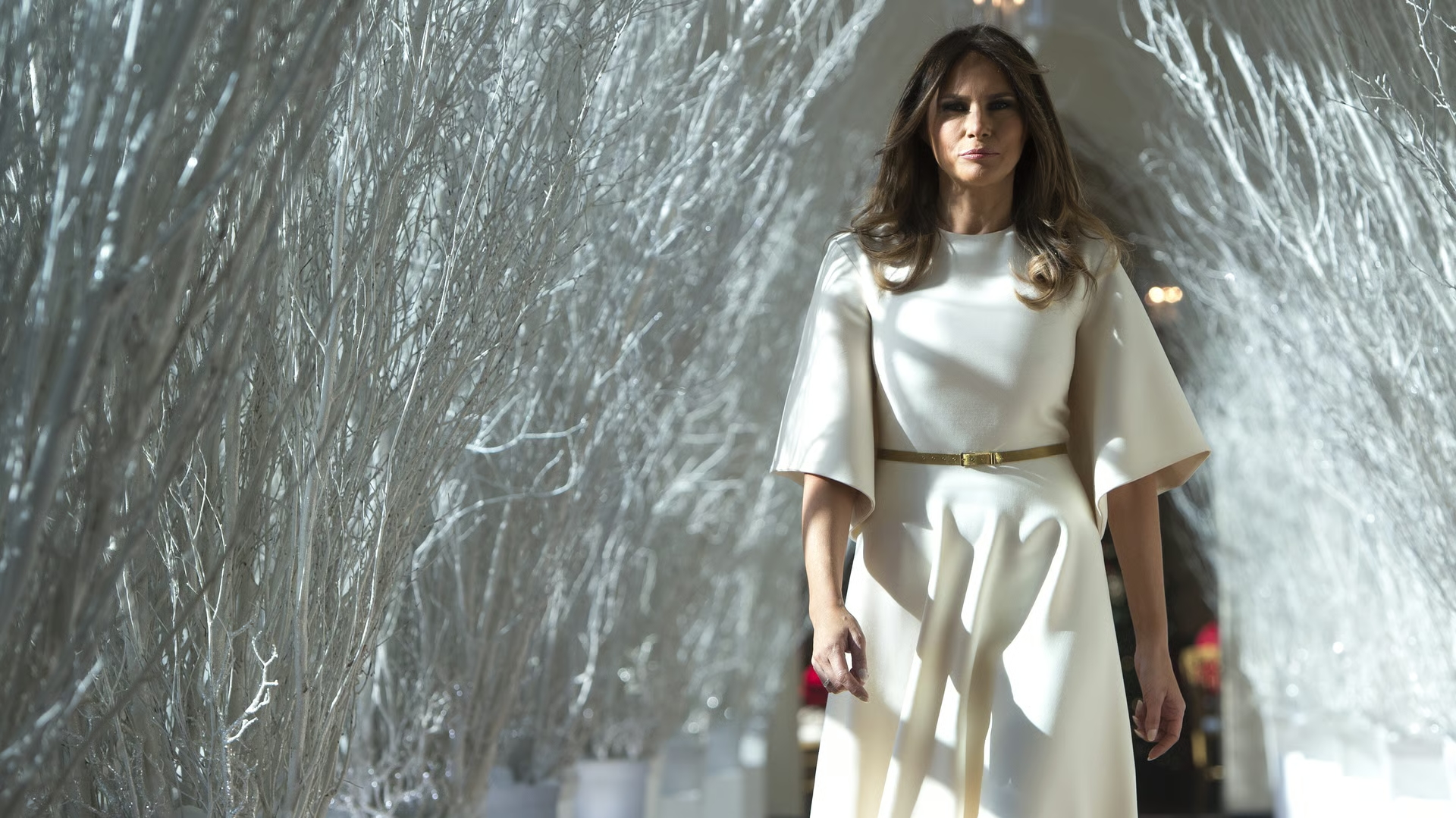
For years the media called Melania Trump cold. They scrutinized every blink and every unsmiling photo as if she were a statue. But let’s get real. You would be cold too if you were tasked with auditing a hundred years of human misery. Imagine walking into the archives of the “Board” and seeing the ledgers of how children have been treated, indexed, and moved like commodities for over a century.
You wouldn’t have a pageant grin. You would be just as precise. She isn’t cold — she is concentrated and graceful. She is the Mother’s face of the Finisher.
If Princess Diana pulled back the curtain on the suffering of the world’s children, Melania walked onto the stage to dismantle the machinery. Her husband is finishing the work JFK began to reclaim the Republic, and Melania is finishing the work Diana started to protect the next generation.
They are the cleanup crew for a century of chaos. They aren’t here to make friends. They are here to clear the digital minefields trapping our youth.
2. The Saint and the Shark in the London Penthouse
Family, take a breath. We need to look at the photo that breaks the spell.
April 15, 1988. In a London penthouse a world-famous nun in her white and blue habit sits next to the towering tycoon Robert Maxwell. He’s on the phone moving money while she’s on her rosary. The media called it a meeting of humanitarians, but later scrutiny tells a darker story.
Robert Maxwell built the empire later inherited and weaponized by Ghislaine Maxwell and Jeffrey Epstein. Maxwell famously looted hundreds of millions from his employees’ pension funds. The question becomes unavoidable: why was a saint sitting with a shark?
Records show Maxwell controlled planes, offshore accounts, and global logistics while religious institutions operated orphanages and charitable homes. Critics have long argued these systems could be exploited. Author Christopher Hitchens raised such concerns decades ago, though the public preferred to see only saints and saviors.
The troubling possibility is that vulnerable children were moved through institutions that were supposed to protect them.
3. The One Life Mirror and the Maxwell Scrapbook
Consider the film One Life starring Anthony Hopkins, which tells the story of Sir Nicholas Winton saving 669 children from the Nazis. The story reached the public largely through Elisabeth Maxwell — wife of Robert Maxwell and mother of Ghislaine.
Supporters of this theory call it a mirror: while heroic stories were promoted publicly, darker networks may have been operating quietly in the background.
A beautiful story can distract the public from asking difficult questions about institutions, finances, and influence. When the spotlight shines on heroism, fewer people look at ledgers and power structures.
4. Jon Wedger and the Industrial Pimps
Former detective Jon Wedger became a whistleblower after investigating abuse within the London care system. Wedger alleged that vulnerable children in state care were exploited while investigations were suppressed.
According to Wedger, powerful individuals avoided scrutiny while vulnerable children were labeled “troubled” or relocated when they spoke out. His claims suggested corruption inside systems meant to protect children.
Whether fully proven or not, the allegations forced a wider conversation about how institutions handle vulnerable youth.
5. The Kristi Noem Audit and the South Dakota Rescue
In the United States, leaders like Kristi Noem have focused on reforming foster care systems and increasing oversight. Audits revealed gaps where children could disappear from tracking systems or be moved without proper monitoring.
Strengthening Safe Haven laws and requiring transparency from NGOs became part of broader efforts to ensure that every child remains accounted for and protected.
Supporters say strong leadership can expose weaknesses and rebuild systems designed to protect the vulnerable.
6. The Bishop’s Airport Run
Cases involving corruption inside institutions periodically surface. One example involved a bishop accused of financial crimes while attempting to leave the country.
Investigators alleged funds meant for charitable purposes were diverted for personal use. Incidents like these fuel public frustration and demands for greater accountability across religious and charitable organizations.
7. Walking Through the Minefield
Princess Diana famously walked through a landmine field in Angola in 1997 to draw attention to the devastation caused by unexploded mines. Her activism helped push the world toward banning landmines.
Advocates today often compare that moment to modern digital threats — arguing that children now face invisible dangers online just as previous generations faced physical dangers in war zones.
8. The Digital Minefield
In the modern era, exploitation can occur through digital platforms, trafficking networks, and online manipulation. Advocates argue that governments must treat these threats as seriously as physical weapons.
Policy initiatives and international cooperation increasingly focus on protecting children from online exploitation and trafficking networks.
9. From Huambo to the White House
Supporters of global child-protection initiatives argue that the fight has moved from physical battlefields to digital ones. The mission remains the same: ensuring children can grow up free from exploitation and violence.
The goal is transforming dangerous environments into safe communities — just as former minefields in Angola were eventually cleared and rebuilt.
10. The Sovereign Shield
Universities, charities, and public institutions have begun forming partnerships aimed at supporting foster youth and vulnerable children. These programs focus on education, mentorship, and leadership development.
Rather than allowing young people to fall through the cracks, advocates argue they should be given the tools to become leaders in technology, policy, and business.
11. Building New Paths
Educational partnerships across the United States aim to provide scholarships, mentorship, and career pathways for foster youth aging out of the system.
The goal is to replace cycles of instability with long-term opportunity.
12. Technology and Opportunity
Technology leaders and private companies have also launched programs designed to train foster youth in technical fields and skilled trades.
Providing housing, employment, and career development creates a direct path toward independence and stability.
13. The Torch
Many advocates see continuity between past humanitarian efforts and modern reforms. The fight to protect children has spanned generations.
Each generation builds upon the work of the last.
14. The Rescue Anthem
Music often becomes the soundtrack of movements. Lauren Daigle’s song Rescue has become symbolic for many people who believe vulnerable children must be found, protected, and given hope.
The message resonates with those who believe every child deserves safety and opportunity.
Thanks for listening to the Tsunami of Truth. I’m Kristy Allen on JMCBroadcasting.com.
Related Articles