The Special Relationship Is Dead – How Trump Left Britain Holding the Bill

1. The Churchill Complex and the Late Arrival
Today we are dissecting the high-stakes, low-blow world of modern diplomacy where the primary language spoken is passive-aggression. To kick things off, let us look at a quote from Winston Churchill: ‘Success is not final, failure is not fatal: it is the courage to continue that counts.’ It is a lovely sentiment, but these days, it feels like the only thing ‘continuing’ is the sheer, unadulterated awkwardness between 10 Downing Street and the White House.
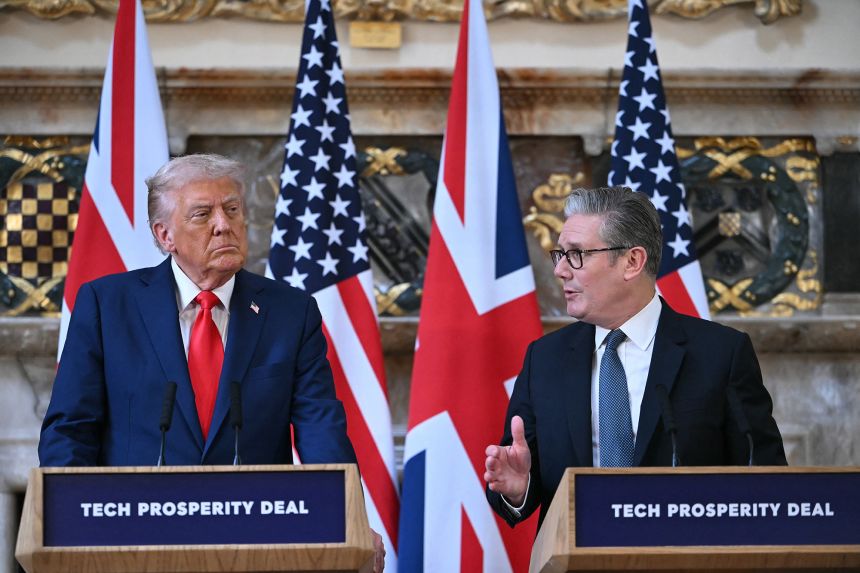
The UK and the US have spent decades bragging about their ‘special relationship,’ but lately, it is looking less like a powerhouse alliance and more like a bad episode of a scripted soap opera. We have Prime Minister Keir Starmer trying to play the role of the serious, rule-following adult in the room, while President Donald Trump is busy flipping the script and the table. The tension hit a fever pitch recently over the conflict in Iran, and Trump did not just open the door to criticism – he kicked it down and changed the locks.
Trump, never one to let a grievance go un-aired, took a massive swing at Starmer’s timing. After the UK hesitated on base usage, Trump effectively told the world that Britain was the friend who shows up to help you move only after the sofa is already up three flights of stairs and the pizza has been eaten. The exact quote that set London on fire was: ‘That’s OK, Prime Minister Starmer, we don’t need them any longer – but we will remember. We don’t need people that join wars after we’ve already won.’ It was a masterclass in petty diplomacy, framing the UK not as a strategic partner, but as a latecomer trying to claim credit for a finished job.
2. The ‘Stupid Island’ and the Chagos Betrayal
But the friction doesn’t stop with timing. It has moved into the very territory the UK is trying to give away. We have to talk about the Chagos Islands. Just a few days ago, Trump delivered an extraordinary public rebuke of Starmer, calling the deal to hand over sovereignty to Mauritius an ‘act of great stupidity.’ This is ‘The Ledger’ in action—Trump sees a strategic asset being handed over on a silver platter and he is not staying quiet about it.
For those of you not following the map, the Chagos Islands home the joint US-UK base on Diego Garcia. It is a ‘super-base’—the crown jewel of the Indian Ocean. Starmer’s government is pushing through a 99-year lease deal, effectively paying Mauritius for land the UK used to own. Trump’s take? ‘Prime Minister Starmer should not lose control, for any reason… leases are no good when it comes to countries.’ He even went as far as to call it a ‘woke’ decision that puts the entire security of the region at risk.
The optics are a nightmare for 10 Downing Street. While Starmer argues he is ‘settling a colonial dispute’ to secure the base’s future, Trump is painting him as a leader who is literally giving away the fort. It reinforces the narrative that the current UK leadership is playing checkers while the rest of the world is playing three-dimensional chess. When Trump calls it a ‘stupid island’ in a press briefing, he isn’t just insulting a piece of land; he is signaling that the ‘Special Relationship’ doesn’t include respecting your sovereign decisions if they look like surrenders.
3. The Hidden Strategy: The China Chessboard
Now, let us look at why that ‘stupid island’ matters to the bigger board. This is where the China strategy comes in. Trump doesn’t play for one square; he repositions the entire map. For years, China has enjoyed a massive advantage by buying sanctioned oil from Iran and Venezuela at steep discounts. This fueled China’s industrial growth on the cheap. By squeezing Iran and securing these naval choke points, the US is essentially cutting off China’s discounted fuel line.
The Panama Canal has been pulled back into the American sphere of influence, and now the battle for the Indian Ocean via Diego Garcia is heating up. Individually, these are headlines; together, they are a checkmate. While the world stares at the explosions, the energy leverage is shifting back to the West. This exposes China’s biggest vulnerability: energy dependency. It is a masterclass in using regional conflict to win a global economic war. And in that war, ‘giving away’ an island like Chagos looks less like diplomacy and more like a tactical disaster.
4. The ‘Trump Tax’ and the NHS Shakedown
However, this ‘winning’ comes with a price tag for America’s allies. In the UK, the friction has moved from the battlefield to the pharmacy. Starmer’s government is being hammered for a deal that reportedly allows US pharmaceutical giants to hike prices for the NHS. Critics are calling it the ‘Trump Tax.’ The deal was reportedly struck to avoid those 10% tariffs Trump loves to talk about, but it leaves the UK paying billions more for life-saving meds.
The political optics are brutal. While Trump calls Starmer ‘weak’ on the world stage, he is simultaneously leaning on the British taxpayer to pad the profits of big pharma. Starmer frames this as ‘paying for innovation,’ but the public sees a shakedown. It is a transactional relationship where the ‘Special Relationship’ feels more like a bill you can’t afford to pay. If the UK wants to stay in the party, it seems they have to pay for the top-shelf drinks.
5. The Civil War Within: Candace and the ‘Satanic’ Narrative
But the fire isn’t just coming from the outside. We are seeing a stunning fracture within the movement itself. When you have major influencers like Candace Owens—someone who has historically been a massive pillar of support—suddenly turning the dial to eleven and calling the President names that I won’t even repeat in full, you know the vibe has shifted. She is out there telling troops to find a legal means to exit the military, claiming the current path is on behalf of ‘satanic’ interests. It is a level of vitriol that would have been unthinkable even six months ago.
Why is this happening? It seems like there is a competition to see who can be the most ‘awake’ to the supposed dark truth. When the political ‘chess moves’ we talked about—the China strategy, the energy leverage—don’t happen fast enough or in the way people expect, some commentators fill that gap with the most extreme theories imaginable. By calling out the ‘Dear Leader’ in such graphic terms, they are essentially trying to burn the whole house down. It creates a massive distraction from the actual geopolitical work being done, turning serious diplomacy into a theological horror movie.’
Is there any truth to these wild claims? In the world of verified facts, no. There is zero evidence to support these explosive labels. What we are seeing is the ‘outrage economy’ in full effect. The more extreme the accusation, the more it circulates. But for the troops on the ground and the diplomats at the table, this kind of rhetoric is more than just noise—it is a direct attempt to destabilize the very institutions that keep the country running. It is a civil war of words where the only winner is the person getting the most clicks.
6. The Art of the Awkward Silence
Personal chemistry matters in this game. We’ve all seen the viral clips of Trump shushing Starmer at press conferences with a blunt ‘that’s enough.’ It is a public display of the new hierarchy. Then there is the Sadiq Khan factor. Trump treats the London Mayor like a personal rival, and every time Starmer defends him, the rift with the White House grows wider. It is a clash of styles: Starmer is the lawyer with a spreadsheet, and Trump is the developer with a gut instinct. They are speaking two different languages in a room where the volume is always at ten.
7. A Supporter’s Take: Results Over Style
As we look at the internal noise, we have to talk about how people are actually processing this. There is a lot of talk about ‘satanic’ narratives, but there is also a very grounded, middle-of-the-road perspective. Jeff Roush put it perfectly recently when he laid out the things he ‘hates’ about Trump—the impulsive social media posts that feel like a sixteen-year-old with too much energy, the cockiness, and the constant flexing. Roush’s take resonates because it captures the frustration of supporters who prefer ‘facts over flexing.’
And yet, despite the annoyance with the style, the support remains firm. Why? Because as Roush points out, in a world of polished, rehearsed, teleprompter-reading puppets, Trump is raw and blunt. He doesn’t hide from the press, and most importantly, he does what he says he is going to do. That follow-through is a rare commodity. Millions of people are willing to endure the all-caps tweets because they see the results: a focus on the border, the economy, and energy. They aren’t brainwashed; they are looking at outcomes. They’ve chosen a leader who fights for the country, even if they wish he’d occasionally find the ‘mute’ button.
8. The High Cost of Being Fashionably Late
The UK is now trying to make up for lost time by sending aircraft carriers to the Middle East, a massive ‘sorry I’m late’ gesture. But Trump’s reaction – telling the world he ‘doesn’t need’ them – is a sting that won’t go away soon. Being ‘late to the party’ is a tag that sticks. It suggests the UK is a secondary player, a courtesy CC on the global email chain rather than a primary recipient.’
Is there a way back? Maybe. But it involves the UK finding its own ‘take’ on the world stage instead of just reacting to the headlines. Starmer is caught between a Europe that doesn’t trust him and a US President who thinks he is too slow. He is the man in the middle, and in 2026, the middle is a very dangerous place to stand.
9. Closing the Book
‘We will end today with a thought from Eleanor Roosevelt: ‘It is not fair to ask of others what you are not willing to do yourself.’ The White House has made its position clear: they feel the UK wasn’t willing to do the heavy lifting when the pressure was on. Whether that is a fair critique or a tactical play, the ‘Special Relationship’ is in the shop for major repairs.’
Related Articles