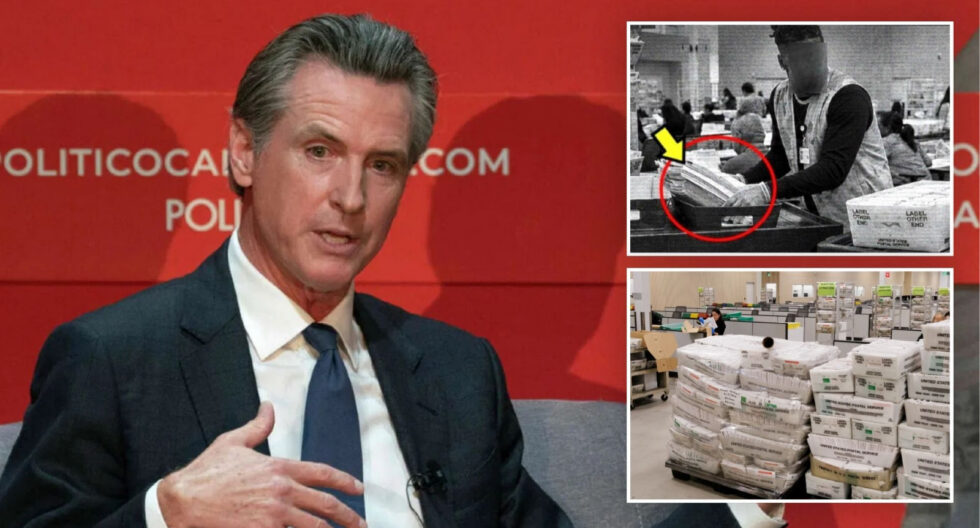
Federal authorities are investigating California’s election system as President Donald Trump escalates criticism of the state’s prolonged vote-counting process and Republicans renew calls for nationwide election reforms.
The scrutiny intensified after U.S. Attorney Bill Essayli announced that multiple election fraud investigations are underway in coordination with the FBI, marking one of the most significant federal examinations of California elections in recent years.
Advertisement
The investigations come as hundreds of thousands of ballots continue to be counted following California’s primary elections, with several high-profile races tightening days after Election Day.
“Protecting the integrity of California’s elections is a top priority for my office,” Essayli said while confirming the investigations and pointing to what he described as “serious structural vulnerabilities” in California’s election system.
Federal officials have not disclosed the specific targets or scope of the investigations. However, Essayli indicated that his office is examining potential election-related violations while also continuing a separate legal battle over access to California’s voter registration records.
The announcement followed repeated criticism from President Trump regarding California’s lengthy ballot-counting process.
Trump argued that the state’s election procedures undermine public confidence and questioned why vote totals continue to shift days after polls close.
Advertisement
“You look at what’s happening. It’s getting tighter and tighter and tighter,” Trump said while discussing California’s ongoing vote count.
The president specifically pointed to races that saw significant movement after Election Day as additional mail ballots were processed.
Among the contests drawing the most attention is the Los Angeles mayoral race, where City Councilmember Nithya Raman steadily gained ground after trailing reality television personality Spencer Pratt in the initial election-night returns.
The California governor’s race has also remained under close scrutiny as officials continue processing outstanding ballots across the state.
As of last week, Los Angeles County alone reported more than 713,000 ballots still awaiting processing, including vote-by-mail ballots, provisional ballots, and ballots returned at vote centers on Election Day.
California election officials have defended the process, noting that state law gives counties up to 30 days to complete the official canvass and certify results.
Secretary of State Shirley Weber has repeatedly argued that election officials are prioritizing accuracy over speed.
“Accuracy comes before speed,” Weber said.
Republicans, however, have increasingly pointed to California’s election system as evidence that broader reforms are needed.
The federal investigations are only one part of a larger dispute.
Essayli also revealed that the Department of Justice remains locked in a legal battle with California over access to voter registration records.
According to federal officials, the DOJ has spent more than a year attempting to obtain California voter-roll data in order to conduct an audit and determine whether the state is complying with federal election laws.
“California is blocking a federal audit of its voter rolls,” Essayli recently stated.
The dispute is currently pending before the Ninth Circuit Court of Appeals.
🚨 JUST IN: President Trump announces US ATTORNEYS are INVESTIGATING California’s election fraud, cheating and late “mail-in counting”
“It’s a rigged election. WE NEED THE SAVE AMERICA ACT!” 🇺🇸
Trump says THEY STOLE IT from Spencer Pratt in the California elections, but then… pic.twitter.com/tVMtNzRORD
— Eric Daugherty (@EricLDaugh) June 11, 2026
Federal officials argue that the National Voter Registration Act, the Help America Vote Act, and portions of the Civil Rights Act give the Attorney General authority to inspect voter registration records and independently review voter-roll maintenance procedures.
The Justice Department has argued that federal law overrides California privacy restrictions when election records are being sought for official federal review.
Essayli has also raised concerns about California’s voter identification procedures for certain first-time voters.
The growing controversy comes as Republicans continue pushing the SAVE America Act in Congress.
The legislation would require proof of U.S. citizenship to register for federal elections and establish nationwide voter identification requirements.
Supporters argue that federal standards would help address many of the concerns currently being debated in states such as California.
This article may contain commentary which reflects the author’s opinion.