The Supreme Court of the United States handed the Trump administration a legal victory Tuesday by throwing out a federal appeals court ruling that had revived a dispute over public speaking restrictions for immigration judges.
In an unsigned order, the justices reversed a decision of the United States Court of Appeals for the Fourth Circuit.
Advertisement
They reinstated a lower-court ruling dismissing a lawsuit filed by the National Association of Immigration Judges.
The case centered on a Justice Department policy requiring immigration judges to obtain approval before participating in certain public speaking engagements deemed “official” in nature.
The policy requires immigration judges to obtain approval before participating in “official” speaking engagements, including presentations at immigration conferences or pro bono legal training events.
According to court records, judges are still permitted to give speeches in a personal capacity so long as the topics are not directly connected to immigration matters.
Advertisement
The National Association of Immigration Judges challenged the policy in federal court in Alexandria, arguing it violated the First Amendment by restricting judges from expressing private opinions about immigration policy or the agency employing them.
But U.S. District Judge Leonie Brinkema, a Clinton appointee serving the Eastern District of Virginia, dismissed the lawsuit, pointing to the Civil Service Reform Act.
The law directs many disputes involving federal employees through administrative review channels such as the Office of Special Counsel and the Merit Systems Protection Board rather than federal district courts.
Brinkema concluded that Congress intended claims like those brought by the judges’ association to be handled through that specialized review system instead of traditional lawsuits in federal court.
The 4th Circuit later revived the lawsuit and sent it back to the district court, raising concerns about whether the review framework created under the Civil Service Reform Act is actually operating the way Congress intended.
The appeals court pointed to two major issues.
First, the Merit Systems Protection Board at one point lacked enough members to function, creating a backlog that critics argued undermined the effectiveness of the system.
Second, the court noted the Trump administration’s constitutional position that the president has the authority to remove members of the MSPB and the Office of Special Counsel at will, a stance that raised broader questions about the independence of the federal employee oversight process.
The administration returned to the Supreme Court calling the case a “clear candidate for summary reversal,” arguing the 4th Circuit relied on a theory the parties had not raised.
The high court agreed.
“Federal courts are not ‘roving commissions licensed to ‘sally forth each day looking for wrongs to right.’ The Court of Appeals lost sight of those principles here,” said the unanimous, unsigned order.
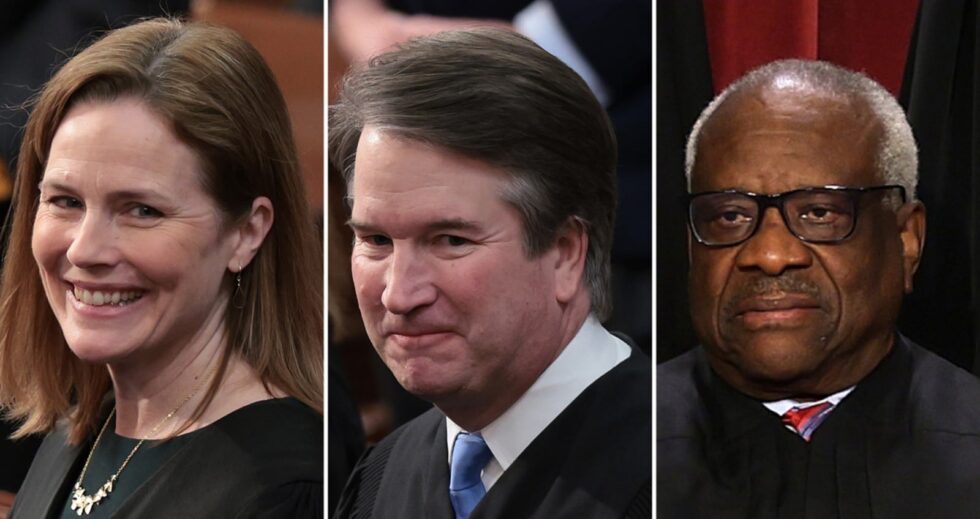
Justice Clarence Thomas, joined by Justice Amy Coney Barrett, wrote that the 4th Circuit was also wrong regarding the legal issues involved.
The justices also dismissed, without comment, a cross-petition from the judges’ association asking the court to consider whether federal employees can directly bring pre-enforcement speech challenges in district court.
Several closely watched cases involving gun rights and immigration policy remain pending before the U.S. Supreme Court as the justices enter the final stretch of their current term, which is expected to conclude by July.
The high court still has more than 20 decisions left to issue, including rulings that could have major implications for Second Amendment protections and key elements of the Trump administration’s immigration agenda.
Both issues have emerged as major legal and political battlegrounds. States across the country continue to debate and enact gun-control measures that face constitutional challenges, while the administration’s efforts to strengthen immigration enforcement have generated a wave of litigation that is now making its way through the federal courts.
One of the most closely watched Second Amendment cases still awaiting a decision is Wolford v. Lopez, which the Supreme Court heard in January.
This article may contain commentary which reflects the author’s opinion.