One of President Donald Trump’s 2024 election mandates from voters was his pledge to begin mass deportation operations against tens of millions of people in the U.S. illegally.
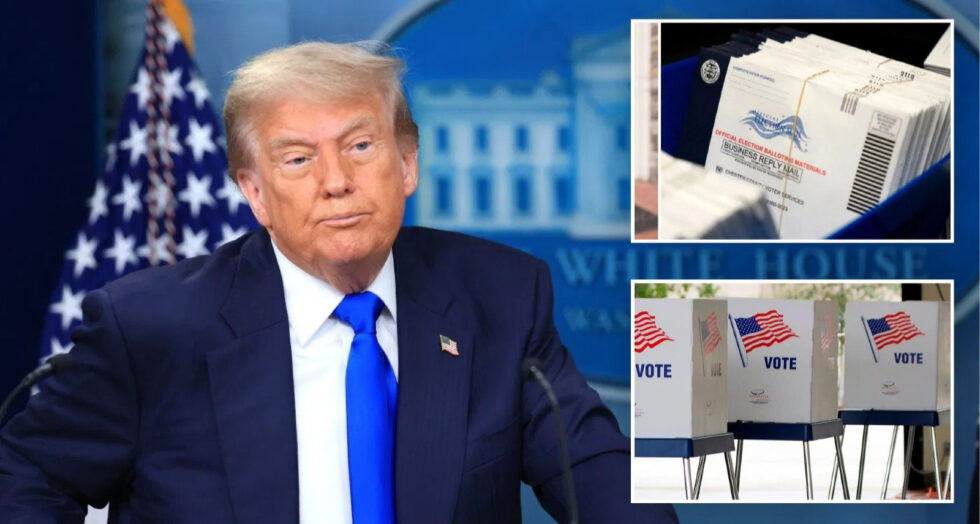
Another of his major campaign pledges was to restore trust and integrity in our elections as they pertain to ensuring that illegal aliens are not being permitted to vote.
This week, a federal judge in Florida gave Trump a win on both fronts.
U.S. District Judge T. Kent Wetherell II, a Trump appointee, on Tuesday ordered the Department of Homeland Security to restore several key features of its Systematic Alien Verification for Entitlements (SAVE) system, which states use to verify citizenship and immigration status when maintaining voter registration rolls.
The ruling effectively reverses an earlier decision by a federal judge in Washington, D.C., who found that certain enhancements to the SAVE system—including a feature allowing election officials to verify citizenship using an individual’s Social Security number—likely violated the Social Security Act and the Privacy Act by improperly collecting and using personal information.
The SAVE system was expanded during the Trump administration to provide states with additional tools to verify voter eligibility and assist with election administration.
Wetherell further ruled that the Department of Homeland Security violated a settlement agreement with several states, including Florida, when it disabled those features.
Wetherell, who approved the settlement last year, retained jurisdiction over the case and ordered the agency to comply with its terms.
“Defendants are plainly in violation of the settlement agreement because it is undisputed that they disabled the bulk-upload and SSN-search features that the agreement expressly required the SAVE system to have,” he wrote in the order.
“The fact that defendants disabled those features to comply with [the judge’s] order does not change the fact that they violated the agreement,” Wetherell added.
Wetherell concluded that the challenged features do not violate federal law, finding that the Social Security number search functions are consistent with 8 U.S.C. § 1373, which governs the sharing of information related to an individual’s citizenship or immigration status, according to Florida’s Voice News.
The judge also directed the defendants to file a status report by July 14 detailing their compliance with the court’s order, Just the News reported.
Meanwhile, in February, a federal judge appointed by Trump found DHS in civil contempt for violating a court order related to the transportation of a detainee in January.
In a ruling issued on Monday, U.S. District Judge Eric C. Tostrud in Minnesota ordered the federal government to compensate the detainee, identified only as “Fernando T.,” for his return flight to Minnesota.
Tostrud noted that Fernando, a Mexican citizen, was released from the Texas detention facility in late January without his belongings.
He expressed concerns that federal officials have not provided an explanation for withholding Fernando’s belongings at the time of his release.
On January 19, Fernando filed a habeas corpus petition seeking either his release from custody or a bond hearing.
The following day, he submitted a request for a temporary restraining order to prevent his transfer while his petition was under review.
In response, Tostrud issued an order prohibiting the federal government from moving the detainee. However, the federal government reported that they had transferred Fernando to a facility in El Paso, Texas, on January 22.
Tostrud ordered DHS to ensure Fernando’s return to Minnesota by January 24.
However, the federal government stated that the earliest they could return him was January 27, citing potential travel delays due to a major winter storm.
In a letter to the court included in the ruling, the federal government acknowledged that Fernando’s release in Texas did not comply with Judge Tostrud’s order.
The lawyer for DHS said he was “deeply remorseful” for the situation and apologized for the violation.
Tostrud wrote in his order that the government’s letter “includes no legal argument, authority, or other response to Fernando’s request for compensatory sanctions.”
This article may contain commentary which reflects the author’s opinion.