President Donald Trump’s immigration agenda suffered a significant legal setback after a federal judge struck down an administration policy affecting foreign nationals from dozens of countries.
The decision represents another major courtroom confrontation over the extent of the executive branch’s authority to restrict immigration and could set the stage for an appeal.
Advertisement
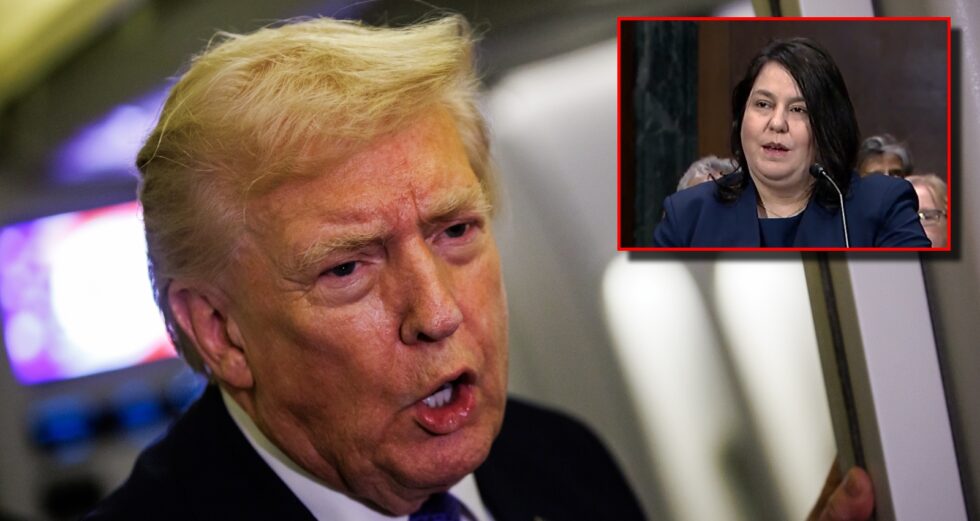
U.S. District Judge Jeannette Vargas, a Biden appointee serving in the Southern District of New York, struck down the Trump administration’s suspension of immigrant visa issuance for nationals of 75 countries.
The State Department policy, which took effect January 21, directed consular officers to stop issuing certain immigrant visas while the administration reviewed concerns involving immigrants who could potentially become dependent on public assistance.
Vargas ruled that Secretary of State Marco Rubio exceeded his statutory authority in implementing the policy.
Advertisement
The dispute centers partly on the Immigration and Nationality Act and its prohibition against discrimination based on nationality in the issuance of immigrant visas.
The administration had selected countries using government data concerning public-assistance usage among immigrant households based on their country of origin.
Advertisement
Countries exceeding a 30 percent threshold were generally included in the suspension, although the administration made some exceptions based on foreign-policy considerations.
Vargas concluded that the State Department’s approach violated federal immigration law because it imposed restrictions directly on visa issuance based on nationality.
The distinction became particularly important because of the Supreme Court’s 2018 decision in Trump v. Hawaii.
In that case, the Supreme Court upheld restrictions on the entry of nationals from several countries under the president’s broad authority to suspend the entry of certain foreign nationals.
Vargas determined that the current dispute is legally different because the administration’s new policy directly restricted the issuance of immigrant visas rather than merely regulating entry into the United States.
The judge also rejected arguments that the State Department’s policy was insulated from judicial review.
She determined that the policy qualified as a final agency action under the Administrative Procedure Act because it imposed mandatory instructions on consular officers and produced immediate legal consequences for visa applicants.
The Catholic Legal Immigration Network, Inc., or CLINIC, was among those challenging the administration’s policy.
The ruling represents a significant victory for immigration advocates who argued that the administration could not use nationality as the basis for preventing otherwise eligible applicants from receiving immigrant visas.
Advertisement
The Trump administration, however, has defended tougher immigration restrictions in part by pointing to the potential financial burden created when immigrant households rely on government assistance.
The State Department’s policy was specifically designed around concerns that prospective immigrants could become public charges after entering the United States.
The broader public-charge issue has become an increasingly important component of the administration’s immigration agenda.
Supporters of Trump’s approach argue that the federal government should have broad authority to ensure that immigrants entering the country can financially support themselves rather than depend on taxpayer-funded programs.
The administration’s opponents argue that those concerns do not permit the State Department to disregard statutory restrictions imposed by Congress.
Advertisement
The legal fight could ultimately turn on precisely where the president’s authority to restrict entry ends and Congress’s rules governing visa issuance begin.
That question could become particularly important if the administration appeals Vargas’ decision.
For now, however, the ruling prevents the administration from enforcing the 75-country immigrant visa suspension under the challenged policy.
The decision does not necessarily prevent the Trump administration from pursuing other public-charge restrictions authorized under existing immigration law.
Advertisement
It does, however, represent a significant setback for one of the administration’s attempts to dramatically restrict immigrant visas.
🚨 A federal judge has struck down the Trump administration’s suspension of immigrant visas for nationals of 75 countries, ruling the State Department policy violates federal immigration law and exceeds Secretary Marco Rubio’s authority. pic.twitter.com/GPRez33uI6
— SCOTUS Wire (@scotus_wire) August 22, 2026
With the administration likely to challenge the ruling, the battle over the 75-country policy may be far from finished.
This article may contain commentary which reflects the author’s opinion.