The United States military announced a significant breakthrough in the Strait of Hormuz that could have major implications for global shipping and energy markets.
American forces have eliminated one of the most dangerous physical obstacles threatening vessels traveling through the strategically vital waterway.
Advertisement
Adm. Brad Cooper, commander of U.S. Central Command, announced Thursday that American forces have successfully cleared Iranian sea mines from the internationally recognized shipping lanes running through the Strait of Hormuz.
The development follows months of severely restricted commercial traffic during the ongoing conflict with Iran, which has contributed to uncertainty surrounding global energy supplies. It also arrives as President Donald Trump’s administration intensifies a broader campaign designed to economically isolate Tehran.
“The U.S. military has achieved a major milestone in the Strait of Hormuz,” Cooper said in a video announcing the operation’s success.
Advertisement
Cooper said the mines had been placed months earlier by Iran’s Islamic Revolutionary Guard Corps and credited American military personnel with removing the threat from established transit routes.
“We have successfully cleared sea mines in the strait’s international shipping lanes that were laid months ago by Iran’s Islamic Revolutionary Guard Corps,” Cooper said.
Advertisement
“Internationally recognized transit routes in the strait are free of Iranian sea mines, thanks to the incredible work of the U.S. military,” the CENTCOM commander added.
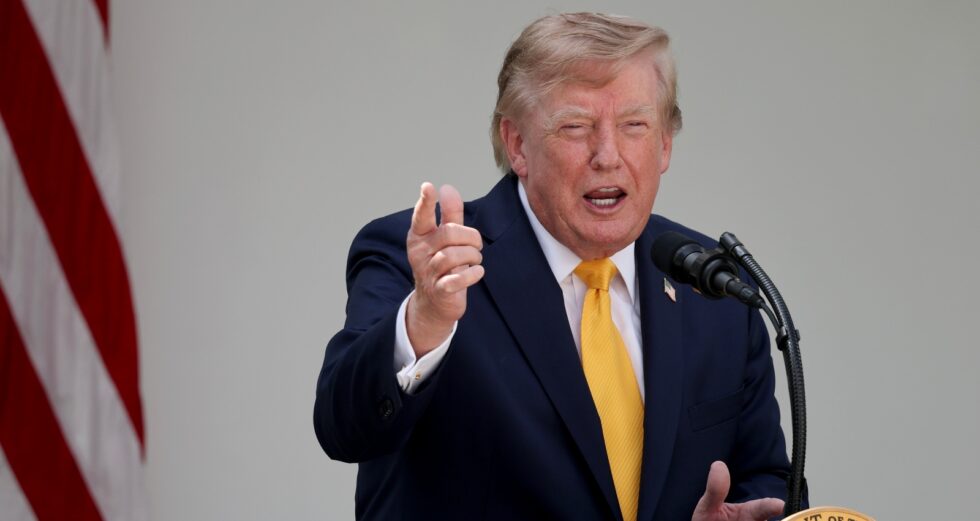
President Trump also announced that the Strait “is open.”
“They [Iran] don’t want us to go back at them. That’s the whole ball game,” he said.
The accomplishment represents an important step toward potentially restoring more normal commercial shipping through one of the world’s most consequential maritime chokepoints.
The United States believes it has gained the upper hand over Iran in the Strait of Hormuz after months of military operations that weakened Tehran’s ability to disrupt shipping, Axios reported Friday, citing US officials.
“That sucker is open. The Iranian response is very mild,”… pic.twitter.com/aYOB8Tg8aK
— Iran International English (@IranIntl_En) August 28, 2026
The Strait of Hormuz connects the Persian Gulf with the Gulf of Oman and serves as a critical route for enormous quantities of oil and natural gas moving into international markets.
Disruptions to the waterway can therefore quickly create consequences extending far beyond the Middle East, affecting shipping costs, energy supplies and gasoline prices around the world.
Traffic through the strait has been severely restricted during the six-month conflict with Iran, creating additional uncertainty for shipping companies attempting to navigate the region.
The removal of Iranian mines does not guarantee that commercial traffic will immediately return to previous levels because shipping companies must still evaluate other potential security threats.
Advertisement
However, eliminating mines from internationally recognized transit lanes removes one of the most immediate physical dangers facing vessels attempting to pass through the waterway.
The development could consequently provide shipping companies with greater confidence about eventually increasing traffic through the strait if broader security conditions permit.
American consumers also have a significant interest in what happens next because disruptions involving Persian Gulf energy shipments can contribute to higher fuel prices.
AAA reported that the national average price for a gallon of regular gasoline stood at approximately $4.10 late Thursday, compared with roughly $3.21 one year earlier.
The military announcement comes as the Trump administration simultaneously increases economic pressure against Tehran.
Advertisement
Treasury Secretary Scott Bessent warned governments and financial institutions Monday that maintaining certain financial relationships with Iran could put their access to the U.S. dollar system at risk.
The White House has called its intensified financial campaign “Operation Economic Outcast,” an effort intended to further isolate Iran from international banking and commerce.
The administration has also promoted the economic offensive as an economic “D-Day,” invoking the scale and significance of the Allied invasion of Normandy, France, during World War II.
Trump’s strategy is therefore increasingly operating along two tracks, with American military forces confronting Iranian threats while the administration attempts to squeeze Tehran economically.
Advertisement
Clearing the shipping lanes provides Washington with a tangible military accomplishment as those economic efforts accelerate.
The longer-term impact will depend on whether the Strait of Hormuz remains secure enough for commercial vessels to return in substantial numbers, Trending Politics reported.
For now, however, CENTCOM says internationally recognized transit routes through the strait are free of Iranian sea mines, potentially opening the door to increased commercial traffic through one of the world’s most important waterways.
This article may contain commentary which reflects the author’s opinion.