The Second Amendment continues to be an issue before the current U.S. Supreme Court, after decades of prior courts refusing to hear such cases.
And not surprisingly, most of the current cases stem from blue states trying to restrict gun rights.
Advertisement
A major Second Amendment challenge to California’s concealed-carry restrictions is moving forward again following a recent U.S. Supreme Court decision striking down part of Hawaii’s gun law.
The federal case, May v. Bonta, challenges portions of California’s law restricting where licensed concealed-carry permit holders may possess firearms.
The lawsuit had been placed on hold while the Supreme Court considered Wolford v. Lopez, a closely related challenge involving Hawaii’s restrictions.
Advertisement
After the Supreme Court issued its decision in June, a federal judge lifted the stay in May v. Bonta on July 15 and reopened the California case.
The California Rifle & Pistol Association and other gun-rights groups brought the lawsuit against California Attorney General Rob Bonta.
California’s law designates numerous locations as “sensitive places” where concealed firearms generally cannot be carried, even by people with permits.
The challenged locations have included parks, playgrounds, public transportation facilities, casinos, stadiums, museums, zoos, libraries, restaurants that serve alcohol and other public areas.
Some provisions have already been blocked by courts, while others remain in effect as the litigation continues.
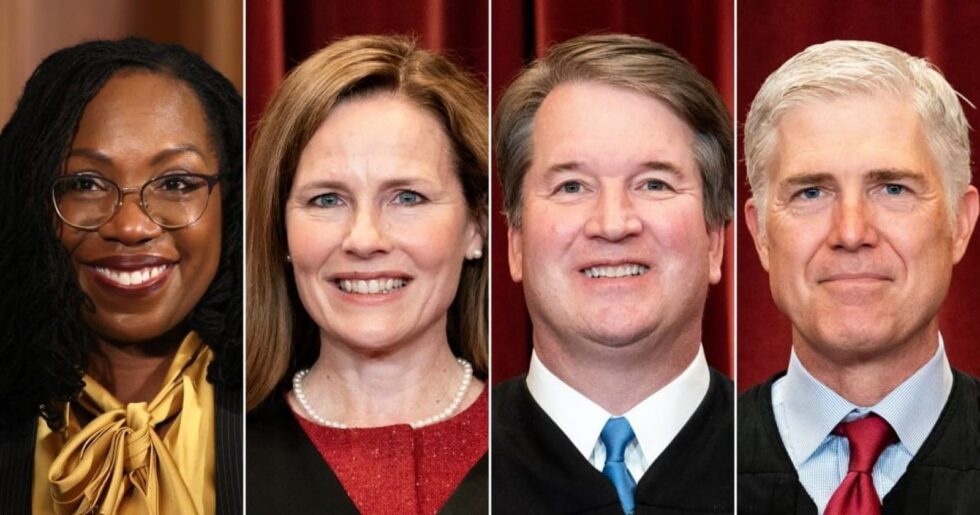
The renewed California case follows the Supreme Court’s 6-3 decision in Wolford v. Lopez.
That case centered on a Hawaii law that prohibited licensed concealed-carry holders from bringing firearms onto private property open to the public unless the property owner expressly gave permission.
Advertisement
That meant businesses such as stores, restaurants and gas stations were effectively gun-free by default unless their owners affirmatively allowed firearms.
Writing for the majority, Justice Samuel Alito said the rule violated the Second and Fourteenth Amendments.
“The regime hobbles what the Second Amendment protects: the right of Americans to carry arms for self-defense as they go about their daily lives,” Alito wrote.
The majority concluded that Hawaii had reversed the traditional legal default for businesses open to the public.
Advertisement
Historically, members of the public generally could enter such property unless the owner told them otherwise. Hawaii’s law instead required gun owners to obtain affirmative permission before entering while carrying a firearm.
The court found that the state had failed to identify a sufficiently similar historical tradition supporting that restriction.
The ruling built on the Supreme Court’s 2022 decision in New York State Rifle & Pistol Association v. Bruen, which held that the Second Amendment protects a right to carry handguns outside the home for self-defense.
Under the framework established in Bruen, governments defending modern gun restrictions generally must demonstrate that those laws are consistent with the nation’s historical tradition of firearm regulation.
The Supreme Court’s ruling in Wolford dealt specifically with Hawaii’s private-property rule and did not automatically strike down every type of “sensitive place” restriction.
Advertisement
That distinction will be important as the California litigation resumes.
The Ninth Circuit previously allowed California to enforce restrictions in several locations while blocking others, meaning the lower courts will still have to determine how broadly the Supreme Court’s reasoning applies to California’s law.
The Trump administration supported the challengers in Wolford, arguing that Hawaii’s default rule improperly restricted the right of licensed individuals to carry firearms for self-defense.
The Supreme Court ultimately agreed with the challengers on that issue.
With Wolford now decided, May v. Bonta can proceed toward further rulings on California’s restrictions.
The case could help determine how far states may go in declaring public locations off-limits to concealed firearms while remaining consistent with the Supreme Court’s increasingly developed Second Amendment framework.
This article may contain commentary which reflects the author’s opinion.