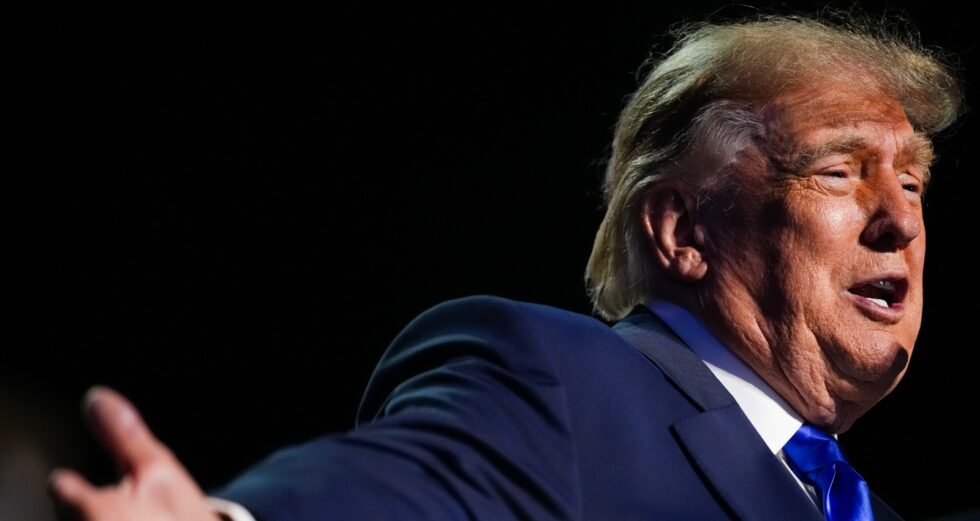
Commerce Secretary Howard Lutnick says President Donald Trump’s proposed $5,000 dividend for American adults would not be financed through taxpayer money or additional federal borrowing.
Instead, Lutnick says the administration believes it can generate the money through alternative revenue sources, including a new visa program for wealthy foreigners and gains tied to the federal government’s investment in Intel.
Advertisement
“It’s not tax money,” Lutnick told NBC News while arguing that the government could “earn” the money needed for Trump’s proposed payments.
Lutnick pointed first to the Trump Platinum Card, an upcoming Commerce Department program aimed at wealthy foreign nationals seeking extended access to the United States.
Under the proposal described by Lutnick, applicants would pay a $5 million contribution to the federal government after undergoing vetting and paying processing fees.
Advertisement
Lutnick said more than 100,000 people are already on a waiting list for the program and argued that full participation at that level could generate approximately $500 billion.
That calculation assumes all 100,000 prospective applicants ultimately qualify and make the full payment, something that has not yet occurred because the program has not fully launched.
Lutnick also cited the federal government’s stake in Intel as another possible source of money.
The government acquired approximately 433 million Intel shares for roughly $8.9 billion, and the value of that stake has increased substantially as Intel’s share price climbed.
Lutnick described the government’s gain as roughly $50 billion, although outside calculations put the current unrealized increase closer to the mid-$30 billion range depending on the share price used.
Those gains remain on paper unless the government sells the shares, meaning they are not currently available as cash for direct payments.
Advertisement
Lutnick’s explanation adds another potential financing mechanism to a proposal that administration officials have described in different ways since Trump unveiled it this week.
Vice President J.D. Vance has pointed to tariff revenue as one potential source, while National Economic Council Director Kevin Hassett has discussed using congressional budget reconciliation to establish funding.
Trump announced the proposal during the Republican midterm convention in Dallas, promising a $5,000 payment to American adults if Republicans retain control of both the House and Senate in November.
Trump described the payment as a dividend produced by the economic gains of his administration and said recipients would be required to spend the money inside the United States.
Advertisement
The proposal would carry an enormous price tag if implemented broadly.
FactCheck.org estimated that paying $5,000 to every adult U.S. citizen would cost approximately $1.2 trillion.
That means the $500 billion Lutnick says could potentially come from the Platinum Card program would cover less than half the estimated total even if every person currently on the waiting list ultimately paid the full $5 million.
The value of the government’s entire Intel stake would cover only a relatively small additional portion of the overall cost.
Trump has also suggested that tariff revenue could support the payments, although FactCheck.org found that current tariff collections fall far short of the amount required.
Advertisement
The president has suggested congressional approval may not be necessary, but outside analyses and members of his own administration have indicated that legislation would likely be required to authorize payments on that scale.
Hassett has specifically mentioned reconciliation legislation as a possible vehicle for establishing the program.
The administration has not yet released final eligibility rules, a payment timetable or a comprehensive funding mechanism that adds up to the full estimated cost.
Lutnick’s comments nevertheless provide the clearest explanation so far of how the White House believes at least part of the proposal could be funded without relying on traditional tax collections or additional deficit spending, Newsmax reported.
The central question now is whether those proposed revenue streams can generate anything close to the amount necessary to fulfill Trump’s $5,000 promise.
This article may contain commentary which reflects the author’s opinion.