An appeals court ordered California to answer the Trump administration’s emergency request concerning approximately 20,000 ballots sent to suspected noncitizens.
Advertisement
The development advances the Justice Department’s push for election safeguards as officials dispute how potentially ineligible ballots should be handled.
The Ninth Circuit issued its order late Friday, requiring California’s response by noon Saturday ahead of the midterm elections.
Federal prosecutors want election officials to separate ballots associated with individuals on a federal list while their eligibility undergoes review.
Advertisement
The requested safeguard would keep those ballots apart from other votes rather than allowing them to proceed through normal processing.
The appeals court’s order requires a response from California; it does not itself grant the administration’s requested ballot segregation.
That distinction leaves the underlying dispute unresolved while putting the state under a deadline to address the emergency application.
The department sought appellate intervention after U.S. District Judge David Carter did not rule within a timeframe prosecutors requested.
A hearing before Carter remains scheduled for Tuesday, Fox News correspondent Matt Finn reported, despite the appellate proceedings.
Whether the Ninth Circuit would decide the emergency request before that hearing remained unclear in the supplied report.
“This is an emergency,” the filing stated, underscoring the administration’s argument that delays could undermine protections for eligible voters.
Attorney General Todd Blanche and First Assistant U.S. Attorney Bill Essayli submitted the filing seeking urgent judicial action.
The department argued that continued processing could make disputed ballots untraceable and dilute votes cast by United States citizens.
That argument centers on California’s processing procedures, which eventually separate completed ballots from envelopes containing information identifying their senders.
California officials say that after signature verification, ballots are removed from identifying envelopes and processed alongside other ballots.
Once that separation occurs, officials argue, isolating ballots associated with particular individuals becomes impossible in cases where processing has finished.
The administration’s request therefore focuses on preserving the ability to distinguish disputed ballots before they enter the broader count.
Advertisement
According to court records cited in the report, Los Angeles County officials have already processed approximately 331,000 ballots.
That countywide figure describes overall processing and does not establish how many ballots came from people on the department’s list.
Essayli told Fox News Digital that investigators had evidence showing the 20,000 identified individuals received mail-in ballots during October.
Advertisement
Receiving a ballot does not establish that someone returned it, voted illegally, or ultimately had a ballot counted.
The report describes those individuals as suspected noncitizens, with eligibility still subject to the review sought by federal prosecutors.
Essayli’s office sued California October 15, approximately two weeks after the state began sending mail-in ballots to voters.
The lawsuit sought an order preventing ballots returned by the identified individuals from being counted, according to the supplied account.
By Friday, the department had escalated its effort through an emergency appellate request seeking a ruling by Saturday.
Essayli defended separating the disputed ballots as a limited measure while authorities address questions about voter eligibility.
He also said the approximately 20,000 figure represented the minimum number identified, rather than the outer limit.
Advertisement
“We believe it’s at a minimum of 20,000.”
“That’s the floor.”
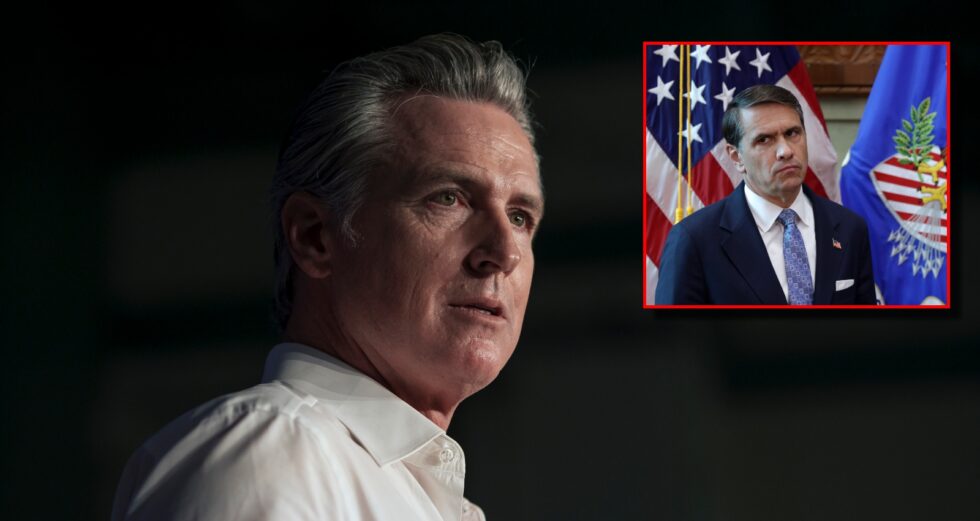
The prosecutor also clashed publicly with Democratic Governor Gavin Newsom over California’s procedures for preventing noncitizens from voting.
Essayli accused the state of inadequate citizenship verification that he argued allowed noncitizens to appear on voter rolls.
Newsom defended California’s election integrity and maintained that state officials were complying with the law, according to the report.
California election officials rejected the department’s demands and raised legal and practical objections in their court filings.
They argued county election offices lack the authority and access to federal records needed to verify voters’ citizenship status, Fox News reported.
For Republicans prioritizing election integrity, the administration’s request highlights the importance of resolving eligibility disputes before ballot identification becomes impossible.
This article may contain commentary which reflects the author’s opinion.