A federal judge has dismissed a lawsuit attempting to force the Department of Government Efficiency to follow federal open-records and transparency rules, finding that the plaintiffs failed to show the entity legally operates as a formal government advisory committee.
U.S. District Judge Jia M. Cobb ruled that the plaintiffs—Jerald Lentini, Joshua Erlich, and the group National Security Counselors—did not provide enough factual evidence in their complaint to prove that DOGE qualifies as an “advisory committee” under the Federal Advisory Committee Act.
The 1972 law requires official panels that advise the executive branch to register charters, hold public meetings, keep detailed minutes, and disclose their records. The plaintiffs argued that DOGE, originally announced by then-President-elect Donald Trump in November 2024 to “cut the Federal Government down to size,” was dodging those requirements while operating outside the formal United States DOGE Service created inside the Executive Office of the President.
In her opinion, Cobb wrote that the law requires a committee to have an organized structure, a fixed membership, and a specific purpose, while offering advice “as a group, and not as a collection of individuals.”
While the plaintiffs argued that Elon Musk headed the effort and that Trump named Musk and Vivek Ramaswamy to lead it to “provide advice and guidance from outside of Government,” Cobb noted the complaint failed to spell out who actually belongs to the group or how it functions. Post-inauguration, the lawsuit named only Musk as an active member and acknowledged that “little is publicly known about its structure or membership” due to a lack of transparency.
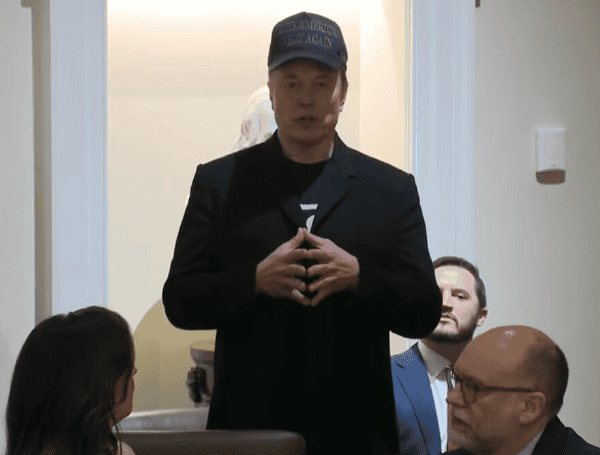
Elon Musk Calls DOGE Team “Tech Support” For Government Systems At Trump Cabinet Meeting
“While the Court does not go so far as to suggest that, to get past a motion to dismiss, Plaintiffs should have come armed with a full roster of DOGE’s staff, an organizational chart, or something of the like, Plaintiffs at least needed to offer more than they have here, which is next to nothing,” Cobb wrote.
Cobb also pointed out that the complaint failed to allege that DOGE was established by statute or by a sitting president, noting Trump was merely president-elect in November 2024 when the group was formed. She added that the lawsuit lacked specific facts showing the current executive branch or federal agencies exercise the type of strict management or control over DOGE required to prove it is being “utilized” under the statute.
The plaintiffs had argued that they should not be penalized for sparse details before being allowed to gather evidence through the legal discovery process. Cobb rejected that claim, noting that civil court rules require a plausible factual claim before a case can proceed to discovery.
Cobb emphasized that the ruling does not permanently decide whether DOGE or related organizations could ever meet the legal definition of an advisory committee in the future, concluding only that the current lawsuit fell short of legal pleading standards.
READ: Federal Judge Tosses Former NTSB Member’s Lawsuit Over Trump Firing
Please make a small donation to the Tampa Free Press to help sustain independent journalism. Your contribution enables us to continue delivering high-quality, local, and national news coverage.
Sign up: Subscribe to our free newsletter for a curated selection of top stories delivered straight to your inbox.
Judge Dismisses Bid To Force Musk’s DOGE Out Into The Open