The Senate overwhelmingly advanced a sweeping bipartisan energy permitting bill Monday, but the legislation still faces major obstacles before reaching President Donald Trump’s desk.
Advertisement
Senators voted 73-25 to begin formal consideration of the Bipartisan American Affordability and Jobs Act, delivering supporters a decisive procedural victory during Congress’ lame-duck session.
The nearly 500-page proposal is designed to accelerate federal approval of pipelines, power plants, mines, transmission lines, and other major infrastructure projects.
It would also change environmental review requirements and require massive data centers to shoulder more of the costs associated with expanding the electrical grid.
Advertisement
Republicans overwhelmingly supported advancing the measure, voting 51-1 in favor, while Democrats were sharply divided.
Twenty-one Democrats and independent Sen. Angus King of Maine joined Republicans in advancing the bill, while 23 Democrats and independent Sen. Bernie Sanders opposed the motion.
The legislation was negotiated by Republican Sens. Shelley Moore Capito of West Virginia and Mike Lee of Utah alongside Democratic Sens. Sheldon Whitehouse of Rhode Island and Martin Heinrich of New Mexico.
Capito argued that years of permitting delays have prevented companies from making critical investments in American energy and infrastructure, The Wall Street Journal reported.
“For far too long, critical investments in our nation’s infrastructure, energy production, and economy have been forced to sit on the sidelines due to endless red tape, duplicative reviews, and regulatory uncertainty,” Capito said, per the WSJ.
“It is time for Congress to act. It is, actually, well past time,” she added.
The legislation would overhaul portions of the National Environmental Policy Act, Clean Water Act and Endangered Species Act while shortening timelines for certain lawsuits and environmental reviews.
Supporters argue the changes could unleash new domestic energy production while making it easier to build the transmission infrastructure needed to move electricity around the country.
The measure has attracted support from both the American Petroleum Institute and clean-energy industry groups.
Trump strongly endorsed the legislation Sunday, calling it a “BIG WIN for U.S. ENERGY INDEPENDENCE and DOMINANCE.”
The president said the bill would “ensure that we can build Pipelines, Mines, and Power Plants faster than ever before, lowering Energy Costs for American Families.”
Trump, however, complicated negotiations hours before Monday’s vote when he reiterated his opposition to wind power.
“Well, the bill hasn’t been fully negotiated,” Trump told reporters after learning that wind projects could benefit from provisions in the legislation.
Advertisement
“I will not approve wind turbines because wind turbines are a major loser.”
Those comments immediately raised concerns among Democratic supporters because the legislation contains protections affecting previously approved renewable-energy projects.
Whitehouse said implementation of those provisions would be critical to maintaining Democratic support.
Advertisement
“The bill’s success depends on Trump officials getting wind turbines up and spinning to get affordable energy on the grid,” Whitehouse said.
The White House subsequently reaffirmed that Trump “stands 100%” behind the permitting bill despite his comments about wind turbines.
Democrats nevertheless remain divided.
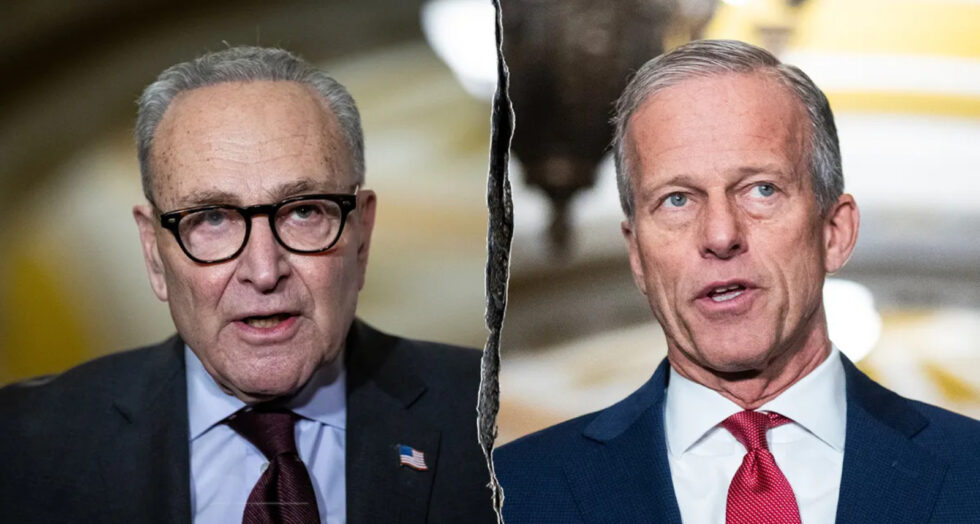
Senate Minority Leader Chuck Schumer supported beginning debate but said he still has “outstanding concerns” that he intends to address through amendments.
🚨 JUST IN: The US Senate just ADVANCED the President Trump-backed American affordability and jobs bill, by a vote of 73-25 — a HUGE step toward freeing America to BUILD again
TRUMP: “This Landmark Permitting Reform Legislation will codify our America First Energy Agenda, and ensure that we can build Pipelines, Mines, and Power Plants faster than ever before, lowering Energy Costs for American Families, and creating High Paying American Jobs.” 🇺🇸
– Has data centers pay the full cost of the new grid they need
– Speeds up at least $10 BILLION a year in HUD housing money
– Ends automatic historic preservation reviews for many federally backed housing projects
– Requires planning for power lines across regions, with a federal backstop when states or localities block themGet it to President Trump’s desk ASAP!
— Eric Daugherty (@EricLDaugh) November 9, 2026
Democratic Sen. Catherine Cortez Masto of Nevada has warned she could oppose final passage unless provisions involving the National Historic Preservation Act are changed.
Republican Sen. Lisa Murkowski of Alaska has expressed similar concerns.
Advertisement
Several environmental groups and Native American organizations also oppose the legislation, arguing it could weaken environmental safeguards and tribal protections.
Supporters released revised language over the weekend intended to strengthen tribal consultation and expand opportunities for states and tribes to participate in transmission planning.
Heinrich said the changes addressed concerns raised during negotiations.
“Americans can’t afford to wait for lower electricity prices,” Heinrich said. “We need to pass this bill now.”
The legislation also attempts to address growing concern about electricity demand from artificial intelligence data centers.
Under the proposal, large data centers would be required to contribute more toward grid improvements needed to accommodate their enormous power consumption rather than shifting those expenses to residential customers.
Despite Monday’s 73-vote showing, passage remains uncertain.
The Senate must still work through amendments and approve the final legislation before the House can consider it.
This article may contain commentary which reflects the author’s opinion.