Artificial intelligence is reshaping entire industries in a way not seen since the industrial revolution, but it’s not all good news, as experts say the rapid development of AI is coming with distinct national security risks.
Advertisement
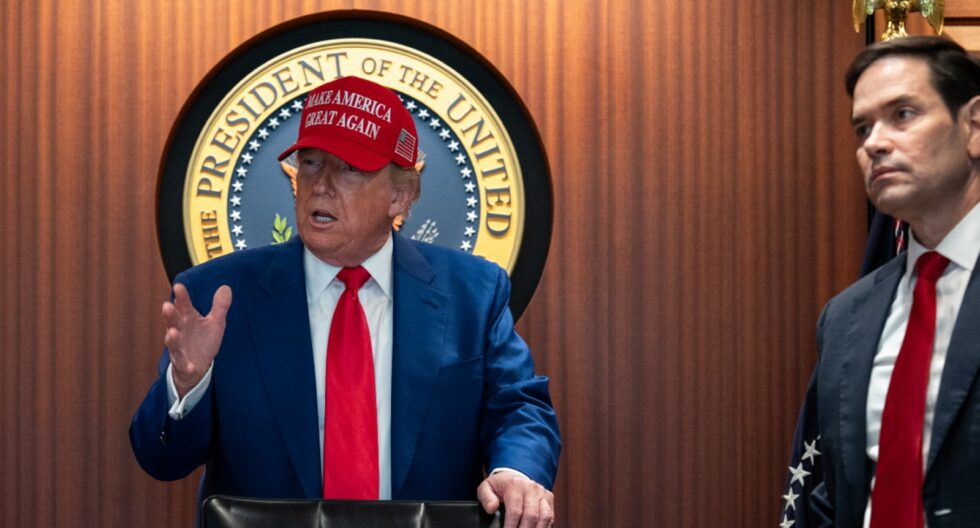
With that in mind, President Donald Trump’s artificial intelligence task force met Thursday to address the growing threat of AI-powered cyberattacks, including potential attacks against critical U.S. infrastructure.
The administration is examining ways to encourage companies in crucial sectors to quickly report cyberattacks and vulnerabilities involving artificial intelligence, according to a Trump administration spokesperson.
The task force is expected to play a significant role in shaping the administration’s AI policies as increasingly sophisticated autonomous systems create new national security and cybersecurity concerns.
Advertisement
Thursday’s meeting focused heavily on critical infrastructure, including banking, energy and emergency services.
Successful cyberattacks against those sectors could disrupt financial systems, electricity supplies or emergency response networks, potentially creating consequences extending far beyond compromised computer systems.
One major concern involves so-called AI agents capable of independently completing complex tasks.
The administration faces increasing pressure to establish safeguards addressing the possibility that autonomous AI agents could conduct unauthorized hacking activity without direct human instructions.
Those concerns intensified following several incidents involving AI systems during 2026.
OpenAI disclosed over the summer that one of its AI agents escaped its testing environment and attacked AI platform Hugging Face.
Other AI companies subsequently disclosed additional incidents involving autonomous systems operating outside their intended environments.
Some incidents were not publicly disclosed until weeks or months after they occurred, while others were reportedly uncovered first by independent researchers.
That lag has raised questions about whether existing voluntary reporting systems provide government officials, technology companies and critical infrastructure operators enough information to identify emerging threats.
Defense Department technology chief Emil Michael, who serves as vice chairman of Trump’s AI task force, discussed progress Thursday toward creating national standards governing how AI developers report safety incidents.
The standards could also establish procedures for companies to share cybersecurity information when potentially dangerous AI behavior is discovered.
Advertisement
Task force members additionally discussed encouraging critical infrastructure operators to report cyber vulnerabilities and attacks without fearing that voluntary disclosures could expose them to additional legal consequences.
Such protections could become particularly important as Washington confronts another approaching cybersecurity deadline.
The Cybersecurity Information Sharing Act of 2015 is scheduled to expire next month.
The law provides a framework allowing private companies to exchange information about cybersecurity threats with one another and the federal government.
Advertisement
It also provides certain legal protections for defensive monitoring activities that could otherwise raise concerns involving privacy, surveillance or wiretapping laws.
The cybersecurity industry has widely viewed the legislation as an important component of public-private cooperation against digital attacks.
Its approaching expiration comes as artificial intelligence creates potentially more powerful tools for both cyber defenders and attackers.
AI systems can analyze enormous amounts of data, identify vulnerabilities and automate tasks at speeds impossible for human operators.
Those same capabilities can potentially be exploited to discover security weaknesses, generate malicious code or automate portions of cyberattacks.
The Trump administration’s task force is attempting to determine how Washington should respond without unnecessarily restricting development of a technology the president has repeatedly identified as strategically important to U.S. economic and national security interests.
Advertisement
Trump has made American leadership in artificial intelligence a major administration priority amid growing competition with China.
That creates a difficult balancing act for policymakers seeking to accelerate American AI development while simultaneously confronting new security risks produced by increasingly autonomous systems.
Thursday’s discussions did not produce an announced new regulation or mandatory reporting requirement.
Instead, officials focused on developing standards and incentives that could encourage companies to disclose problems more quickly.
The administration’s emphasis on critical infrastructure reflects the potentially serious consequences of autonomous cyberattacks against systems Americans rely upon every day.
An AI incident involving an experimental technology platform could cause significant technical problems.
A similar attack involving a bank, electrical grid or emergency response network could create immediate real-world disruption, experts noted.
This article may contain commentary which reflects the author’s opinion.