The European Medicines Agency just approved a new Moderna mRNA flu vaccine—after clinical data demonstrated strong protection for older adults. In the United States, the same technology is facing a political blockade.
The FDA recently refused to review an mRNA flu vaccine application—despite a 40,000-person clinical trial showing it outperformed standard flu shots in older adults. The agency later reversed course, but the damage was done:
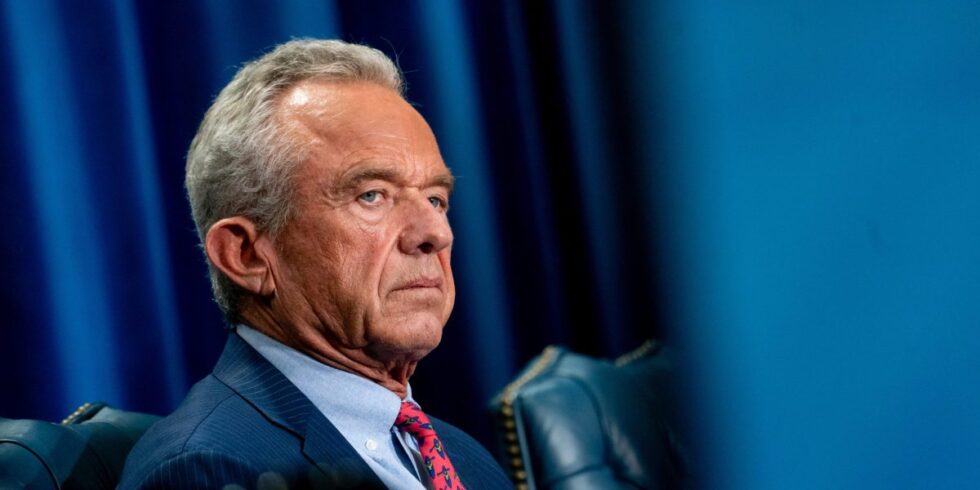
Across the U.S. biotech sector, the conclusion is now widespread: Secretary Robert F. Kennedy Jr. is subjecting mRNA medicines to political scrutiny rather than scientific review.
The message to investors is unmistakable. And the numbers confirm it.
In 2023, investors poured more than $500 million into mRNA vaccines. Last year, that figure collapsed to $174 million—a 66% decline in a single year. Before the FDA reversed course, Moderna’s CEO Stéphane Bancel warned the company would no longer pursue new late-stage vaccine trials in the United States. “You cannot make a return on investment,” he said, “if you don’t have access to the U.S. market.” Moderna is not alone.
This is a stunning reversal for a technology that President Trump championed. Operation Warp Speed—his administration’s public-private partnership—helped bring the COVID-19 vaccine to market at record speed. The consequences of the current policy shift are already materializing.
NTx Bio has halted construction of a $31 million RNA manufacturing facility in Plano, Texas. Announced by Governor Greg Abbott in May 2025 and backed by $1.5 million from the Texas Enterprise Fund, the plant was meant to anchor a $4 billion life sciences innovation district. Eight months later, the jobs are gone.
The rest of the world isn’t waiting. Mexico launched “Plan Mexico”—a five-year national strategy to build domestic mRNA manufacturing. President Trump has promised to bring manufacturing home. His administration is actively driving one of America’s most strategic industries offshore.
The U.K. committed £1.1 billion in R&D and is building a 250-million-dose manufacturing facility. Canada established a long-term Moderna partnership. Australia is targeting domestic production by 2026. Rwanda is building Africa’s first mRNA manufacturing hub. Senegal, Indonesia, and Brazil are all entering new biopharma partnerships.
The United States is conspicuously absent from that list.
These are high-skilled jobs—research, development, manufacturing, quality control, specialized supply chains. Each facility lost represents hundreds of direct positions and thousands more in supporting industries.
Our adversaries are seizing the advantage. China now leads 46% of all mRNA vaccines in global clinical development—up from 15% just five years ago. Beijing isn’t waiting for Washington. It’s building the manufacturing capacity and patent portfolio we’re abandoning.
We have seen this before. It took a $52 billion federal investment to begin rebuilding America’s semiconductor industry after we ceded that ground to foreign competitors. We are watching the same exodus with mRNA—this time with no excuse.
The irony is sharp. The United States provided the foundational research that made mRNA vaccines possible—decades of NIH grants, private investment, and Operation Warp Speed. That investment is now paying dividends for other nations while American companies face a hostile regulatory climate at home.
The timing could not be worse. mRNA is just beginning to fulfill its promise beyond COVID. Clinical trials are showing success against pancreatic cancer, melanoma, and rare genetic disorders that were previously untreatable. The pipeline of new mRNA therapies is entering its most consequential growth phase.
Other nations see where this is going. They are building the workforce, infrastructure, manufacturing capacity, and regulatory frameworks needed to capture that growth—for their workers and their patients.
The question is not whether mRNA manufacturing will expand globally—it already is. The question is whether American companies will participate from facilities on U.S. soil or somewhere else. America won the race to develop mRNA medicine. Secretary Kennedy’s ideological agenda is forfeiting the prize.
The opinions expressed in Fortune.com commentary pieces are solely the views of their authors and do not necessarily reflect the opinions and beliefs of Fortune.