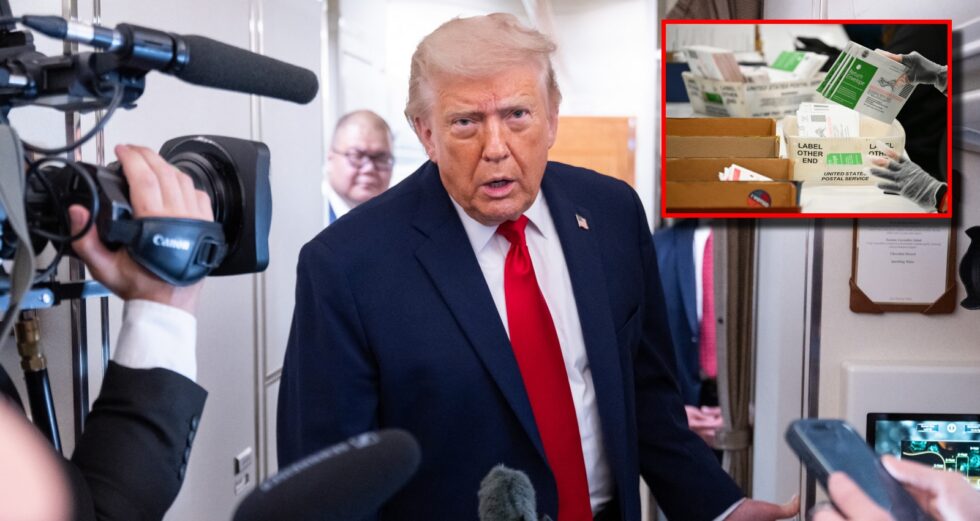
Arizona Attorney General Kris Mayes is moving forward with plans to seek new indictments against a group of Trump allies accused of participating in the state’s 2020 alternate electors effort after suffering a setback at the Arizona Supreme Court.
The attorney general’s office confirmed Thursday that prosecutors intend to return the matter to a grand jury following a ruling that effectively leaves in place a lower court decision requiring additional proceedings in the case.
Advertisement
“The Arizona Attorney General’s Office will return this case to the grand jury,” a spokesperson for Mayes said in a statement. “We decline to comment further at this time.”
The decision comes after the Arizona Supreme Court declined to revive the original prosecution, marking the latest twist in one of several election-related cases filed around the country in the aftermath of the 2020 presidential election.
The case centers on allegations that a group of Republican activists and Trump allies attempted to advance claims of election fraud and submit documents identifying themselves as Arizona’s legitimate presidential electors despite President Donald Trump’s loss in the state.
Among those charged in 2024 were former White House Chief of Staff Mark Meadows, former New York City Mayor Rudy Giuliani and numerous other Trump allies.
Advertisement
Prosecutors argued that the defendants participated in a scheme to create and submit alternate electoral documents after the 2020 election.
The defendants have denied wrongdoing and argued their actions were lawful.
Arizona was one of the closest states in the 2020 election.
Former President Joe Biden carried the state by just over 10,000 votes, making it one of the narrowest margins in the nation.
It’s possible President Trump himself could also be caught up in the new proceedings if they go on past his current term.
The latest legal battle focuses less on the underlying allegations and more on how the case was originally presented to the grand jury.
Last year, a Maricopa County judge ruled that prosecutors should return the matter to a grand jury after finding that jurors were not provided with a copy of the Electoral Count Act of 1887, a federal law governing the counting and certification of electoral votes.
Defense attorneys argued the law was central to their legal position and should have been presented to the grand jury before indictments were issued.
In announcing her appeal of that ruling last November, Mayes defended the original prosecution.
“An independent grand jury of ordinary Arizonans found that there was sufficient cause to charge the defendants with the alleged crimes,” Mayes said at the time.
“These defendants were charged based on two things: the facts and the law.”
With the Arizona Supreme Court declining to intervene, prosecutors must now present the case again to a new grand jury if they wish to continue pursuing charges.
Not every defendant remains in active litigation. According to reports, three individuals have already resolved their cases, including one Republican activist who pleaded guilty in August 2024 to a misdemeanor charge involving the filing of a false document.
Arizona is one of several states that pursued legal action related to alternate elector efforts following the 2020 election.
Similar cases were filed in Georgia, Michigan, Nevada and Wisconsin, though the outcomes have varied considerably.
In Michigan, a federal judge dismissed charges against 15 defendants last year. In Georgia, the high-profile racketeering case that included Trump as a defendant ultimately collapsed after Fulton County District Attorney Fani Willis was removed from the case because of her relationship with the special prosecutor she appointed, Politico reported.
The Arizona case now enters a new phase as prosecutors prepare to present evidence once again to a grand jury in an effort to secure fresh indictments and keep one of the state’s most significant election-related prosecutions alive.
The renewed grand jury proceedings could determine whether the case moves forward toward trial or faces additional legal challenges in the months ahead.
This article may contain commentary which reflects the author’s opinion.