A dramatic overnight vote in Washington has placed one of the most powerful positions in the federal government into new hands.
The outcome was decided by the narrowest of margins, and the official taking control could immediately inherit a politically explosive decision involving one of the most recognizable figures from the COVID-19 pandemic.
Advertisement
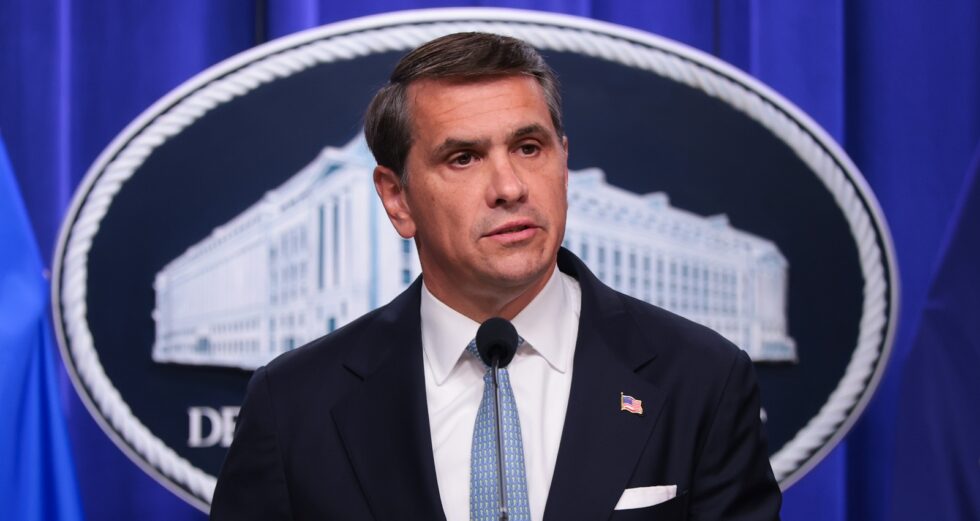
The Senate confirmed Todd Blanche as attorney general early Saturday in a 50-49 vote, putting him in charge of the Justice Department as a congressional criminal referral involving Dr. Anthony Fauci awaits consideration by federal prosecutors.
The referral followed Fauci’s recent appearance before Senate investigators, where the former National Institute of Allergy and Infectious Diseases director invoked his Fifth Amendment right against self-incrimination 111 times while testifying under subpoena.
A Senate committee subsequently referred Fauci to the Justice Department for possible criminal prosecution, meaning Blanche’s department will have to determine whether the evidence warrants further investigation or potential charges.
Advertisement
The referral does not establish that Fauci committed a crime, and invoking the Fifth Amendment cannot itself be treated as evidence of guilt.
Republican lawmakers have nevertheless argued that Fauci should face legal consequences stemming from their investigation into the federal government’s response to COVID-19, while Democrats have characterized the inquiry as politically motivated.
Advertisement
Blanche’s confirmation means responsibility for determining how DOJ handles that referral now rests with a department he formally leads after serving as acting attorney general since Pam Bondi’s departure in April.
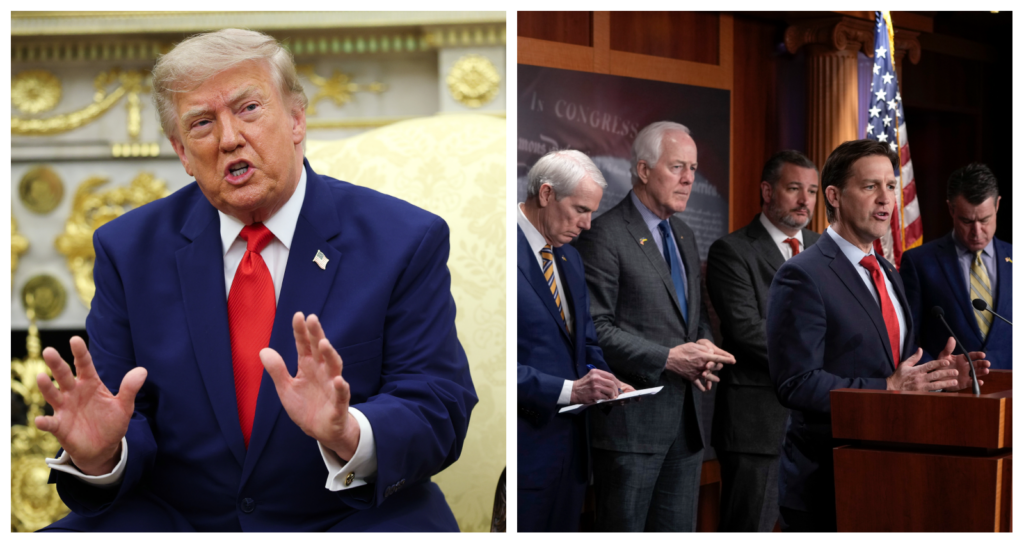
His confirmation almost failed, with every Senate Democrat voting against him along with Republican Sens. Susan Collins of Maine and Lisa Murkowski of Alaska.
Sen. Mitch McConnell, R-Ky., who has been absent from the Senate since mid-June, did not vote, leaving Republicans with virtually no margin for additional defections.
That placed Sen. Bill Cassidy, R-La., in the position of casting the decisive vote after he had remained the final Republican holdout on Blanche’s nomination.
Cassidy acknowledged his reservations about Blanche before announcing that he would nevertheless support his confirmation.
“Mr. Blanche is not perfect, and he will tell you this, but the choice is not between perfection and Mr. Blanche,” Cassidy said.
“It is between Mr. Blanche and another acting Attorney General who may not run the department effectively under President Trump,” Cassidy continued.
Cassidy also emphasized that his vote should not be interpreted as an endorsement of every action taken by President Donald Trump or his administration.
Advertisement
“This is not a referendum on President Trump,” Cassidy said.
“It is a decision regarding Mr. Blanche in very specific circumstances,” he added.
“All considered, I will vote for Mr. Blanche,” Cassidy concluded. “I’ll be criticized for this vote. What’s new?”
Senate Democratic Whip Dick Durbin, D-Ill., sharply criticized the confirmation, calling the Senate’s decision “a grave mistake.”
Advertisement
Blanche previously served as Trump’s personal defense attorney before entering the administration and ultimately becoming acting attorney general following Bondi’s ouster.
His permanent confirmation now places him at the head of a Justice Department confronting several politically sensitive matters, with congressional Republicans certain to watch closely for what happens with their Fauci referral.
Fauci’s Senate testimony came as lawmakers continue examining pandemic-era government policies, federal funding connected to scientific research and questions surrounding the origins of COVID-19.
Advertisement
Sen. Rand Paul, R-Ky., who subpoenaed Fauci to testify, has been among the most vocal lawmakers demanding accountability and has questioned whether the pardon Fauci received from former President Joe Biden would protect him from every potential avenue of prosecution.
Paul also posted a photograph of Fauci sitting alone at the Senate hearing table following his testimony and wrote, “Accountability is coming.”
Any prosecution would require federal investigators and prosecutors to independently determine that sufficient admissible evidence exists to support criminal charges, regardless of what Congress recommended in its referral.
This article may contain commentary which reflects the author’s opinion.