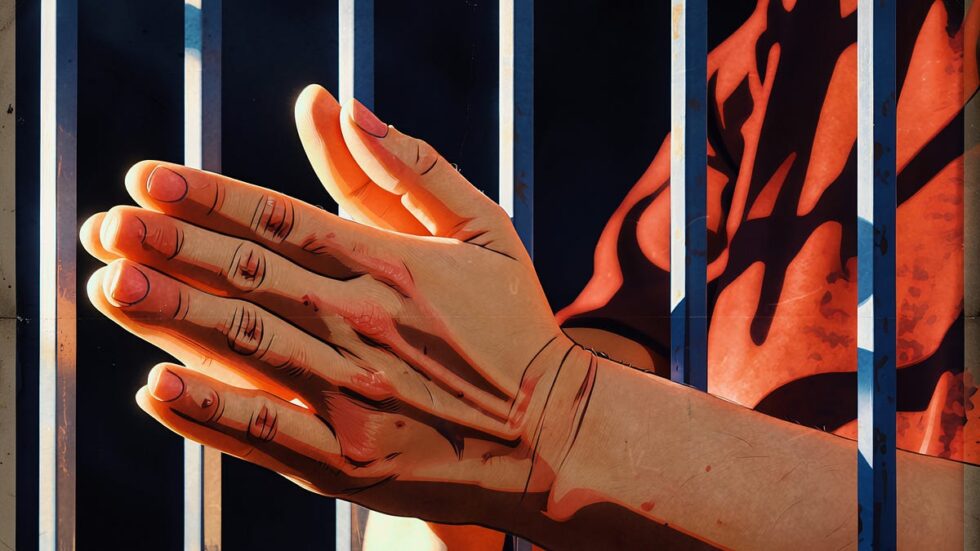
There are moments when you hear enough stories, meet enough families, and see enough broken lives that you can no longer pretend the system is working the way it should.This is one of those moments.It’s time for a real, honest conversation about clemency and ask why so many people seem so uncomfortable with it.Somewhere along the way, clemency became a “scandal” instead of a safeguard. Pardons became political weapons in the public debate, and mercy started being talked about as if it were weakness, favoritism, or some loophole for the undeserving.That’s wrong.Mercy isn’t weakness… and showing mercy isn’t pretending crime doesn’t matter.Mercy is what a just system needs when punishment has gone too far, or when prosecutors overreach and sentences become detached from reality. Mercy is for the person sitting behind bars who shouldn’t have been there to begin with.Clemency exists for these reasons. And there are men and women sitting in cells right now who need it.WHAT WEAPONIZATION REALLY MEANSBefore we can talk honestly about clemency, we have to talk about weaponization.Weaponization is a big, broad term, and it involves more than just government agencies or federal courtrooms. It can also include prosecutorial overreach, harsh charging decisions, selective enforcement, excessive sentencing, and the kind of institutional abuse that doesn’t stop once someone is convicted.Weaponization also reaches families.It shows up when the wife’s trying to pay legal bills while raising children alone, the parent driving hours to visit a son or daughter one who was just suddenly moved to another facility, and the kids forced to adjust to a new normal they never asked for and don’t understand.Furthermore, weaponization doesn’t always mean a person is innocent.A person can be guilty of a crime and still be caught in a system that went too far. Someone can make a mistake, violate the law, or be convicted of an offense, while still receiving a punishment that doesn’t fit what actually happened.Justice isn’t just about guilt. It’s about proportion. When punishment is excessive, and charges are inflated, or the wrong legal theory is applied and the sentence doesn’t match the crime, the system isn’t delivering justice. And that’s where mercy enters the equation. WHAT CYNTHIA HAS SEENSince launching Weaponization Watch, Cynthia Hughes has met families who are trying to survive the aftermath of a system that has completely upended their lives.She has listened to wives, husbands, parents, and children describe what it feels like to lose someone not only to incarceration, but to a legal process that feels overwhelming, expensive, punishing, and at times impossible to fight.These families aren’t demanding the world on a silver platter. They want basic fairness, proportionality, and a real look at whether justice was actually served.Families come to this fight for many different reasons. Some believe their loved one is truly innocent. Others believe the punishment doesn’t fit the crime, the wrong jurisdiction or legal theory changed the entire course of the case, or a person who did wrong received a sentence way beyond what common sense or justice should allow.So, again, for those in the back… clemency doesn’t mean every person behind bars is innocent.It’s about admitting the system can get things wrong, and sometimes it goes too far even when someone did something wrong.WHY CLEMENCY EXISTSClemency wasn’t created for perfect cases.It was created because human systems tend to fail.Courts can get it wrong, prosecutors can overcharge, and judges can impose sentences that are wildly disconnected from the facts. Laws can be applied in ways that produce outcomes no reasonable person would defend. And sometimes, years later, the full picture looks very different from the one that was presented at trial or sentencing.That’s another reason why clemency matters.Clemency exists for the truly innocent, the overcharged, the oversentenced, and the people caught under the wrong legal theory or trapped in the wrong jurisdiction. It also exists for those whose punishment went far beyond the nature of the offense, including people who were guilty, served time, changed their lives, and deserve a real chance to begin again.THE PARDON SMEARPardons have also gotten a bad rap, especially in the current political climate.We’ve watched critics treat clemency as if it undermines the justice system. But the truth is the opposite. Clemency is part of the justice system. It’s one of the few built-in tools available when the process fails, goes too far, or produces an outcome that cries out for correction.The President’s clemency power is there for a reason.It’s not supposed to sit there untouched, collecting dust on a shelf because the media might complain or political opponents might sneer. It’s a constitutional power meant to be used when justice demands another look.President Trump has faced criticism for issuing pardons — and the January 6 defendants are among the most prominent examples. But whether people agreed with every decision or not, there are people in this country who needed mercy, and many who still do.Clemency shouldn’t be treated like a dirty word just because some people dislike who is holding the pen, or the autopen.ED MARTIN AND THE OFFICE OF MERCYPresident Trump also chose Ed Martin to serve as U.S. Pardon Attorney, which is a very important role. And that matters because the Office of the Pardon Attorney demands someone who recognizes what too many people forget: mercy isn’t weakness, people can deserve a second chance, and cases can’t always be judged by a media headline, charging document, or the loudest political narrative.Clemency work involves a heck of a lot more than paperwork. It takes judgment, moral clarity, faith in restoration, and the ability to look at a person’s full story instead of reducing them to the worst moment of their life.And speaking of moments… right now, America needs people inside the process who understand that justice without mercy becomes something cold, rigid, and very dangerous.A JUBILEE MINDSETThere’s also something deeply meaningful about the timing of all this.In the biblical tradition, Jubilee represents restoration, renewal, and the lifting of burdens. It’s a time associated with debts being forgiven, people being released, and communities being given the chance to reset.And in 2026, many Christians are also recognizing a special Jubilee Year of St. Francis, a year that carries its own spiritual emphasis on renewal, humility, and mercy.Whether a person looks at Jubilee through a religious lens or simply understands it as a symbol, the message is powerful.A healthy society can’t run on endless punishment. At some point, there has to be room for restoration, for mercy treated as wisdom instead of weakness, and for leaders willing to ask whether enough is enough.WHY THIS MATTERS NOWThere are men and women behind bars right at this very moment who need that kind of mercy.The people who need mercy don’t all have the same story. Some are innocent, others were overcharged or oversentenced, and many were pulled into legal theories that should’ve been stretched as far as they were. There are also people who might be guilty, but have already paid a price far beyond what justice required.And behind many of those people are families still trying to function.Clemency isn’t ignoring wrongdoing. It’s recognizing when the punishment has become excessive, when the process has failed, or when the person in prison deserves the chance to return to life with accountability, humility, and hope.A justice system that has no room for mercy isn’t strong. It’s broken.So here we are…We’re at a moment when the country can either keep treating clemency like something shameful or finally recognize it for the meaningful tool it is.Mercy is needed for many, Mr. President. There are so many people still waiting for someone in power to recognize the human cost of what this system has done.Sometimes, clemency is the only way justice finds its way back.Weaponization Watch exists because the public needs to understand how deeply these failures reach.Cynthia Hughes has spent years standing beside families crushed by a system that too often refuses to admit when it has gone too far. Weaponization Watch is the next fight. We’re exposing how lawfare works and making sure the people caught in it aren’t forgotten.Click here to contribute.Weaponization Watch is a project of The Hughes Foundation, a 501(c)(3) nonprofit organization. All donations are tax-deductible to the fullest extent allowed by law.Thank you for your support of due process and accountability.Stay connected and follow the fight for justice on social media.[ X ] [ TRUTH SOCIAL ] [ GETTR ] [ INSTAGRAM ] [ FACEBOOK ] [CYNTHIA HUGHES]
Source link