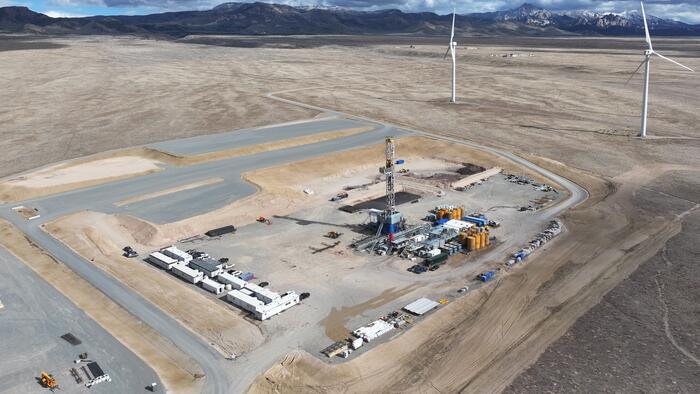
While the Trump administration keeps pushing domestic energy addition through funding vehicles and executive orders aimed at grid reliability and AI-driven demand growth, two next-generation geothermal developers just posted updates that move past announcements and into measurable progress on drilling and capital formation.Fervo announced that its third-generation well design at Cape Station in Utah has lifted drilling rates by 143% compared with the first Cape well. The latest well, Sawtooth 7, reached 19,448 feet measured depth, including a 7,500-foot lateral, in just 21 days. That’s a 70% reduction in drilling time versus the prior design generation, even as the team targets hotter rock at 460 degrees Fahrenheit and larger casing diameters for higher output per well. Phase I at Cape Station remains on track for first power later this year, with Phase II targeting 400 MW online in 2028. Faster wells directly compress costs and timelines for the kind of repeatable deployment investors have been waiting to see.Fervo’s Cape Phase II is tracking toward roughly $5,500/kW installed, with a longer-term target of $3,000/kW as the drilling learning curve keeps compounding. That remains well below the Georgia Vogtle nuclear units, which ultimately landed somewhere between $10,000 and $15,000/kW after years of delays and overruns.As we reported back in February when the DOE released its $171.5 million Notice of Funding Opportunity for EGS field tests and resource confirmation drilling, the policy environment has turned supportive for technologies that can deliver firm, 24/7 carbon-free power without weather dependence. Quaise Energy moved in parallel with the initial close of a $134 million Series B round, bringing total funding to roughly $230 million. Prelude Ventures led, with strategic participation from JERA and Idemitsu Kosan of Japan. The proceeds target Project Obsidian, the company’s planned first commercial superhot geothermal plant on federal leases in central Oregon near Newberry Volcano. Quaise’s millimeter-wave drilling technology is approaching one kilometer of depth in Texas test wells after penetrating more than 100 meters of granite. The goal remains first electrons to the grid by 2030 from a facility with long-term gigawatt-scale potential once superhot rock above 300 degrees Celsius is routinely accessed.Both moves align with the administration’s emphasis on unleashing American energy dominance and securing reliable power for data centers that cannot tolerate intermittency. Geothermal’s baseload profile makes it a natural complement to the nuclear builds that remain frustratingly slow on actual construction despite regulatory tailwinds.
Source link