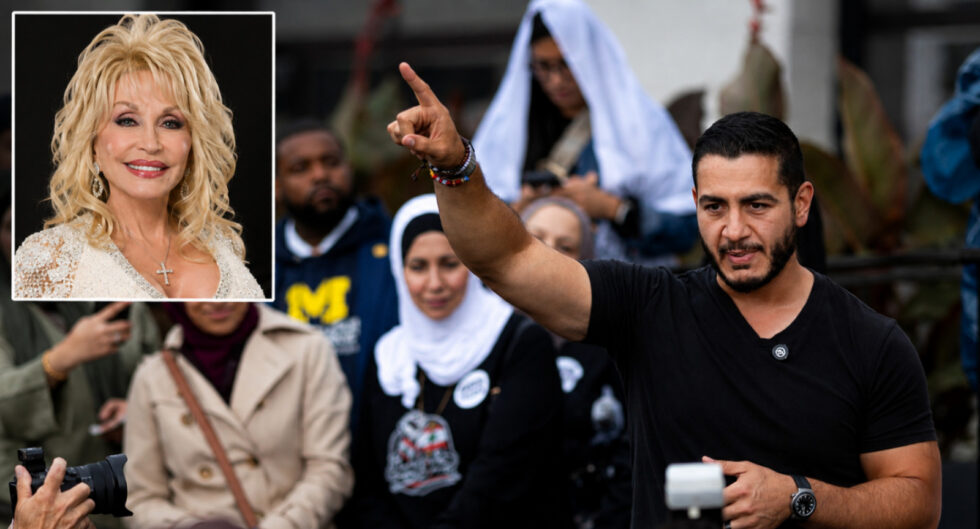
Michigan Democratic Senate nominee Abdul El-Sayed is back in the hot seat—again.
El-Sayed is facing a wave of criticism after posting a tribute to country music legend Dolly Parton that detractors accused of turning the beloved entertainer’s death into an opportunity to promote progressive political themes.
Advertisement
Parton died Tuesday at age 80 following what her representatives described as a “brief battle with cancer.”
As tributes poured in from Americans across the political spectrum, El-Sayed joined the conversation with a message highlighting poverty and inequality — language that quickly drew fire from conservatives who argued the Democrat was injecting politics into a moment of national mourning.
“Dolly Parton used her gift for music to highlight the challenges of poverty, inequality, and struggle in ways that uplifted and inspired working people,” El-Sayed posted on X Tuesday.
Advertisement
El-Sayed followed the statement with lyrics from Parton’s autobiographical hit “Coat of Many Colors,” a song inspired by her impoverished childhood in rural Tennessee.
The reaction was swift.
Advertisement
El-Sayed’s post received significantly more critical responses and quote-posts than positive engagement, with conservative commentators and other users accusing the progressive Senate candidate of using Parton’s death to advance a political message.
Twitchy Managing Editor Sam Janney offered one of the harshest responses.
“Leave it to you to exploit her death for political gain,” Janney wrote, followed by an insult.
Washington Free Beacon reporter Chuck Ross similarly criticized the post.
“I didn’t think anyone would actually politicize Dolly Parton’s death, but here we are,” Ross wrote.
Townhall Media’s Storm Paglia responded, “Quiet,” before adding, “You hate America.”
Senate Leadership Fund rapid response director Chloe Smith also jumped into the backlash, responding to El-Sayed in meme form with the message, “Stay away from her.”
Another user challenged the apparent ideological connection El-Sayed sought to draw between Parton and working-class politics.
“Gimme a break, Abdul is no fan of Dolly and I doubt she of him,” the user wrote. “Dolly is a hard working kind person, NOT a socialist.”
Advertisement
Another account delivered an even shorter verdict, calling El-Sayed a “Pandering pathetic buffoon.”
Conservative writer Debbie Schlussel accused El-Sayed of attempting to manufacture a connection to working-class Americans.
“Hilarious watching this privileged spoiled rich kid from wealthy Bloomfield Hills… pretend he’s down with the struggle of America’s working poor because he googles a Dolly Parton song. Total fraud. How many believe this phony knew the lyrics to any Dolly song?” Schlussel wrote.
Your religious laws would have had her covered from head to toe and restricted her from playing music or expressing herself publicly.
— Matt’s Idea Shop (@MattsIdeaShop) August 25, 2026
The controversy carries particular political significance because Parton spent decades deliberately refusing to align herself with either major political party.
Advertisement
“I am not political, and I refuse to get caught up in political things,” Parton said in a 2020 interview.
She also explained why she resisted attempts to pull her into partisan battles.
“I don’t like to get involved in politics, because first of all, I have as many Republican fans as I do Democrats,” Parton said. “I don’t want to offend anybody, I have a right to myself.”
The Democratic nominee has also faced criticism from conservatives over his remarks about Sharia law and other positions as Republicans seek to portray him as far outside Michigan’s political mainstream.
Advertisement
Parton’s representatives said she died peacefully in Nashville. Her death brought an outpouring of tributes honoring not only a remarkable entertainment career but also decades of philanthropy.
For El-Sayed, however, what was apparently intended as a tribute quickly became another political headache.
And in a competitive Michigan Senate race where Republicans are already working to make the progressive Democrat’s ideology a defining issue, critics wasted no time arguing that even his farewell to one of America’s most famously nonpartisan entertainers revealed the political worldview they hope voters will reject in November.
This article may contain commentary which reflects the author’s opinion.