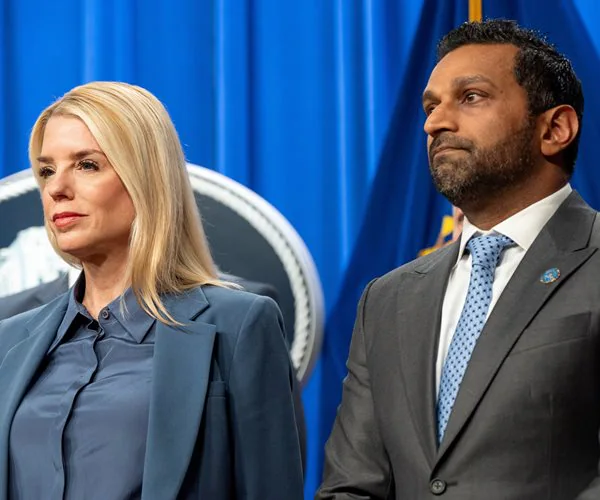
Federal Bureau of Investigation (FBI) Director Kash Patel, joined by U.S. Attorney General Pam Bondi, delivers remarks on an arrest connected to the 2012 U.S. Embassy attack in Benghazi, at the Department of Justice in Washington, DC.
Kevin Dietsch/Getty Images
hide caption
toggle caption
Kevin Dietsch/Getty Images
Days before the United States dropped its first bombs on Iran, FBI Director Kash Patel fired members of a team that monitored threats from the Islamic Republic. The reason? They had investigated President Donald Trump’s handling of classified documents.
That move came amid a year of layoffs, budget cuts, resignations, and shifting priorities across America’s national security agencies — including the FBI, the CIA, and the Department of Homeland Security.
Now, as U.S. officials warn that Iran could retaliate with cyber attacks or terror attacks on U.S. soil, some experts are asking if the United States still has the capacity to defend itself.
That’s the question we try to answer in this edition of “If You Can Keep It,” our series exploring the biggest stories of the day and what they mean for our democracy.
Find more of our programs online. Listen to 1A sponsor-free by signing up for 1A+ at plus.npr.org/the1a.