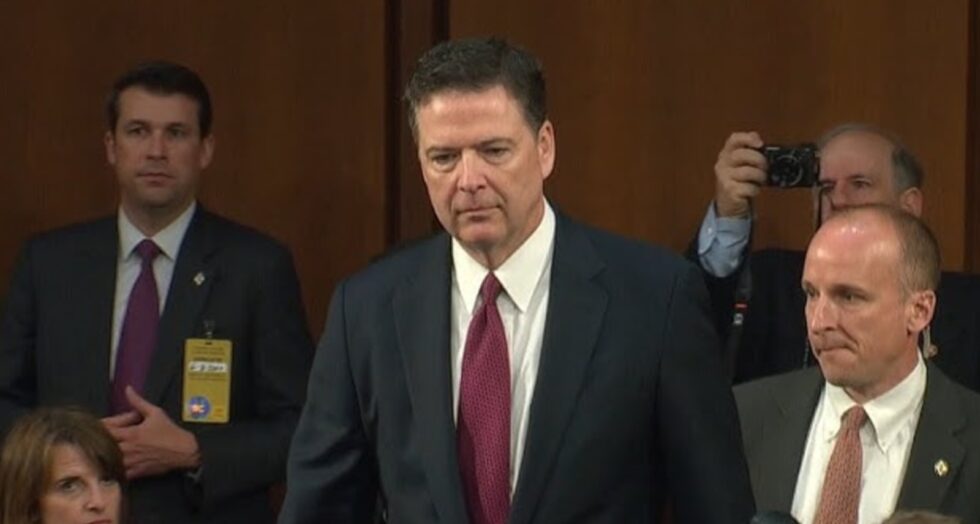
Former FBI Director James Comey faces another case as federal prosecutors pursue allegations involving the handling of sensitive government information.
Advertisement
Comey faces two criminal counts involving the alleged transmission of national defense information and a conspiracy to transmit it.
The charges mark the third prosecution attempt against Comey during Trump’s administration, adding another case to his existing legal battles.
Prosecutors filed the criminal information in Washington federal court on October 5, with the case becoming public Monday, October 26.
Advertisement
That chronology distinguishes the original filing from the unsealing, which disclosed proceedings that had already been underway behind closed doors.
The allegations concern conduct in October 2016, when Comey was still serving as FBI director under President Barack Obama.
According to the New York Post, the case involves information allegedly provided to the New York Times about email surveillance.
Prosecutors allege Comey directed someone to disclose national defense information to a reporter while attempting to correct another outlet’s coverage.
The Post identified the reporter as Charlie Savage and connected the disclosure to reporting about Yahoo and government surveillance.
Those accusations remain allegations, rather than findings that Comey committed a crime, and he has denied wrongdoing.
The court’s unsealing order describes the first count as sharing a national defense document to someone unauthorized to receive it.
That count alleges a violation of the federal statute governing certain disclosures of national defense information, according to the order.
The second count alleges that Comey conspired with other individuals to commit the disclosure offense described in the first count.
The charging document used criminal information rather than a grand jury indictment, making the filing procedure another contested issue.
The Justice Department says it acted to prevent the applicable 10-year statute of limitations from expiring, according to Reuters.
Comey’s lawyers argue that the approach is legally improper and have asked the judge overseeing the case to dismiss it.
Advertisement
The department defended the procedure as established federal practice, while declining further comment because the criminal investigation remains ongoing.
That disagreement leaves prosecutors defending both their allegations and the procedural mechanism used to preserve the case.
Judge Trevor McFadden’s Monday order addressed public access to the records, while reserving the dismissal issues for later consideration.
Comey requested that the case be unsealed, and the government did not oppose that request, the judge explained.
Advertisement
Initially, prosecutors had sought secrecy because the information referenced unnamed and unindicted alleged participants, according to the order.
They warned that disclosure could compromise ongoing criminal and grand jury investigations or endanger cooperating witnesses.
The court initially accepted those representations but also permitted prosecutors to provide the charging document to Comey’s attorneys.
By the time McFadden considered unsealing, the government no longer opposed disclosure or renewed its earlier concerns about interference.
The judge emphasized the public interest in criminal charges concerning a former FBI director’s actions while holding office.
He explained that both the alleged conduct and the government’s decision to prosecute properly warrant public scrutiny.
The order also noted that facts underlying the investigation had already received attention through reporting and other proceedings.
Advertisement
McFadden pointed to discussion during a 2022 trial and FBI documents declassified and published in 2025, citing the parties’ filings.
He further noted that Comey knew about the criminal information and had offered to surrender.
Comey responded publicly by maintaining his innocence and condemning the latest prosecution, according to Reuters.
“I’m still innocent,” he said.
His earlier congressional testimony case was dismissed after a judge found that the prosecutor who brought it was improperly appointed.
The Justice Department appealed that dismissal, while a separate prosecution involving Comey’s social media photograph remains pending, The New York Post reported.
That photograph depicted seashells arranged as numbers that administration officials interpreted as a threat against Trump, an allegation Comey denies.
This article may contain commentary which reflects the author’s opinion.