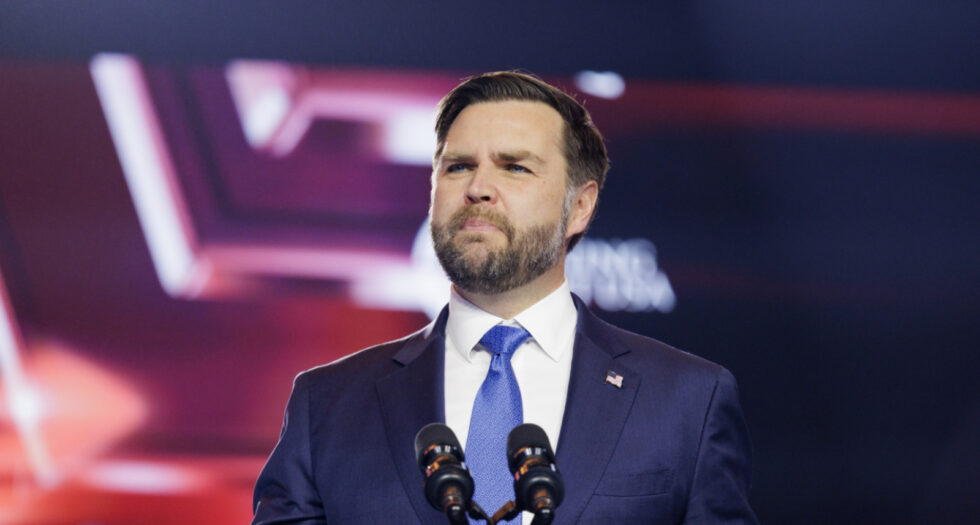
Vice President JD Vance is weighing whether to skip the 2028 presidential race as he considers his family, the political environment, and the future of President Donald Trump’s movement.
Advertisement
Vance has not made a final decision, and several people close to him say he remains more likely than not to seek the Republican nomination.
However, conversations with allies and advisers indicate the 42-year-old vice president is seriously considering all options following Republicans’ difficult midterm election.
Vance had long been viewed as a natural candidate to succeed Trump and remains one of the most prominent potential contenders for the Republican nomination.
Advertisement
But the political environment has become considerably more complicated following Republican losses and continued voter frustration over the economy and the war with Iran.
One Vance ally told CNN that sitting out the election would not necessarily end his presidential ambitions because of his age.
“I wouldn’t be surprised by any decision he makes,” the ally said. “He’s only 42. He’s young enough that he can have a comeback should this environment make success impossible. It just may not be his time.”
Vance and his wife, Usha, also welcomed their fourth child in July, adding another consideration to his decision.
People close to Vance told The Washington Post that he dislikes raising his children under the constant protection and restrictions that accompany Secret Service security.
The vice president reportedly intends to use the holidays and potentially the first months of 2027 to consider his options.
WATCH:
Several allies insist the midterm results have not fundamentally altered his calculations.
“Two years is such an eternity in politics, and people are very easily prisoners of the moment,” one person close to Vance told the Post.
Vance has already begun separating himself from some of the administration’s most controversial policies, particularly the war with Iran.
Advertisement
Following the midterms, he argued that the conflict had played a significant role in Republican losses.
“There will be a lot of infighting and arguing over what happened and why that is,” Vance wrote.
“The reason we lost is the war. The president himself said so last night.”
Vance has long been among the administration’s more skeptical voices regarding prolonged overseas military intervention and previously participated in efforts to negotiate an end to the Iran conflict.
Advertisement
Trump on Thursday publicly redirected his vice president away from Iran negotiations and toward domestic corruption investigations.
“I have asked Vice President Vance to focus his complete and total attention on the Massive Corruption and Crime taking place in Democrat run Cities and States throughout the U.S.,” Trump wrote.
“We don’t need a deal with Iran. Those days have long since passed.”
Meanwhile, other Republicans are beginning to position themselves for a potentially competitive 2028 primary.
Florida Gov. Ron DeSantis, Texas Sen. Ted Cruz and Georgia Gov. Brian Kemp are among the Republicans being discussed as possible candidates.
Secretary of State Marco Rubio also remains prominent in early speculation, although Rubio has previously indicated he would support Vance if the vice president runs.
Advertisement
A Reuters/Ipsos poll released this week found 41% of Republicans and Republican-leaning independents rated Vance as an excellent potential 2028 candidate, narrowly ahead of Rubio at 40%.
Vance could also face resistance from some major Republican donors.
Republican fundraiser Eric Levine told the Post that several substantial donors he has spoken with do not currently support a Vance candidacy.
“I can’t speak to every donor that’s out there, but the large donors that I’ve spoken to, there’s no support for the guy, and they’re looking where they can put their money,” Levine said.
Vance’s supporters counter that the political environment could change dramatically before voters begin selecting the next Republican nominee.
For now, Vance appears determined to avoid rushing one of the biggest decisions of his political career.
The sitting vice president remains a major prospective contender for 2028, but for the first time, his allies are openly acknowledging that running for president two years from now is not guaranteed.
This article may contain commentary which reflects the author’s opinion.