Subscribe to the ad-free edition
Contribute
Sign up for the email list
The New York Times used to be called the “Old Gray Lady” because it was the stodgy gold standard of American newspaper journalism. I know it’s hard to believe now, but yes, they used to have standards.
Editors were supposed to be obsessive about facts, context, and all those inconvenient little details that separate journalism from a PR campaign. And don’t even get us started on their investigative operation. The Times has the money, the manpower, and the resources to dig deeper than almost anybody in the business, so there’s really no excuse for missing something this big.
But after Trump hit the political scene, so many things have changed… and this latest scandal has everybody talking.
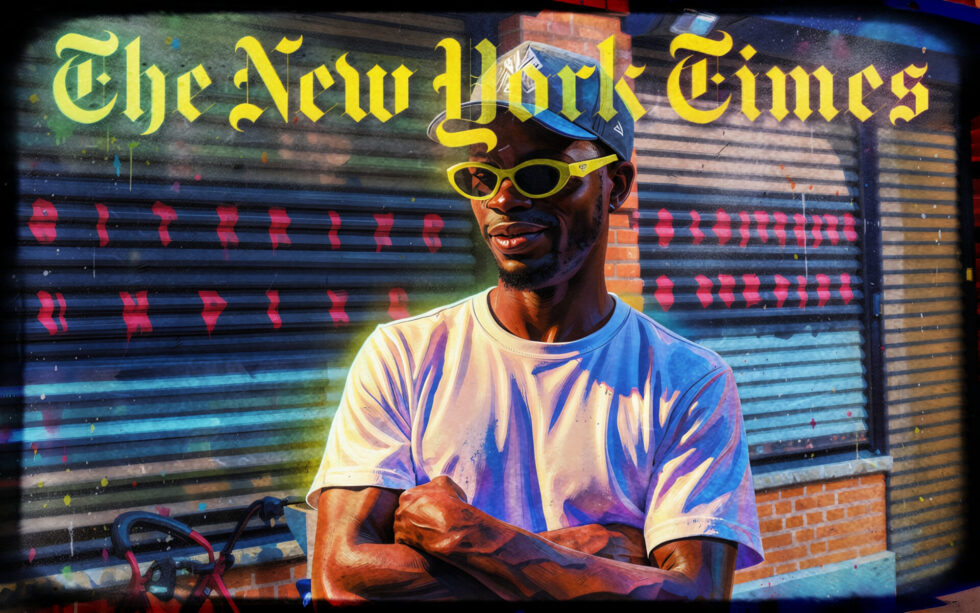
It all started when the Times published a glowing PR puff piece on a black guy by the name of Tyshawn Kennedy, an unlawful New York street vendor running an operation called “Hoodwill.”
The story had everything today’s media loves: a black underdog entrepreneur, cheap clothes, a street-vendor hustle, and a lot of social-justice dipping sauce on the side.
There was just one rather enormous detail missing from the NYT report…
Kennedy is a registered sex offender.
And according to records, this guy’s criminal history includes attempted rape and a sex offense involving a person under 15.
Gee, that might be the type of information worth including in a nearly 2,000-word PR plug of the guy.
But once other reporters started digging into Kennedy’s background, that feel-good profile suddenly looked a whole lot less charming. Kennedy is listed as a Level 3 sex offender, the highest risk designation in New York’s registry system.
Headline USA:
Tyshawn Kennedy, an unlawful street vendor, got one with virtually no PR efforts behind it.
The Aug. 4 profile turned Kennedy into a media darling for running a clothing vendor named “Hoodwill,” a reference to the nonprofit thrift store Goodwill.
But the glowing profile came crashing down after the New York Post noted that despite the novelty of Kennedy’s operation (selling clothing for much less than Goodwill), he is listed on the New York State sex offender registry.
The embarrassing fact was nowhere mentioned in the nearly 2,000-word profile.
Headline USA found that Kennedy is listed as a Level 3 risk on the state’s sex offender registry, with his residence listed in Kings County, Brooklyn.
The registry page includes at least 14 photos of Kennedy taken over the years.
His listed charges include attempted rape in the second degree involving a person 18 years old or older and intercourse with a person under 15.
Well, he certainly got some PR, didn’t he?
The problem is that readers weren’t getting the whole story.
And now we get to the really damning part of this story…
If this were just some case of a reporter failing to run a background check, that would be embarrassing enough, right?
But it’s so much worse than that, because, according to the NYT, somebody at the paper already knew.
The writer had apparently informed an editor before publication that Kennedy had an attempted-rape conviction and remained on the New York State sex-offender registry.
And the story still went out without telling readers. So much for those stodgy old standards.
That also changes this from a sloppy journalism story into something bigger. How did a fact that important get deliberately left out of the finished story?
New York Post:
Hours after The Post visited the Goodwill site and began inquiring to local leaders about Kennedy’s criminal past, The Times updated its online story on Thursday night with an “editor’s note.”
It said “senior editors learned details” of the ex-con’s criminal history after the article published, conducted a review and “concluded that the article fell short of our standards and should not have been published as it was written.”
“The writer had informed an editor before publication that Mr. Kennedy’s history included an attempted rape conviction and that he remains on the New York State sex offender registry,” the note also conceded. “That information should have been included in the article. More broadly, senior editors should have been made aware of those details before publication and discussed other ways to write about Hoodwill and the issues around it.”
During his interview with The Post, Kennedy briefly stopped to ask a woman who arrived with two huge bags of books and other goods, “Are you donating today?”
Minutes later, the same woman told the reporter she thought she was donating to Goodwill.
You know, this is a good time to remember that fake news isn’t just about the propaganda they push. Sometimes it’s about the facts they conveniently leave out.
Somehow, a nearly 2,000-word feature still made it through the editing process without readers being told that its sympathetic central character was a registered sex offender with an attempted-rape conviction.
This is what happens when journalism starts with the narrative and works backward.
Trust in the media didn’t collapse for no reason.
When the newspaper that once set the standards for everybody else can publish a glowing profile like this while sitting on information this serious, readers are going to wonder what else they aren’t being told.
The Times says the story “fell short” of its standards.
That’s the understatement of the year.
NEWSFEED — FOLLOW ON X — GAB — GETTR — TRUTH SOCIAL — BLUESKY