One Strait, Half the World’s Food at Risk

According to reporting by Shanaka Anslem Perera, there’s a major blind spot in how people are looking at the Strait of Hormuz right now. Most of the attention is on oil. Very little is on fertilizer. That’s where the real risk is.
Governments spent decades building systems for energy security: strategic petroleum reserves, coordinated releases, and contingency planning. That infrastructure exists because past oil shocks forced it into policy. Nothing comparable exists for fertilizer, and that gap is now being exposed.
This didn’t happen by accident. It happened because policymakers chose efficiency over resilience. They chose cheaper inputs over secure ones. They chose global dependence over local strength.
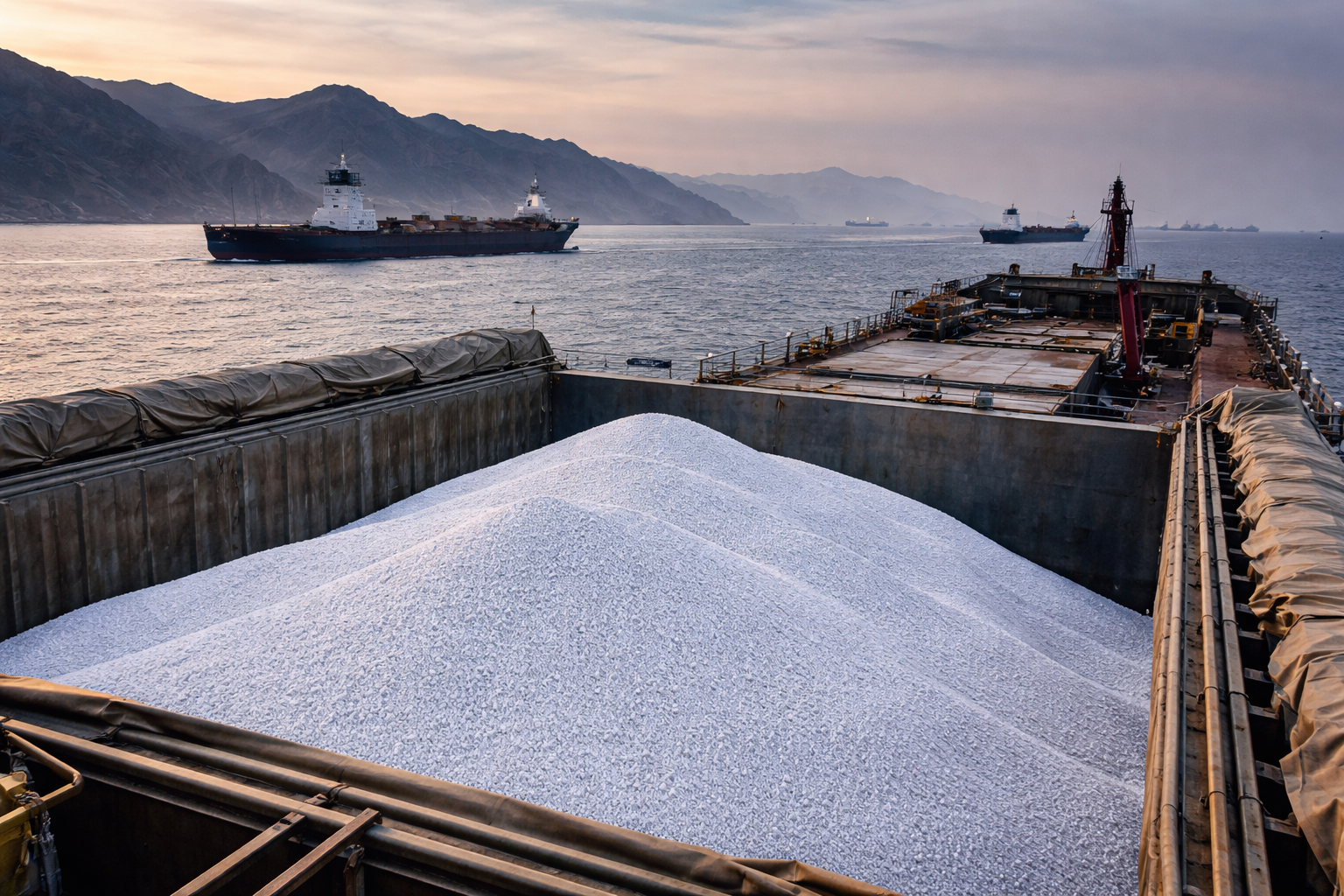
About one third of the world’s seaborne fertilizer trade moves through the Strait of Hormuz. The Gulf region also produces a large share of globally traded nitrogen fertilizers like urea. These inputs support a significant portion of global food production.
In plain terms, a narrow strip of water now sits between billions of people and the nutrients required to grow their food.
I would say that’s a major failure of planning!
Right now, that flow is under pressure. Following the strikes on Iran, the Strait became very risky for commercial shipping. The issue is not just missiles or mines. The decisive factor is insurance. War-risk coverage has been pulled or repriced sharply.
Without insurance, ships do not move. Fertilizer cargoes cannot absorb the increased costs. The economics break.
Yes, Trump offered to supply insurance and escort ships, but his words may not mean anything if shippers don’t take him up on it or if he is unable to handle the logistics continually. He has not asked other countries to get involved to secure the strait.
The system doesn’t collapse all at once. It tightens slowly, like a valve being turned. The next constraint is timing.
Agriculture runs on fixed biological windows. These cannot be shifted. In the United States, corn planting runs from April through May, and nitrogen application must occur just before or during that window.
In India, Kharif crops are planted from June through July, with fertilizer demand building in advance. Across Southeast Asia, Africa, and the Middle East, planting cycles follow similar seasonal patterns.
Miss those windows and yields drop significantly.
Prices are already rising. Farmers are making decisions in real time: pay more if supply is available, or cut back. That decision carries consequences.
In many regions, especially in the developing world, reducing fertilizer does not reduce yield in a straight line. It accelerates the decline.
This is where the situation shifts from a market story to a food story.
The impact is not evenly distributed. The United States and Europe have buffers. They have domestic production, capital, and more flexibility. Many farmers secured inputs earlier.
Large parts of the world did not build those buffers. Countries like India, Bangladesh, and much of Sub-Saharan Africa rely heavily on imports. They operate closer to the edge. When supply tightens, they lose access first.
How this develops now comes down to duration.
A disruption measured in weeks keeps the system strained but intact. Prices rise. Logistics tighten. Most planting schedules hold.
A disruption lasting one to two months begins to interfere with delivery timing. Some farmers apply less fertilizer. Some shipments arrive too late. Yield pressure builds.
A disruption extending into two to three months collides directly with planting windows across multiple regions. Application rates fall in a meaningful way. Acreage shifts toward lower-input crops. Output declines.
A longer disruption pushes into broader system effects. Fertilizer shortages feed into lower crop production. Import-dependent countries struggle to secure supply. Food prices rise in a sustained way.
Governments step in with subsidies and controls, often without the fiscal strength to sustain them. Now extend that further.
If the Strait remains dangerous for a year, the system doesn’t just bend. It starts to fracture.
Two full planting cycles get disrupted. Farmers reduce inputs season after season. Soil nutrient levels degrade. Yields fall again and again.
Food inventories tighten. Exporting countries begin protecting their own supply. Trade flows shrink. Prices stay high long enough to exhaust government responses.
At that point, shortages stop being temporary. They become structural.
The first places to feel real hunger will not be the wealthiest countries. It will show up where the system is already thin: parts of Sub-Saharan Africa, Yemen, Sudan.
Regions that depend on imported fertilizer and imported food at the same time. Places with limited reserves and limited ability to compete in global markets.
Then the pressure spreads outward.
Urban populations in import-dependent countries feel it next. Availability tightens. Rationing begins. Political pressure builds.
The system behaves like a stressed network. The weakest points fail first. Then the strain moves.
All of this leads back to a deeper issue.
This was avoidable.
Countries chose not to build domestic fertilizer capacity. They chose not to invest in soil regeneration, crop rotation, or alternative nutrient systems.
Desert regions that could have been partially reclaimed through water management and reforestation were left dependent on imports.
Food systems were globalized because it was easier, not because it was safer. Globalization rewarded convenience. It punished self-sufficiency.
It allowed entire regions to outsource the most basic requirement of survival: the ability to feed themselves.
That trade worked in a stable world. It breaks down in a contested one.
We are moving into a period where control of basics matters again: food, water, inputs, energy. The Strait of Hormuz is exposing it.
A single chokepoint now influences a meaningful share of global food production. Not because it had to, but because the system was built that way.
Sustained instability, even without full closure, is enough. Elevated risk keeps insurance tight. Shipping slows. Supply gaps form.
And those gaps hit at the exact moment timing matters most. This situation intersects directly with the agricultural calendar.
What’s unfolding is a real-time stress test of the global food system. The outcome depends on how long the disruption lasts, how many weeks the Strait stays unstable, how many shipments do not move, and how many planting windows get missed.
And underneath all of that sits a harder reality.
In the end, having your own food and water matters. That used to be obvious.
It’s becoming obvious again.
Related Articles