This article may contain commentary
which reflects the author’s opinion.
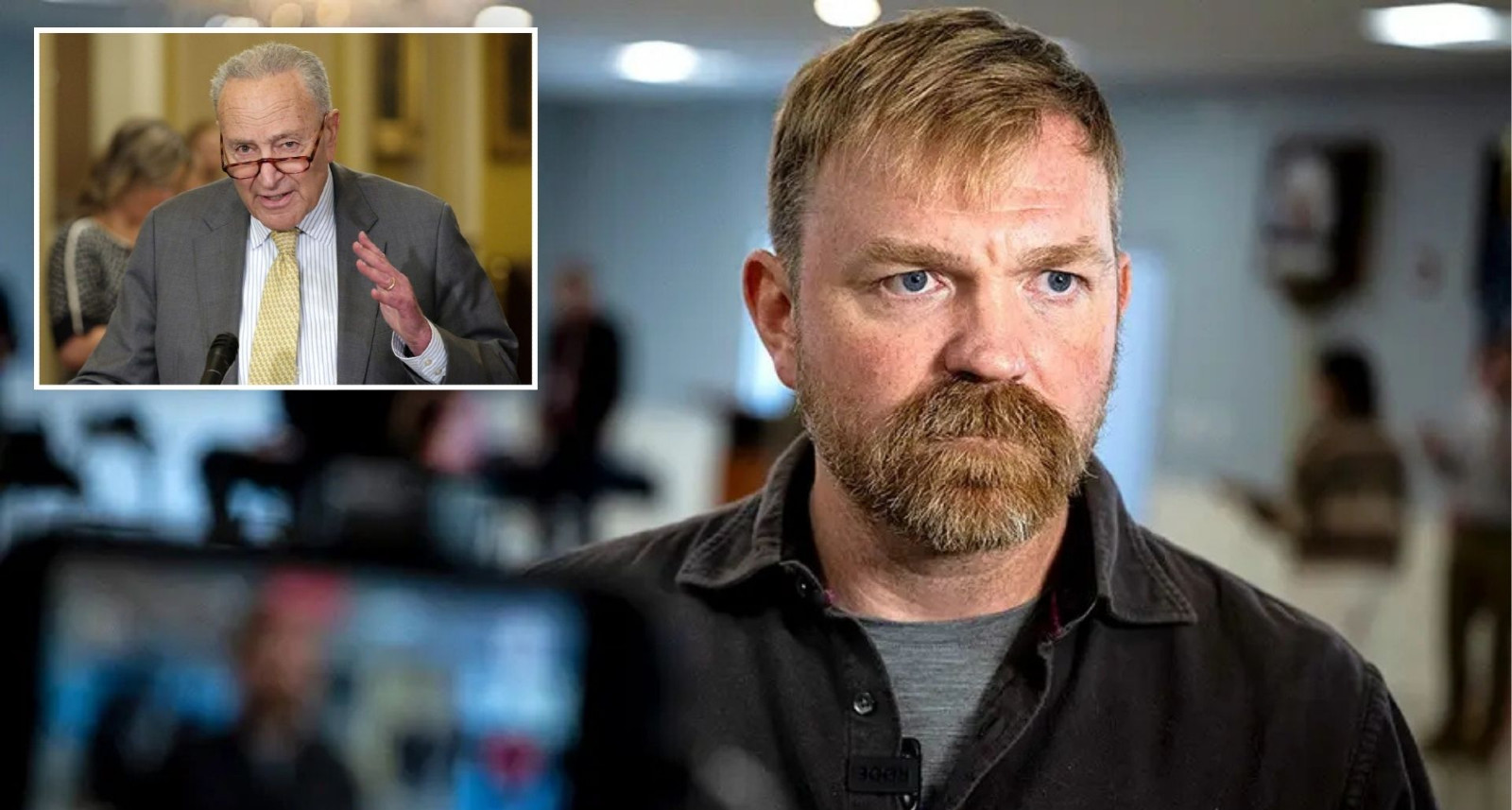
A Pennsylvania Democratic Senate candidate has been arrested after federal authorities say he made a series of violent threats targeting President Donald Trump and members of Congress, according to court filings and law enforcement officials.
Raymond Chandler was taken into custody Friday by agents with the Federal Bureau of Investigation and the United States Secret Service, following an investigation into multiple voicemails he allegedly left for elected officials.
According to an affidavit filed in the U.S. District Court for the Western District of Pennsylvania, Chandler is accused of leaving graphic messages in which he described violent scenarios involving lawmakers and their families. One voicemail, cited in court documents, allegedly urged a member of Congress to imagine a coordinated attack in which large groups of people would surround the homes of wealthy individuals and carry out killings.
Advertisement
🚨 Pennsylvania Democrat Senate candidate Raymond Chandler arrested after allegedly leaving voicemails calling for the assassination of President Trump and threatening to kill Sen. John Fetterman and his 13-year-old daughter. pic.twitter.com/nzl3IDImUq
— Brandon Tatum (@TheOfficerTatum) May 4, 2026
In that message, Chandler allegedly described a scenario in which a crowd would “pull you out of your house” and kill both the lawmaker and their daughter, along with others. Investigators say the message framed the violence as a response to economic inequality and wealth concentration in the United States.
Advertisement
Authorities allege that Chandler left another voicemail days later that escalated the rhetoric further. In that message, he allegedly instructed a member of Congress to use a firearm to kill President Trump, telling them to “put that firearm to the President’s head” and “pull the trigger.”
Federal officials say those statements prompted a joint investigation involving both the FBI and Secret Service, agencies tasked with investigating threats against federal officials, including the president.
An FBI spokesperson confirmed that Chandler was arrested by agents in Pittsburgh. The Secret Service, which handles protective intelligence related to threats against the president, also participated in the investigation, according to officials familiar with the case.
Court documents indicate that the voicemails were left in April, with investigators tracing the communications back to Chandler through phone records and other evidence. Authorities have not yet detailed whether additional charges may be filed or whether more communications are under review.
Chandler has not publicly commented on the allegations. It is also not immediately clear whether he has retained legal counsel.
Threats against the president and members of Congress are prosecuted under federal law and can carry significant penalties if convicted. Statutes governing such cases generally require prosecutors to demonstrate that the threats were made knowingly and willfully, and that a reasonable person would interpret them as serious expressions of intent to harm.
The arrest comes amid broader concerns from federal law enforcement about an increase in threats directed at public officials. Agencies have warned in recent years that political tensions, combined with the reach of digital communication platforms, have contributed to a rise in threatening rhetoric and, in some cases, actual violence.
Officials have emphasized that even statements framed as hypothetical or rhetorical can be subject to criminal investigation if they meet the legal threshold for a threat.
The case also unfolds against a backdrop of heightened security concerns in Washington and beyond. In recent weeks, multiple incidents involving threats or alleged attempts at political violence have drawn national attention and prompted renewed scrutiny of how such cases are handled.
In a separate but recent proceeding, a federal magistrate judge in Washington, D.C., raised concerns about the treatment of a defendant accused of attempting violence at a high-profile political event. The judge noted that even in serious cases, detainees must be treated in accordance with legal standards and the presumption of innocence must be maintained.
While that case is unrelated to Chandler’s arrest, it reflects the broader legal environment in which cases involving alleged threats against public officials are being examined—not only in terms of prosecution but also detention and due process.
For now, Chandler is expected to make an initial appearance in federal court, where prosecutors will formally present the charges and a judge will determine whether he should remain in custody pending further proceedings.