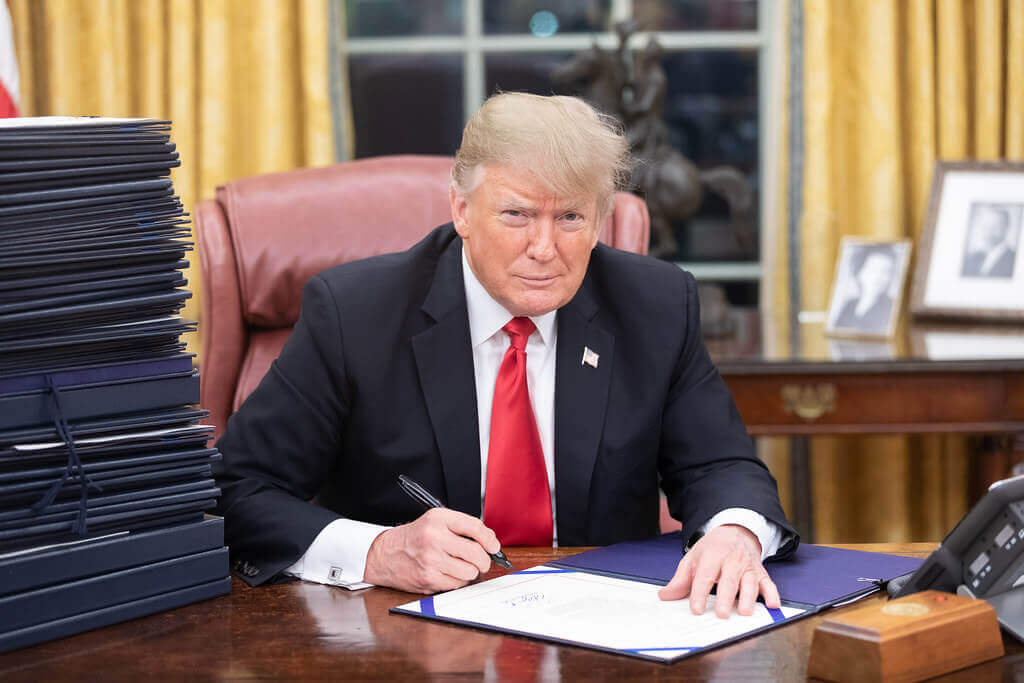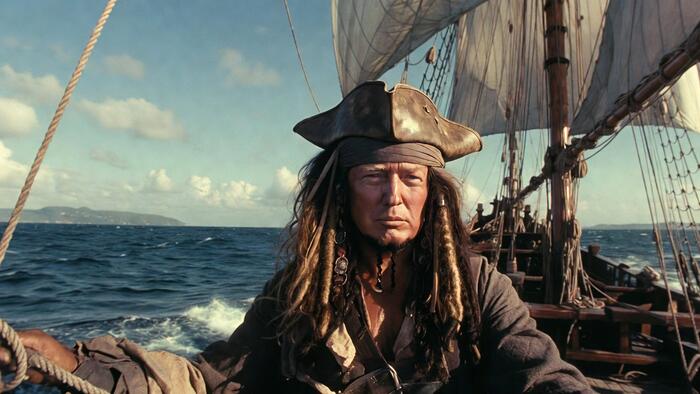
By Stefan Koopman, senior macro strategist at Rabobank“We landed on top of it. We took over the ship, the cargo, the oil. It’s a very profitable business… We’re like pirates.” President Trump’s remarks were, once again, strikingly blunt and unfiltered, to the point of sounding almost satirical. Yet the irony is real. The US president was openly acknowledging that American naval power in the Arabian Sea is now being used in ways that mirror the practices it was once built to suppress.Negotiating with pirates is difficult. While this weekend’s headlines finally hint at diplomacy between the US and Iran, the gap between their positions appears wider than the Strait itself. Iran continues to cling to maximalist demands, while the US rejects them as unacceptable. For now, no credible outlines of a deal have emerged.In the meantime, Washington is trying a different tactic. The US is encouraging neutral commercial vessels to run the blockade, putting Iran’s threats to the test. It has offered to help guide stranded ships through the Strait by sharing information on safer transit routes (e.g. no mines) and, potentially, insurance support. Although US navy vessels may operate nearby, this falls short of formal military escorts, which would likely violate the ceasefire. Even so, the approach carries obvious risks, as it could still result in exchanges of fire with Iranian ships, which might then lead to further escalation.From Washington’s perspective, that risk is not entirely unwelcome. Any Iranian attack on neutral shipping would strengthen the US public‑relations case and might make it a bit easier to assemble the international coalition that has so far proven elusive.This is a savvy legal move by Trump.May 1: War Powers letter formally ends hostilities, preserves force posture, asserts Article II constitutional authority.May 3: “Project Freedom” announced as a humanitarian operation, not military.Monday: US Navy escorts neutral… https://t.co/jEJTdw5C7C
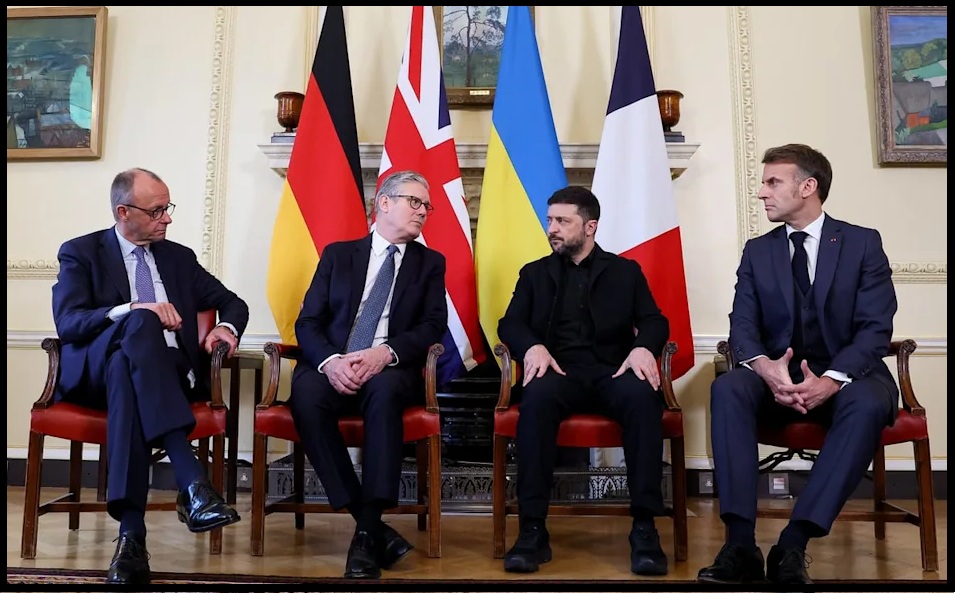
— Chris Rollins (@ThePowerAudit) May 3, 2026If some energy does flow out of Hormuz, it will kick the can down further down the road. The deeper problem remains that both sides believe they have won. Washington points to the destruction of much of Iran’s navy and air force, its missile‑launching capacity, and large parts of its military and industrial base. Tehran draws a different conclusion. It has survived a campaign widely seen as aiming at regime collapse, it has demonstrated its ability to strike across the Gulf and into Israel, and it has shown it can place the global economy in a chokehold.Even as its own economy suffers from the US blockade, Tehran appears convinced it can outlast the US economically and politically, especially as Trump moves closer to the midterm elections. At present neither side holds a strong card, yet both believe time is on its side. That might look like a manageable situation were it not for oil markets losing roughly 10 million barrels a day, with inventories now running uncomfortably low.This leaves Trump facing a binary choice. He can pursue genuine diplomacy, concede parts of Iran’s demands, and secure outcomes he wants. That path would provoke resistance from Israel and hawks in Washington, but it would also be the fastest way to restore flows through Hormuz. Or he can resume the war, whether being provoked or not, betting that another bombing campaign will achieve what the first 40 days did not.The problem is that coercion does not stop at Iran. Its oil may be seized, but buyers are punished too. The US Treasury has escalated sanctions by targeting major Chinese oil importers, most notably Hengli, a 400,000‑barrel‑a‑day refinery accused of purchasing billions of dollars of Iranian crude. Beijing pushed back. Its commerce ministry invoked the Blocking Statute, instructing firms not to comply with what it described as unjustified and improper US sanctions. This puts large companies between a rock and a hard place, because they either have to decide to comply with US sanctions or with the Chinese rules. That points at decoupling.Pirates also have a habit of breaking deals. Over the past year European policymakers persuaded themselves that a durable bargain with this White House was possible. That belief produced the Turnberry deal, a one‑sided concession presented as a truce to stabilize Transatlantic trade. The logic was always questionable. And this weekend president Trump said he will raise its Section 232 tariffs on European car imports back to 25% from Turnberry’s 15%, underlining how little its own deals constrain it.The Commission’s instinct may be to reopen talks, seeking a return to the lower rate through technical adjustments or promises of rapid implementation. That reaction is understandable, but it may also miss the point. The lesson of the Greenland episode is that this administration responds more to firmness than to appeasement. On paper, Europe has options too. It still holds a list of €93bn in retaliatory tariffs, suspended after Turnberry. It also has the Anti‑Coercion Instrument, the so‑called trade bazooka, which allows restrictions on US investment or the withdrawal of intellectual property protection. The tools exist, but the question ahead is whether Europe is willing to follow China’s lead?US pressure on Europe, and Germany in particular, is not limited to trade. Days after a call between Trump and Putin, Washington said it would withdraw 5,000 troops from Germany, part of the 37,000 still stationed there. Russia would clearly welcome such a move, as would Iran. Trump appears to see these forces as deployed mainly to protect Germany. In reality, the bases exist to allow the US to project power into Europe, the Middle East, and Africa. Their removal would weaken America’s own strategic reach.Berlin now faces the same choice as Brussels. One option is deference, flattering a protector in the hope of restraint despite mounting evidence that protection has become transactional and unreliable. The other is acceptance and acceleration, by folding this shock into Europe’s broader defense awakening and pushing faster towards genuine strategic autonomy.
Source link