President Trump’s Strait of Hormuz Showdown
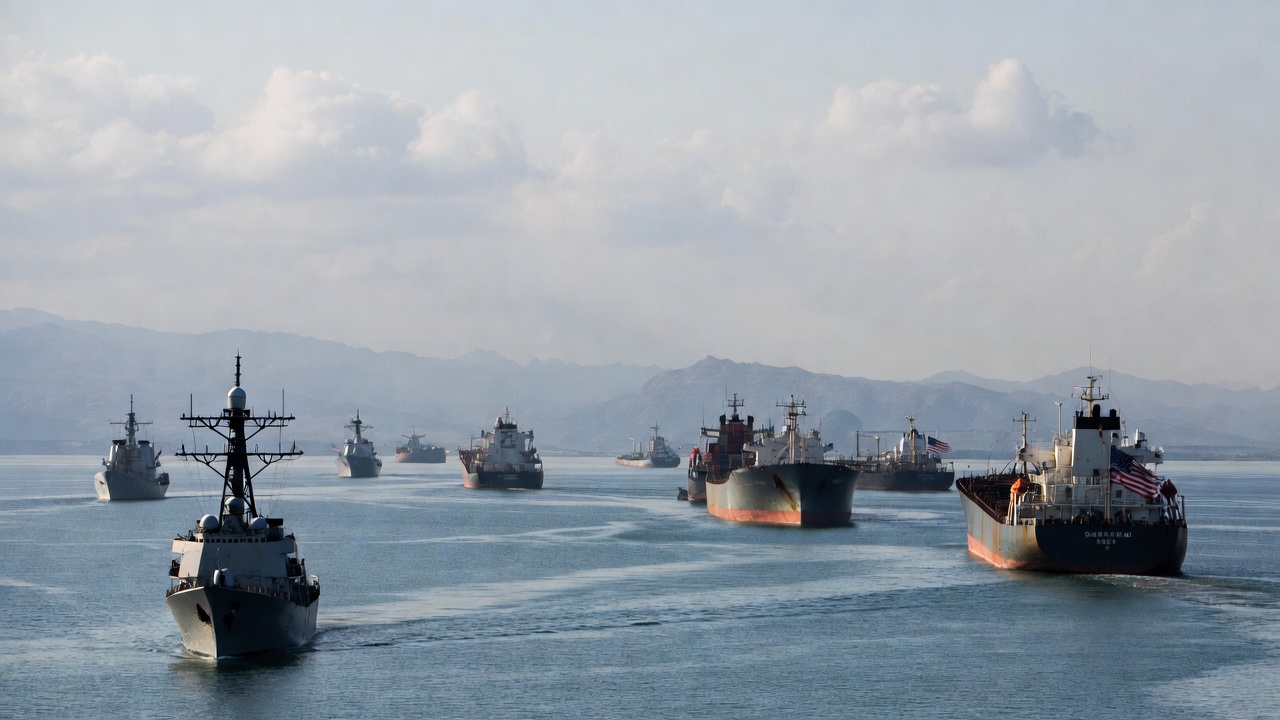

President Trump has issued a decisive order that reshapes the security landscape for global energy trade amid an acute crisis in the Strait of Hormuz.
The escalating U.S.-Israel conflict with Iran has produced direct attacks on tankers, stranded vessels, and casualties at sea. An IRGC commander declared the strait closed, vowing to target any ship attempting passage. In response, major marine insurers canceled war-risk coverage for vessels in the Gulf and adjacent waters. Without this essential protection against losses from war, terrorism, or related perils, shipowners face untenable exposure even for brief transits.
Traffic has ground to a near halt. Companies like Maersk and Hapag-Lloyd suspended operations through the strait, rerouting vessels via far longer paths around Africa or delaying voyages altogether. Hundreds of ships, including oil and LNG tankers, remain anchored or backed up in the region. Supertanker freight rates reached record highs as operators demanded extreme premiums to offset the risks. Brent crude surged sharply—around 9% in a single day—with further volatility driven by fears of sustained supply constraints.
This chokepoint carries roughly one-fifth of global seaborne crude oil and a similar share of liquefied natural gas, making any prolonged blockage a severe threat to energy markets. GCC countries, heavily reliant on secure exports for revenue and imports for essentials like food, face immediate vulnerabilities. Disrupted outflows reduce income while blocked inflows raise costs for staples and risk shortages in import-dependent populations.
Japan, which sources a large portion of its energy from the Middle East, confronts direct exposure to price spikes and supply uncertainty. Even China, despite diversified sourcing, experiences cascading market instability and elevated costs from the disruption.
Effective immediately, President Trump directed the United States Development Finance Corporation to offer political risk insurance and financial guarantees—at remarkably reasonable rates—to protect maritime commerce through the Gulf, with special emphasis on energy shipments. This coverage extends to every shipping line operating in the region.
If the situation demands it, the U.S. Navy stands ready to escort tankers through the Strait of Hormuz without delay.
This action carries profound implications. For too long, the calculus in Washington treated disruptions to global oil flows as an acceptable cost in pursuit of certain strategic goals. Such a stance would have inflicted severe damage on Gulf Cooperation Council partners reliant on secure exports, driven up costs for allied nations like Japan that depend heavily on imported energy, and created cascading pressure even on competitors such as China.
President Trump has overturned that approach entirely. He refuses to engage in a zero-sum contest where one side’s gain requires widespread economic pain. He rejects prolonged attrition that erodes stability for everyone involved.
Instead, he positions the United States as a reliable force for order—extending protection to keep commerce moving and ensuring that rule-following actors worldwide can continue their trade without fear of sudden catastrophe.
This reflects genuine leadership on the global stage: safeguarding the arteries of international energy supply, supporting allies and partners, and contributing to broader peace through demonstrated commitment to stability. When the United States steps forward to shoulder these responsibilities, it reminds the world why American economic and military power remains unmatched and why it excels at preserving the rules-based flow of goods that benefits billions.
More steps are coming, as the President indicated. But this move alone sends a clear message: America protects freedom of navigation, ensures energy reaches those who need it, and chooses strength that builds security rather than chaos. That’s the kind of leadership the world can count on.
I’m Sean Morgan and this has been the News Behind the News. Get past reports at seanmorganreport.substack.com and jmcbroadcasting.com.
Related Articles