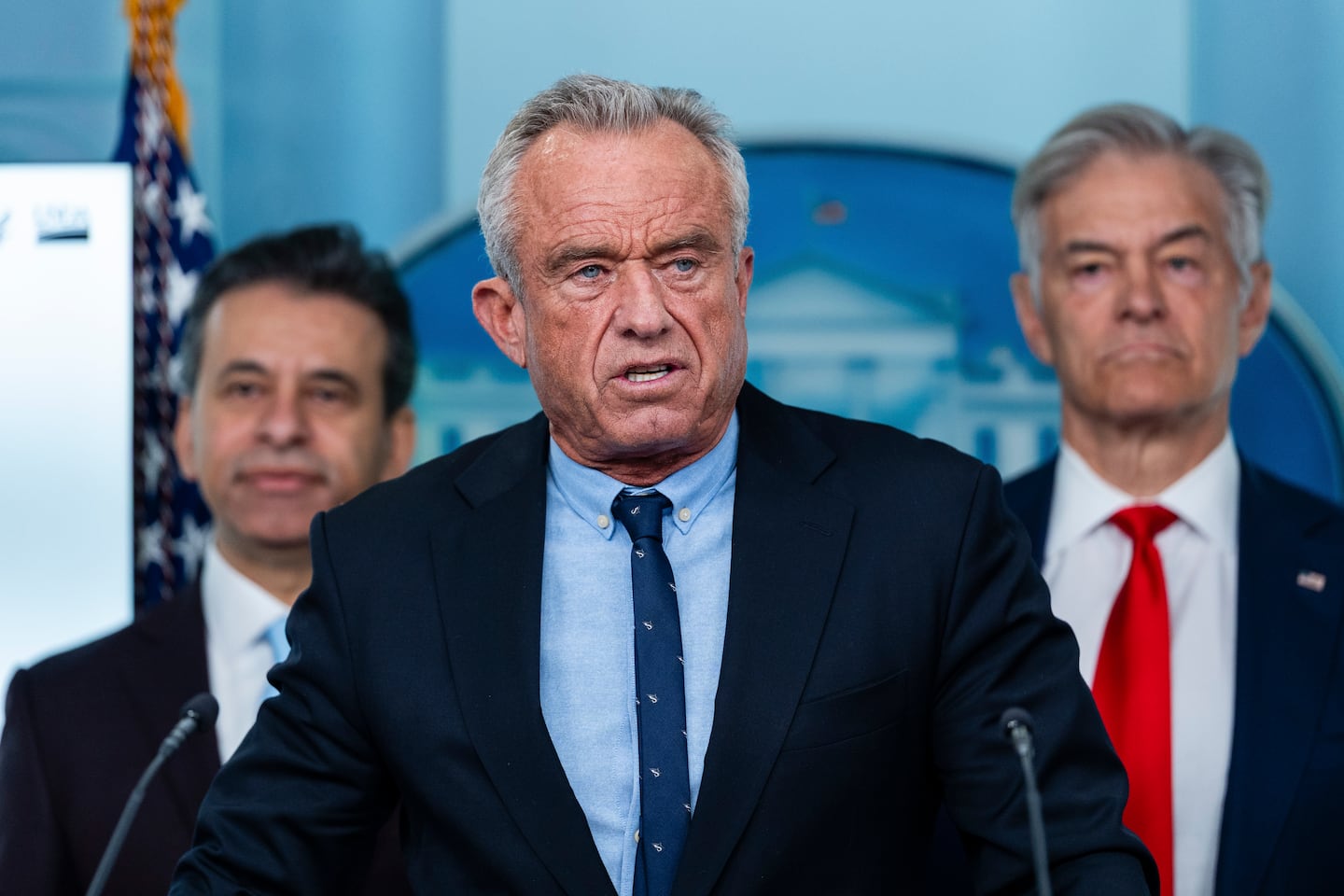
If Robert F. Kennedy Jr. has shown us anything since President Donald Trump appointed him secretary of Health and Human Services, it’s that the path to a healthier America cannot be paved with good intentions alone.
The 72-year-old captured supporters through an ideological movement packaged as “MAHA”—Make America Healthy Again. With the promise of bringing transparency back to the White House’s work around health, food, and vaccines, even some left-leaning, health-conscious voters have been captivated by his claims.

His attempts to dismantle scientific vaccine research aside, Kennedy’s efforts in the sector of food health seem to keep hitting snags. And we already saw the former environmental lawyer beat his chest over pesticides, only to ultimately craft policies that fell extremely short of limiting the use of controversial chemical compounds.
Now he is finding himself very intentionally at odds with Dunkin’ and decrying the 115 grams of sugar sloshing through one of the megachain’s more popular iced coffee beverages.
“We’re going to ask Dunkin’ Donuts and Starbucks, ‘Show us the safety data that show that it’s okay for a teenage girl to drink an iced coffee with 115 grams of sugar in it,’” he said during a Feb. 26 “Eat Real Food” rally in Austin, Texas.
What’s interesting is Kennedy is falling into a similar holding pattern that the former first lady Michelle Obama found herself in during the days of the Obama administration. Reminiscent of when Republicans cried over a “nanny state” in which the Obamas were coming for people’s french fries, we’re seeing the same war cries over a sugary beverage.
“Come and take it,” Massachusetts Gov. Maura Healey wrote alongside an image of a Dunkin’ iced coffee cup.
Rep. Richard E. Neal of Massachusetts called the move a “wicked bad idea” as well.

But the thing is, not far off from Kennedy ‘s battles with seed oils and saturated fats, albeit less rooted in hard science, there is plenty of scientific evidence linking sugar consumption to health issues. According to Harvard Medical School, high added-sugar diets can indirectly contribute to heart disease. A study by the National Institute of Health also found that high added-sugar diets contribute to food addiction.
Then again, it’s not Kennedy’s stance that raises eyebrows here, it’s his approach. As it stands, the HHS secretary is leaning on corporations to do the regulating rather than introducing any kind of policy himself.
“[That] might work in the short time but if they reduce sales, companies will bring back the sugar,” Dr. Marion Nestle, a former senior nutrition policy adviser under the Reagan administration and food expert, told Daily Kos in a written email response. “If RFK Jr. is serious about getting companies to reduce sugars, he needs to set standards for what level is acceptable. This will be difficult, since evidence-based standards do not exist.”
Nestle, who has no relation to the food giant Nestlé but has solidified herself in the industry as a thought leader nonetheless, has long made the point that food regulations haven’t existed simply because of the politics, and lobbying, behind it.
Related | RFK Jr.’s new food guidelines smell a little rotten
And the MAHA movement is falling into the trap of both personal and corporate accountability without the policy behind it as well.
Daily Kos contacted the HHS for comment but didn’t receive a response at time of publication.
During the Austin press conference, Kennedy did announce the closure of the “GRAS” loophole, which has previously allowed corporations to approve new additives that they have privately deemed as safe. Originally, GRAS was intended for ingredients such as flour, spices, and other products that were “Generally Recognized as Safe.”
However, while closing this loophole may bring about change in the way food companies throw long-worded additives into their products, it doesn’t address the sugar-obsessed elephant in the room.
The wellness-focused politician has pushed for people to pump iron (with some strange folks like Kid Rock) and to get active even while they wait for their delayed planes—advocating for movement and self-accountability to turn around the health of Americans.
But as Nestle pointed out in our conversation, Kennedy’s efforts are rooted in education, not regulation. And in that, she told us, it’s hard to know just how serious this attempt to reign in corporations’ sugar-loading habits really is.
The question remains: Is Kennedy ready to war it out with big food corporations like he said he would with Big Pharma and Big Agriculture?