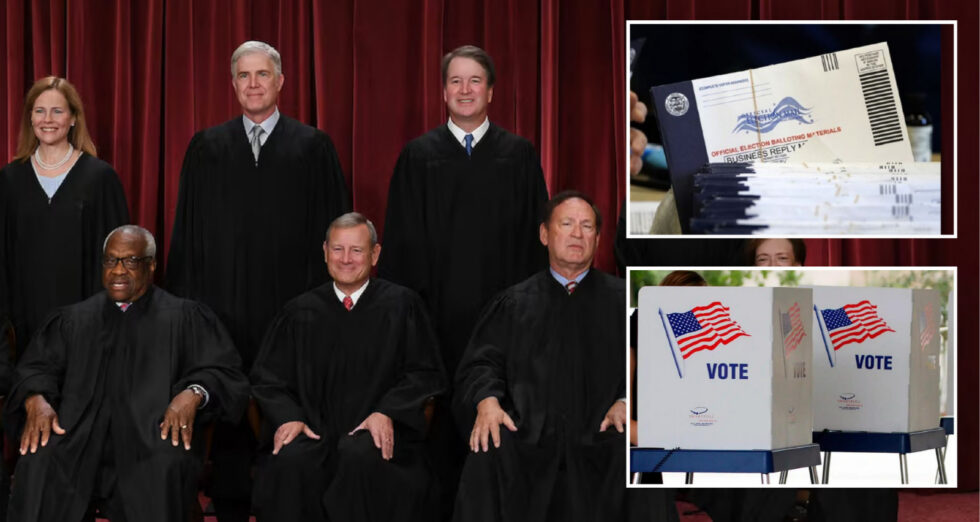
The U.S. Supreme Court has unveiled the first major cases it will hear when the justices return to the bench this fall, setting the stage for another term that could reshape federal immigration policy, environmental law and veterans’ benefits.
Several of the disputes involve questions with potentially far-reaching consequences for both the federal government and millions of Americans.
Advertisement
The court’s newly released calendar offers an early look at the issues likely to dominate the opening weeks of the term.
Among them are challenges involving the Trump administration’s immigration policies, climate-related lawsuits against energy companies and disputes over the authority of federal courts.
Advertisement
The Supreme Court announced Tuesday that it will hear oral arguments in seven cases between Oct. 5 and Oct. 14, with several of the cases expected to have significant legal and policy implications.
One of the most closely watched cases is Genalo v. Black, which is scheduled for argument on Oct. 13 and centers on how long the federal government may detain certain noncitizens before they are entitled to a bond hearing.
Advertisement
The case asks whether immigration detention can become so prolonged that the Constitution requires the government to provide an opportunity for the detainee to seek release before an immigration judge.
The dispute stems from a Department of Homeland Security policy implemented in July 2025 stating that certain people who are in the United States illegally—including some who have lived in the country for many years—may remain in immigration detention without access to a bond hearing.
According to SCOTUSblog, the justices will also consider whether the case has become moot because the individual at the center of the lawsuit was released from detention in 2022.
If the court determines the case is not moot and reaches the underlying constitutional question, the decision could affect a key immigration policy of the Trump administration and clarify the limits of prolonged immigration detention.
The Supreme Court’s opening day on Oct. 5 will also include arguments in Suncor Energy (U.S.A.) Inc. v. County Commissioners of Boulder County, a closely watched environmental lawsuit.
The case arises from litigation filed by the city and county of Boulder, Colorado, against Suncor Energy and ExxonMobil, alleging that greenhouse gas emissions contributed to climate change and caused damage to the community.
Earlier in the litigation, a member of Boulder’s legal team described the lawsuit as functioning as “an indirect carbon tax.”
Advertisement
The Supreme Court will consider whether federal law preempts state-law claims seeking damages for injuries allegedly caused by interstate and international greenhouse gas emissions.
The justices will also determine whether those claims belong in federal court rather than state court, an issue that has been heavily litigated in climate-related lawsuits across the country.
Also scheduled for Oct. 5 is Johnson v. United States Congress, which concerns whether federal district courts have jurisdiction to hear constitutional challenges involving veterans’ benefits administered by the Department of Veterans Affairs.
Advertisement
The outcome could clarify where veterans must bring legal challenges involving federal benefits and whether district courts may hear certain claims that are currently directed to specialized review systems.
On Oct. 7, the justices will hear arguments in Department of the Air Force v. Prutehi Guahan, another case involving environmental law.
That dispute asks whether an environmental organization may challenge the Air Force’s application to renew a permit allowing the disposal of unexploded military ordnance before Guam’s Environmental Protection Agency has acted on the application.
Advertisement
The court will also decide whether the Air Force was required to submit an environmental impact statement to Guam before filing its permit application, The Daily Signal reported.
The Supreme Court’s October calendar marks the beginning of another closely watched term, with cases involving immigration, environmental regulation, federal authority and constitutional rights expected to shape legal precedent and influence national policy long after the justices issue their decisions.
This article may contain commentary which reflects the author’s opinion.