Like Republicans in 2024, Democrats during the 2026 midterms ran on the issues of “affordability” and reducing costs for Americans.
Advertisement
At least some of them have held true to that pledge—so far—by supporting a piece of legislation last week that President Trump and most GOP members also backed.
The Senate overwhelmingly approved a sweeping bipartisan energy and permitting overhaul Thursday night aimed at accelerating major infrastructure projects while preventing massive data centers from shifting their electricity costs onto American households, the Capitalism Institute reported.
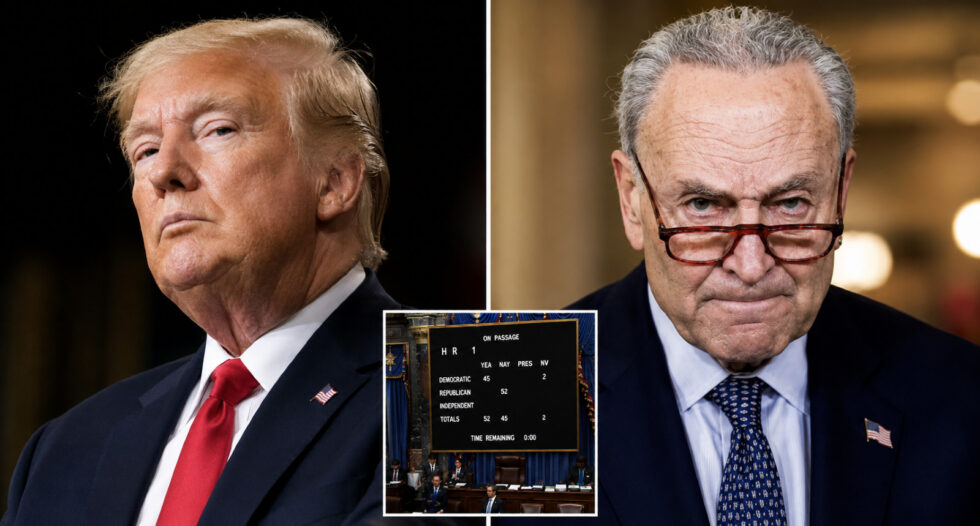
The Bipartisan American Affordability and Jobs Act of 2026 passed the Senate 62-33, sending one of Congress’ most significant permitting reform efforts in years to the House.
Advertisement
The legislation was negotiated by Republican Sens. Mike Lee of Utah and Shelley Moore Capito of West Virginia alongside Democratic Sens. Martin Heinrich of New Mexico and Sheldon Whitehouse of Rhode Island.
The four lawmakers lead the Senate’s energy and environmental committees and spent months negotiating the compromise.
“In America today, it takes too long and costs too much to build,” Senate Majority Whip John Barrasso, R-Wyo., said.
“Energy projects that would help lower prices remain frozen for years” while awaiting federal approval, Barrasso added.
The legislation seeks to shorten federal reviews and permitting timelines for projects ranging from power plants and transmission lines to pipelines, mines and renewable-energy facilities.
It would make changes affecting the National Environmental Policy Act, Clean Water Act, Endangered Species Act, National Historic Preservation Act and Federal Power Act.
Supporters argue the existing permitting system can leave major projects trapped in regulatory reviews and litigation for years, discouraging investment and making it more difficult to expand America’s increasingly strained electrical grid.
The bill also addresses one of the fastest-growing concerns in the energy debate: enormous electricity demand from artificial intelligence and data centers.
Under the legislation, the Federal Energy Regulatory Commission would be required to ensure data centers cover both embedded and incremental costs associated with connecting to the electrical grid.
States could impose additional costs, require data centers to provide their own generation or use excess revenue collected from data centers to benefit other electricity customers.
Advertisement
Lee said those provisions are intended to prevent families and small businesses from effectively subsidizing the infrastructure required by massive technology companies.
The Utah Republican predicted the broader permitting reforms could eventually produce significant savings for consumers.
Advertisement
“This is a big day for the American people,” Lee said after passage. “BAAJA is all about giving the American people the freedom to build, the freedom to build things that the American people need.”
“Whether you’ve heard of it or not, whether you’re rooting for it or against it, you will benefit from this bill once it becomes law,” he added.
Heinrich similarly argued that expanding electricity generation while requiring data centers to shoulder their grid costs would benefit consumers.
“The Bipartisan American Affordability and Jobs Act will get more affordable energy onto the grid faster, make data centers pay their fair share of electricity and grid costs, and create more than 100,000 good-paying American jobs — all while maintaining important environmental protections and strengthening Tribal consultation,” Heinrich said.
The Trump administration strongly endorsed the legislation before Thursday’s vote.
The White House said the bill would reform a federal permitting system that has prevented construction of pipelines, power plants, mines and other infrastructure while helping deliver cheaper energy and economic growth.
Advertisement
It would also codify President Trump’s Ratepayer Protection Pledge, according to the administration.
The bill nevertheless faced opposition from lawmakers and environmental organizations concerned that speeding approvals could weaken environmental protections and restrict legal challenges.
Critics specifically raised concerns about changes involving endangered species, public lands, clean water protections and tribal interests.
The legislation ultimately drew support from both parties, although a majority of Senate Democrats opposed final passage.
Republican Sens. Josh Hawley of Missouri and Mike Rounds of South Dakota also voted against the measure.
The legislation now heads to the House, where lawmakers previously approved a narrower permitting proposal and must decide whether to accept the Senate’s broader compromise.
This article may contain commentary which reflects the author’s opinion.