What is glyphosate?
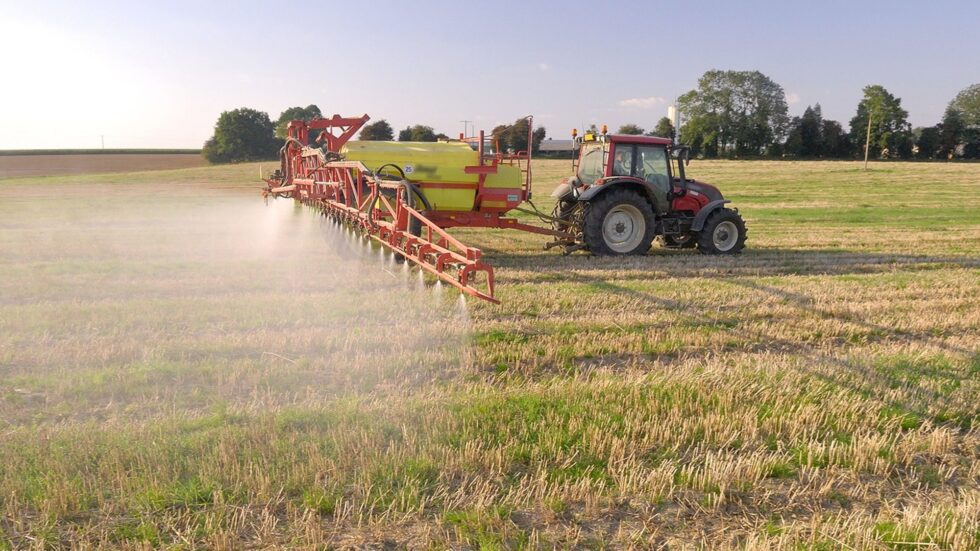
It’s the world’s most used herbicide, best known in the U.S. as Roundup. American farmers alone spray about 300 million pounds of it on fields annually. Such chemical herbicides have long been opposed by environmental groups and Health Secretary Robert F. Kennedy Jr.’s MAGA-aligned Make America Healthy Again movement, which claims glyphosate causes cancer and other health problems. Bayer, the German chemicals giant that makes Roundup, last month proposed a $7.25 billion settlement to resolve tens of thousands of lawsuits from people who allege the glyphosate-based weed killer is to blame for their non-Hodgkin lymphoma, a cancer of the immune system. (Bayer insists glyphosate is safe and has not admitted liability, but in 2023 began phasing the chemical out of Roundup sold for residential use.) So MAHA activists were stunned when President Trump issued an executive order a day after the settlement was announced to boost glyphosate production, calling it “central to American economic and national security.” Zen Honeycutt, founder of the MAHA-linked Moms Across America group, said she felt “sick to my stomach” when she read the executive order, calling it, “a love letter to glyphosate.”
Is glyphosate safe?
The evidence is mixed. The International Agency for Research on Cancer, an affiliate of the World Health Organization, designated the herbicide in 2015 as “probably carcinogenic to humans.” Bayer points out that the IARC puts drinking hot beverages and eating red meat at the same hazard level as glyphosate, and that other public health bodies—including the EPA and the U.N.’s Food and Agriculture Organization—disagree with this assessment. But Lianne Sheppard, a University of Washington professor who served on the EPA panel that reviewed glyphosate in 2016, notes that scientific evidence for the herbicide’s effects on human health has recently “strengthened for cancer and other end points.”
What is that evidence?
A meta-study she co-authored found that people with high exposures—such as agricultural workers or people who live near farms—have a 41% increased risk of developing non-Hodgkin lymphoma. Meanwhile, laboratory studies using human cells and animals suggest glyphosate can damage DNA and harm the liver and kidneys. Critics caution that animal and cell studies typically use far higher exposure levels than most people would encounter. “There’s just no compelling evidence that glyphosate causes cancer,” said Robert Tarone, a 28-year veteran of the National Cancer Institute. But other scientists argue that there’s a lack of hard evidence showing glyphosate to be safe, especially following the retraction in November of a landmark study cited by many regulators as proof that the herbicide is not carcinogenic.
Article continues below
The Week
Escape your echo chamber. Get the facts behind the news, plus analysis from multiple perspectives.
SUBSCRIBE & SAVE
Sign up for The Week’s Free Newsletters
From our morning news briefing to a weekly Good News Newsletter, get the best of The Week delivered directly to your inbox.
From our morning news briefing to a weekly Good News Newsletter, get the best of The Week delivered directly to your inbox.
Why was the study pulled?
Because lawsuits against Monsanto—the former owner of Roundup, which Bayer acquired for $63 billion in 2018—revealed emails that show the company’s scientists secretly helped conceive and write the supposedly independent study. In messages sent in 2000, one Monsanto employee complimented her colleagues’ “hard work” on the paper and said the “plan is now to utilize it both in the defense of Roundup and Roundup Ready crops worldwide.” In withdrawing the study, the Regulatory Toxicology and Pharmacology journal cited “serious ethical concerns” over the “independence and accountability of the authors,” who may have been paid by Monsanto for their work. The study’s retraction doesn’t mean its findings were incorrect, but it adds to the haze of uncertainty around glyphosate. “We absolutely must study it, given it is the most commonly used herbicide in the world,” said Brenda Eskenazi, a public health expert at the University of California, Berkeley. “Even a small, tiny effect, if it’s real, can have a huge public health impact because so many people would be exposed.”
How many people are exposed to the herbicide?
A 2024 CDC study found glyphosate traces in the urine of about 70% to 80% of Americans, but researchers say that the presence of the chemical does not mean it is causing harm. While running for president in 2024, Kennedy vowed to curb Americans’ exposure to glyphosate, which he called “one of the likely culprits in America’s chronic disease epidemic.” And as an environmental lawyer in 2018, Kennedy won a nearly $290 million lawsuit against Monsanto, in which he argued Roundup caused his school groundskeeper-client to develop cancer. But since joining the agribusiness-friendly Trump administration, Kennedy has quietened his criticisms.
What has he said about glyphosate?
The first report from the White House’s Kennedy-led MAHA Commission in May mentioned glyphosate once in 72 pages, saying studies have “noted a range of possible health effects.” A second 20-page report in September made no mention of it. That led to rumblings of discontent in the MAHA movement, which became thunderous after Trump’s executive order. In a statement, Kennedy said herbicides “are toxic by design” but that he backed the president’s order as a necessary step “to bring agricultural chemical production back to the United States.” Many MAHA supporters—a group that includes 62% of parents who identify as Republican—called that about-face a betrayal. So-called MAHA moms “feel like they were lied to,” said conservative wellness influencer Alex Clark. “How am I supposed to rally these women to vote red in the midterms?” Kelly Ryerson, a MAHA advocate who goes by Glyphosate Girl online, said the order feels “very, very much like the breaking point. People can’t continue to make excuses for the administration.”