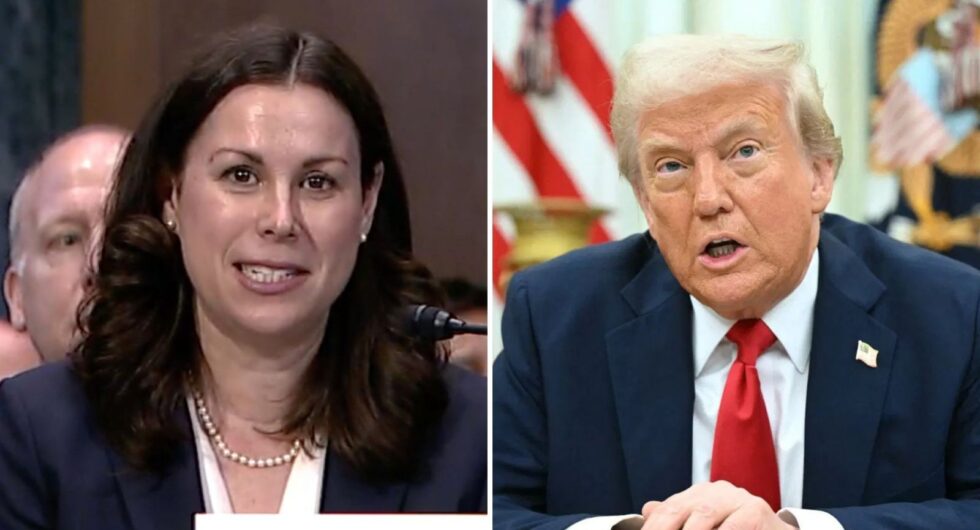
A legal battle that has drawn national attention is now entering a new phase after a federal judge issued a sharply worded ruling criticizing the actions of both sides.
The decision immediately set the stage for another courtroom fight, with the outcome carrying significant legal and political implications.
Advertisement
At the center of the dispute is a lawsuit tied to one of the most widely publicized government leaks in recent years.
What began as an effort to resolve claims over the disclosure of confidential tax records has instead evolved into a broader confrontation over the limits of executive authority and the role of the federal courts.
Advertisement
The administration on Friday appealed a federal judge’s decision rejecting a proposed settlement in President Donald Trump’s lawsuit against the Internal Revenue Service stemming from the unauthorized disclosure of his tax returns.
Advertisement
Trump filed the lawsuit after former IRS contractor Charles Littlejohn admitted to illegally leaking the former president’s tax information and later pleaded guilty in federal court to charges related to the disclosure.
Earlier this year, the Department of Justice and the IRS reached a proposed settlement intended to resolve the litigation, including an agreement establishing what was described as an anti-weaponization fund, which was later terminated.
However, U.S. District Judge Kathleen Williams of Florida, an Obama appointee, rejected the proposed resolution and issued a sharply critical opinion questioning both the purpose of the lawsuit and the structure of the settlement agreement.
In her ruling, Williams wrote that the case appeared to have been pursued for an “improper purpose” rather than to resolve a legally recognized claim.
“The nature of the suit itself and the conduct of the Parties and counsel from its filing make plain that this was an attempt to use the Court to provide some legitimacy to an agreement to confer immunity to people and entities affiliated with the President and to earmark billions of dollars from American taxpayers to redress grievances not defined in the law,” Williams wrote.
The judge also recommended sanctions against several attorneys involved in the litigation, signaling that she believed aspects of the case warranted additional scrutiny beyond simply rejecting the proposed settlement.
Advertisement
On Friday, the Justice Department formally filed a notice of appeal with the U.S. Court of Appeals for the 11th Circuit, according to The Hill, indicating that it intends to challenge Williams’ decision.
The notice of appeal did not include detailed legal arguments responding to the judge’s criticism, as those issues are typically addressed in later appellate briefs filed with the court.
The underlying lawsuit centers on the leak of Trump’s confidential tax returns, which became public after Littlejohn disclosed thousands of tax records belonging to Trump and other wealthy Americans to media organizations.
Advertisement
Littlejohn ultimately pleaded guilty to unlawfully disclosing tax return information and was sentenced in federal court for the offense.
The case has attracted significant attention because it combines questions about taxpayer privacy, government accountability and the scope of judicial authority in reviewing settlement agreements negotiated by the executive branch.
The appeal now transfers the dispute to the 11th Circuit, where appellate judges will review whether the district court properly rejected the proposed settlement and whether Williams’ legal conclusions should stand.
Advertisement
If the appeals court overturns the ruling, the settlement could potentially be revived or the case returned to the lower court for further proceedings, while an affirmation of Williams’ decision would leave the parties to determine how to proceed with the litigation under the court’s guidance, Just The News reported.
The appeal marks the latest chapter in a lawsuit that began with the unlawful disclosure of confidential tax records but has since expanded into a broader legal fight over judicial oversight, government settlements and the handling of one of the most consequential IRS data leaks in recent history.
This article may contain commentary which reflects the author’s opinion.