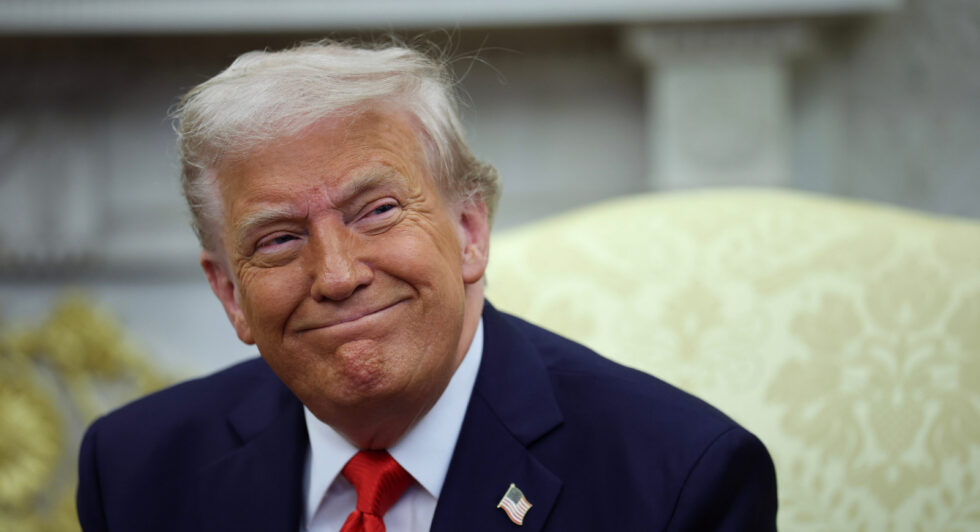
President Donald Trump suggested that high-level peace talks are inching closer to finalizing a nuclear agreement with Iran.
Trump said that a deal would include long-term inspections of Iran’s nuclear program and end the U.S. naval blockade of the Strait of Hormuz.
Advertisement
Under the agreement, the president said that Iran agreed to oversight of its nuclear facilities.
The president said he feels the need to complete the deal now, hinting that everything will be “totally restored” and “lower than before” by August.
Trump said Iran has “fully and completely agreed to highest level Nuclear inspections long into the future (Infinity!!!).”
Advertisement
Trump stated that this level of access ensures “Nuclear Honesty” and that without such commitments, “there would be no further negotiations.”
The US has lifted its naval blockade of the Strait of Hormuz, allowing commercial traffic to resume through the waterway.
Advertisement
U.S. naval ships will remain in the region in case the blockade needs to be reinstated, which Trump said “seems at this point highly unlikely.”
Trump said 19 million barrels of oil went through the strait on Monday, declaring it an “all time RECORD.”
The deal provides sanctions relief meant to solve a humanitarian crisis in Iran.
Funds released will be deposited in an escrow account controlled by the United States and will be used solely to purchase food and medical supplies from the United States.
The purchases will include corn, wheat, and soybeans from American farmers.
Trump said, “These are things that are desperately needed by Iran,” and described the situation as “a humanitarian crisis.”
“I feel it is necessary to help, NOW, before it is too late,” Trump stated.
High-level peace talks between the United States and Iran have concluded, mediators said Monday, with the “immediate” launch of a new round of lower-level technical discussions this week in Switzerland.
The two sides agreed on a road map aimed at reaching a final agreement within 60 days, according to a joint statement from the mediators, Pakistan and Qatar.
They also agreed to establish a “de-escalation working group” that includes Lebanon to address the fighting between Israel and Hezbollah there.
A communication channel was also established to prevent “incidents and misunderstandings” and to ensure the safe passage of commercial vessels through the Strait of Hormuz, the mediators said, calling the progress “encouraging.”
Vice President JD Vance had begun the talks on Sunday, expressing hope that the two sides could make progress.
Negotiators from the two countries — along with mediators from Pakistan and Qatar — held about 18 hours of intensive talks and consultations at the Swiss resort of Bürgenstock.
In a phone interview on Sunday with Fox News’s Trey Yingst, Trump threatened to attack Iran and take over the Strait of Hormuz if Tehran interfered with passage through the waterway.
“You close [the Strait of Hormuz] and you won’t have a country,” Trump said he told Iranian officials, Yingst posted on X “You won’t even make it back to your fu*king country.”
Trump also underscored the threat in a Truth Social post in which he urged Iran to stop Hezbollah militants in Lebanon from “causing trouble.”
“If they don’t, we’ll hit Iran very hard again, just like we did last week, only harder,” he said.
A memorandum of understanding that Trump signed at the Palace of Versailles in France last week requires the U.S. to deliver early, including by lifting sanctions, freeing billions in frozen assets, and dismantling a naval blockade of Iranian ports—concessions only made possible by America’s position of strength.
The two sides established a two-month timeline to flesh out the details and settle issues that have plagued negotiators for years.
Iran promised to let shipping traffic flow freely through the Strait of Hormuz.
This article may contain commentary which reflects the author’s opinion.